 -by
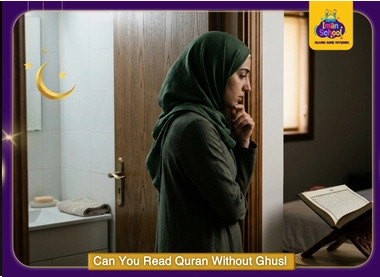
-by Asking Can You Read Quran Without Ghusl is a common question for Muslims seeking to maintain daily spiritual habits. Knowing whether Can You Read Quran Without Ghusl applies to recitation, digital reading, or touching a physical copy helps ensure respectful worship. At Iman School, our qualified tutors guide adult learners and children through essential Islamic rulings with clarity and ease.
Can You Read Quran Without Ghusl?
To answer directly: whether you can interact with the Holy Quran without performing ritual bath (Ghusl) depends heavily on the type of ritual impurity you are in, as well as how you are interacting with the Quran.
Islamic jurisprudence makes a firm distinction between minor ritual impurity (Hadath Asghar, which requires Wudu) and major ritual impurity (Hadath Akbar, such as major impurity requiring Ghusl).
When a person asks can you read quran without ghusl, scholars examine whether the individual is in a state of Janabah (post-intimate impurity) or post-menstrual bleeding, and whether they plan to touch a physical Mushaf, recite aloud from memory, or read digitally.
While there is broad consensus on the fundamental rules regarding physical copies, subtle differences of opinion exist among major Islamic schools of thought (Madhabs) regarding memory recitation and digital screens. Resolving these questions starts with understanding ghusl in islam and its impact on everyday acts of worship.
Learn More: Botox and Fillers in Islam
When Is Ghusl Required Before Reading the Quran?
The necessity of performing ghusl in islam before engaging with the Quran varies depending on the specific method of interaction. To better understand how reading quran without ghusl works across different scenarios, scholars divide Quranic engagement into five distinct categories:
Reciting the Quran
Reciting the Quran aloud or under your breath from memory without ghusl in islam is generally prohibited by the majority of jurists when a person is in major ritual impurity (Janabah). The Prophet Muhammad ﷺ was noted to recite the Quran in all states except when in major impurity. However, if a person only lacks minor ablution (Wudu), oral recitation from memory is fully permissible.
Listening to the Quran
If you are wondering can you listen to quran without ghusl, the answer across all major Islamic schools is a unanimous yes. Listening to Quranic recitations on your speaker, computer, or television is completely permissible regardless of whether you have Wudu or Ghusl, as listening does not involve touching sacred text or active oral recitation.
Reading Quranic Text
Silently reading Quranic verses with your eyes—without moving your tongue or speaking words aloud—is allowed by many contemporary scholars even if major impurity is present. Since eye reading is mentally digesting divine words rather than formal recitation, the strict prohibitions surrounding Can You Read Quran Without Ghusl do not apply in the same restrictive manner.
Touching a Physical Mushaf
When asking can you touch quran without ghusl, classical scholars across all four Sunni schools agree that touching the physical Arabic Mushaf requires full ritual purity. The majority opinion derives from the Quranic verse stating that none shall touch it except the purified. Therefore, physical contact with a hard-copy Quran requires both Wudu and Ghusl.
Reading the Quran on a Phone or Digital Device
A frequent question today is can you read quran on your phone without ghusl? Islamic jurists clarify that digital screens display temporary light pixels rather than physical parchment.
Consequently, touching a smartphone, tablet, or laptop displaying Quranic text does not carry the same legal ruling as holding a physical Mushaf. Most scholars permit holding your phone to read the Quran without Ghusl, though reciting aloud while in major impurity remains restricted according to the majority opinion.
Learn More: Body Piercings Islamic Ruling
Can You Read or Listen to the Quran While in Janabah?
Addressing janabah and reading quran requires clear distinction between oral recitation and passive listening. Major impurity caused by sexual intimacy or wet dreams (Janabah) places a temporary pause on certain acts of worship, such as formal ritual prayer (Salah) and active Quranic recitation.
For those asking can you read quran in janabah, the majority of scholars state that reciting verses aloud from memory is not permissible until Ghusl is performed. The Prophet’s companion, Ali ibn Abi Talib (RA), reported that nothing prevented the Messenger of Allah ﷺ from reciting the Quran except major ritual impurity.
However, if you are asking can you read quran after intercourse, you can listen to recorded recitations or review supplications derived from Quranic verses (such as saying “Bismillah” or “Inna lillahi wa inna ilayhi raji’un”) with the intention of remembrance (Dhikr) rather than Quranic recitation. Those interested in mastering these detailed legal guidelines can enroll in Fiqh for Beginners to build confidence in daily ritual purity rules.
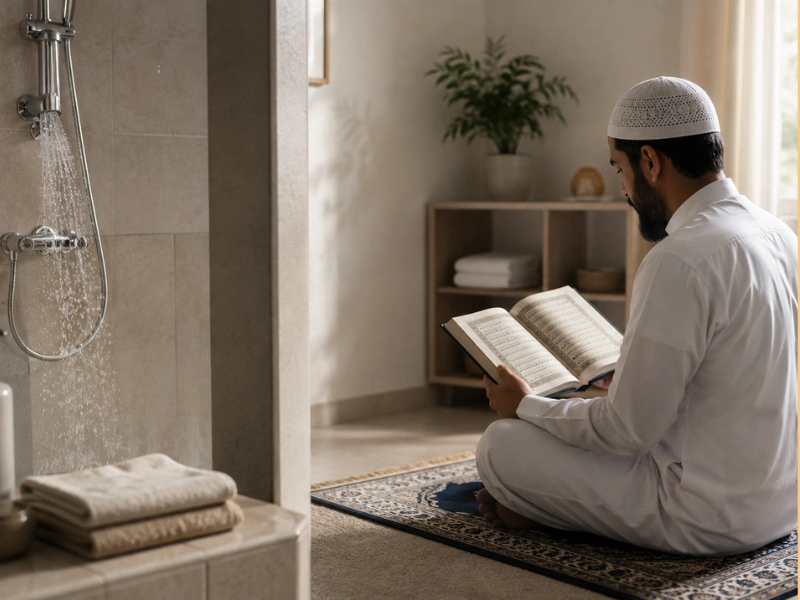
What Can You Do Before Performing Ghusl?
Even when major ritual impurity prevents you from reciting long Quranic passages aloud, Islam provides many alternative avenues for spiritual connection before you take a bath:
- Making Dhikr (Remembrance): You can freely recite Tasbeeh (SubhanAllah), Tahmeed (Alhamdulillah), and Takbeer (Allahu Akbar).
- Reciting Authentic Dua: You may make personal supplications in any language, asking Allah SWT for guidance, forgiveness, and protection.
- Listening to Quranic Recitations: Playing Quranic audio at home or while driving is a fantastic way to maintain spiritual tranquility without violating ritual rules.
- Sending Salawat upon the Prophet ﷺ: Invoking blessings on the Prophet Muhammad ﷺ is always rewarding and requires neither Wudu nor Ghusl.
- Reading Islamic Educational Books: Studying Tafseer commentaries, Hadith collections, or enrolling in an Islamic Studies Course remains open to keep your mind connected to knowledge.
Read Also: Laser Hair Removal Islamic Ruling
Does the Ruling Differ for Women During Menstruation or Postpartum Bleeding?
A crucial nuance regarding Can You Read Quran Without Ghusl involves women experiencing monthly menstruation (Hayd) or post-natal bleeding (Nifas). Unlike temporary Janabah—which can be resolved immediately with a brief bath—menstruation lasts several days, creating a unique legal situation.
While classical jurists historically aligned post-menstrual states with major impurity restrictions, many prominent scholars (including Imam Malik and Ibn Taymiyyah) provided a scholarly exemption for women.
They held that women during menstruation are permitted to recite the Quran from memory or read from digital screens without Ghusl, especially if they are Quran students, teachers, or fear forgetting their memorization. Understanding these compassionate legal adjustments is an integral part of modern Learn Fiqh Online programs for women and families.
Our certified, English-fluent scholars break down classical knowledge into engaging, easy-to-digest lessons that fit seamlessly into your family’s routine. Take the next step in your spiritual education today. Visit our platform to sign up for a zero-obligation Free Trial Class, and start learning with Iman School today.
Discover More: Why can’t Muslim women pray on their period
FAQ About Reading Quran Without Ghusl
Can you recite Quran without ghusl?
If you are asking can you recite quran without ghusl, oral recitation from memory is allowed if you only lack Wudu. However, if you are in major ritual impurity (Janabah), the majority of scholars state you must perform Ghusl before reciting aloud.
Can you listen to Quran without ghusl?
Yes, you can freely listen to Quranic recitations on any audio device without performing Ghusl, as passive listening carries no ritual purity prerequisite.
Can you read Quran on your phone without ghusl?
Yes, reading Quranic text on a digital screen is allowed without Ghusl according to most modern scholars, because smartphone screens are not classified as physical Mushafs.
Can you touch the Mushaf without ghusl?
No, the vast majority of classical and modern jurists agree that touching a physical paper Quran (Mushaf) requires both Wudu and full Ghusl.
Can a person in janabah read Quran?
A person in Janabah should not recite Quran aloud or touch a physical Mushaf. However, they can read text silently with their eyes, listen to audio, or recite daily remembrances.
Do women need ghusl before reading Quran after menstruation?
Once post-menstrual bleeding stops completely, a woman must perform Ghusl before resuming formal prayer (Salah) or touching a physical Mushaf. However, during active bleeding, many scholars permit oral recitation from memory or digital screens for educational purposes.
Read Also: Does a Woman Have to Wear Hijab When Reading Quran
Learn Quran and Islamic Rulings with Qualified Teachers
Understanding complex legal questions like Can You Read Quran Without Ghusl helps every believer worship with peace of mind and authentic knowledge. Navigating daily Islamic jurisprudence allows you to balance respect for Allah’s sacred word with practical daily living in Western societies.
If you are looking to build a thorough understanding of Quranic studies, Tajweed, and Islamic jurisprudence, Iman School provides an exceptional environment to Learn Islamic Studies Online. Our academy offers flexible virtual classrooms designed for learners of all ages and backgrounds.
At Iman School, we pride ourselves on offering comprehensive learning pathways including Online Quran Classes, tailored Quran Classes for Beginners, and specialized jurisprudence modules.