 -by
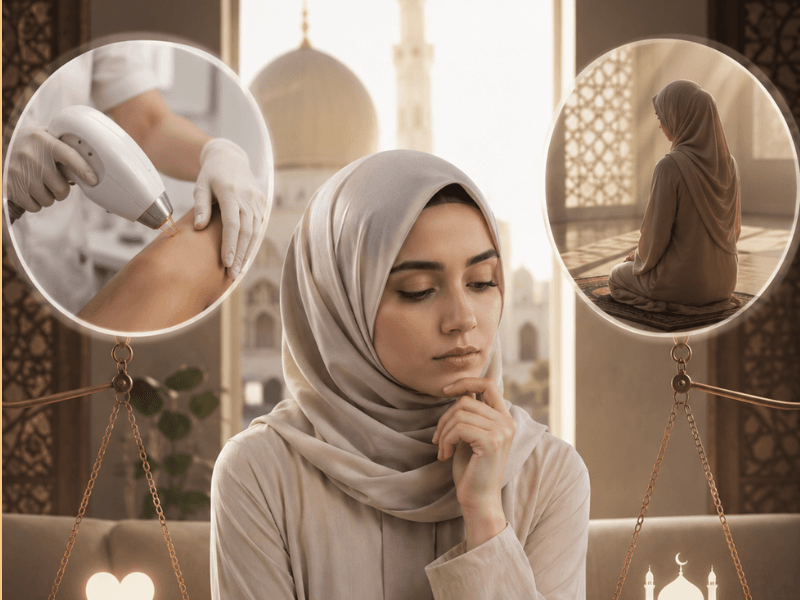
-by The question of Laser hair removal Islamic ruling is a common and important one for Muslims seeking to balance modern technology with their faith. With the advancements in cosmetic procedures, many are asking if laser hair removal, a method that offers permanent or long-term hair reduction, is permissible (halal) in Islam. This article will explore this issue by examining the general principles of Islamic law regarding hair removal, the opinions of various scholars, and the key factors to consider before deciding on the procedure.
Is laser hair removal permissible (halal) in Islam?
Yes, according to the majority of contemporary scholars, Laser Hair Removal Islamic Ruling states that laser hair removal is generally permissible (halal) in Islam. The procedure is seen as a modern method for removing unwanted hair, which is a matter of cleanliness and beautification encouraged by the Sunnah. It does not fall under the category of permanently changing Allah’s creation, as it removes something that grows naturally and is intended for removal. This is the simple answer to the question: Is laser hair removal haram or halal?
The Concept of ‘Awrah and Modesty in Treatment
A critical aspect of the Laser Hair Removal Islamic Ruling is maintaining modesty (Haya). While the procedure itself is halal, the method of execution must adhere to strict guidelines regarding the ‘Awrah (intimate parts).
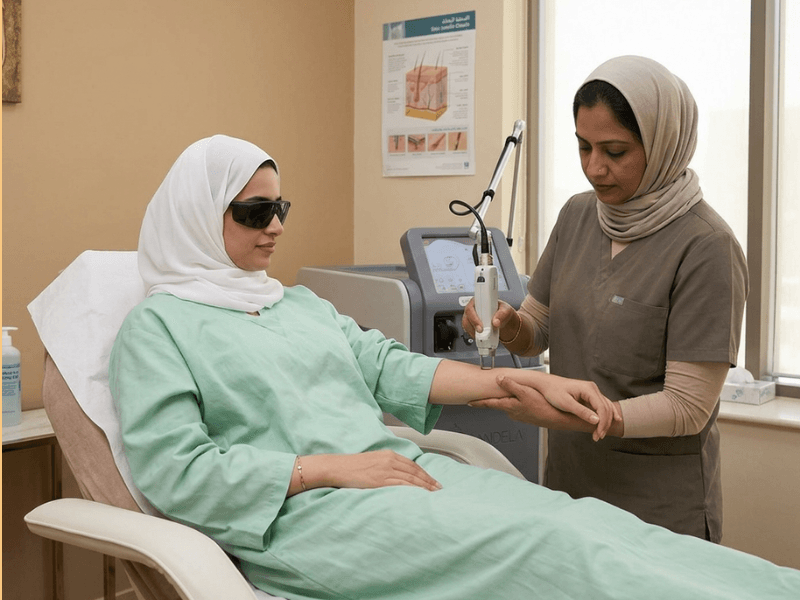
Scholars agree that exposing the ‘Awrah to anyone other than a spouse is prohibited. Therefore, the permissibility is conditional upon ensuring that the practitioner is of the same gender and that only the necessary area is exposed, minimizing any potential violation of privacy laws in Islam.
What are the general principles of Islamic law regarding hair removal?
When discussing Laser Hair Removal Islamic Ruling, it is important to understand the general principles of Islamic law regarding hair removal. Islam distinguishes between two types of body hair:
- Hair that is encouraged to be removed: This includes hair from the armpits and pubic area, which is part of the “fitrah” (natural disposition) and a Sunnah to remove.
Dynamic Clinic - Hair that is forbidden to be removed: This includes the beard for men and eyebrows for both men and women (with the exception of a unibrow).
The general principle is that removing hair that is unwanted or a source of discomfort is permissible. This addresses the general question: Is it permissible to remove body hair in Islam? The ruling on hair removal is often tied to the specific location and the method used.
Specific Rulings for Men vs. Women
The application of Islamic rulings on body hair differs slightly between men and women:
- For Men: It is strictly forbidden (Haram) to remove the beard, as it is considered a distinct feature of masculinity mandated by the Sunnah. However, removing chest or back hair is generally permissible if it causes discomfort or is done for cleanliness.
- For Women: Removing hair from legs, arms, and other body parts is permissible for beautification and hygiene, provided it does not involve plucking the eyebrows (An-Nams), which is explicitly cursed in the Hadith. Laser treatment offers a painless alternative to traditional methods for these areas.
Read Also: Body Piercings Islamic Ruling
Is laser a new method that needs a specific fatwa?
Yes, Laser Hair Removal Islamic Ruling is based on contemporary fatwas because laser hair removal is a relatively modern technology. The ruling was needed to determine if the method’s semi-permanent or permanent nature falls under the prohibition of “changing Allah’s creation” or if it is simply a more advanced form of conventional hair removal methods like shaving or waxing.
What is the difference between temporary and permanent hair removal methods in Islam?
According to Laser Hair Removal Islamic Ruling, temporary methods like shaving, waxing, and depilatory creams are considered permissible and are a part of regular hygiene. The key concern with laser hair removal is its long-term effect. However, scholars have concluded that since the laser targets a naturally growing substance (hair) that is meant to be removed, it is not considered an impermissible alteration of the body. This is a crucial distinction in the Islamic ruling on permanent hair removal.moval.
Does laser hair removal fall under the category of changing Allah’s creation (taghyeer khalqillah)?
No, Laser Hair Removal Islamic Ruling confirms that laser hair removal does not fall under the category of changing Allah’s creation in Islam. The prohibition of “taghyeer khalqillah” applies to permanent and irreversible changes to the body’s fundamental structure for non-medical reasons, such as tattoos or elective surgeries that alter one’s physical form. Removing unwanted hair, which naturally grows and is subject to regular removal, is not considered a permanent change to the body’s essential creation. It is a form of cleanliness and beautification that aligns with the principles of Islam and beauty standards.
Distinction Between Grooming and Alteration
Scholars differentiate between Taghyeer Khalqillah (changing Allah’s creation) and Tazyin (beautification/grooming).
Procedures like tattoos or cosmetic surgery that permanently alter facial features or body structure are forbidden. In contrast, laser hair removal for Muslims is viewed similarly to cutting nails or trimming hair; it removes an external growth without altering the underlying anatomy or identity. This distinction is vital for understanding why modern cosmetic technologies are often accepted within Islamic bioethics.
What are the opinions of different Islamic scholars on this topic?
The majority of contemporary scholars and Fiqh councils have issued rulings that permit laser hair removal, making Laser Hair Removal Islamic Ruling generally positive. This is the prevailing opinion among many Islamic universities and legal bodies. Some scholars, however, may hold a more conservative view, arguing against it out of caution regarding any form of “permanent” change to the body.
Evidence from Quran and Sunnah on Cleanliness
The permissibility of hair removal is rooted in the broader Islamic emphasis on Taharah (purity).
The Prophet Muhammad ﷺ said: “Five things are part of the Fitrah: circumcision, shaving the pubic hair, trimming the mustache, clipping the nails, and plucking the armpit hair.” (Sahih Al-Bukhari).
While laser is not mentioned explicitly, it falls under the general principle of achieving this cleanliness more effectively. Thus, the Halal status of laser hair removal is derived from these foundational texts encouraging hygiene.
Is laser hair removal considered a form of unnecessary beautification?
While it is a form of beautification, it is not considered unnecessary. Islam encourages cleanliness and a pleasing appearance, especially for one’s spouse. The removal of unwanted hair in Islam is a part of hygiene and the fitrah. The long-term or permanent nature of laser hair removal simply makes the process more efficient and convenient, and therefore does not make it impermissible. This applies to concerns about a hairy body Islam and Muslim women’s beauty tips in general.
Learn More: Information About the Holy Quran
What is the ruling on using laser for parts of the body that are part of the ‘awrah?
The use of laser hair removal for parts of the body that are part of the ‘awrah (intimate parts) is permissible, as it is a modern method for removing hair from the pubic and underarm areas. This is a common practice addressed by the hadith about hair removal. The key is to ensure that the procedure is performed by a person of the same gender to preserve modesty. This clarifies issues like: Is it haram to get rid of armpit hair permanently? and Is it haram to remove pubic hair with laser? The answer is no, as the hair is from areas that are encouraged to be removed.
Get Started: Online Islamic Sciences, Quran, and Arabic Language Courses
Is it permissible for a woman to be treated by a male practitioner, or vice versa?
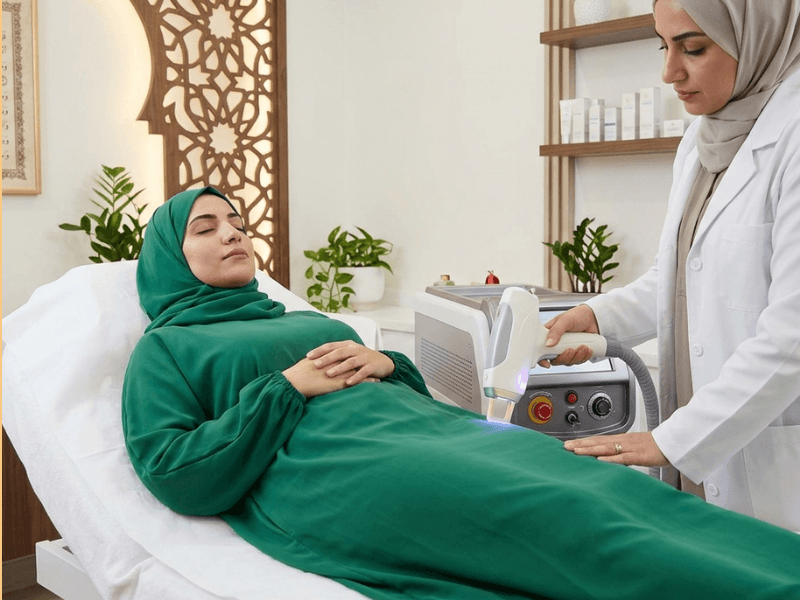
No. Laser Hair Removal Islamic Ruling emphasizes that modesty must be preserved at all times. The rule of covering the ‘awrah dictates that a woman’s ‘awrah should not be exposed to a non-mahram man, and vice versa. Therefore, a woman must be treated by a female practitioner, and a man must be treated by a male practitioner.
Is it permissible to use laser hair removal for medicinal or health-related reasons?
Yes, Laser Hair Removal Islamic Ruling clearly allows laser hair removal when it is used for medical or health-related purposes, such as treating a skin condition or improving hygiene. Islam permits treatments that address health concerns and reduce physical discomfort.
Medical Necessity and Skin Conditions
In cases where excessive hair growth (Hirsutism) causes psychological distress or physical skin issues like ingrown hairs and infections, laser hair removal transitions from a cosmetic choice to a medical necessity in Islam.
The Islamic principle “La darar wa la dirar” (no harm and no reciprocating harm) supports using effective treatments to alleviate suffering. Therefore, if a doctor recommends laser for health reasons, it becomes highly recommended (Mustahabb) or even obligatory (Wajib) to seek relief.
Does laser hair removal interfere with wudu or ghusl?
No, Laser Hair Removal Islamic Ruling confirms that laser hair removal does not interfere with Wudu or Ghusl. The procedure does not leave any physical barrier on the skin that would prevent water from reaching it. Since the laser targets the hair follicles beneath the skin, ritual purification remains valid.
Discover More: The Noble Hadith
Are there any conditions under which laser hair removal would be considered impermissible?
Yes, Laser Hair Removal Islamic Ruling states that the procedure would be impermissible under certain conditions:
- If it is performed by a practitioner of the opposite gender.
- If it is used to remove hair that is forbidden to be removed, such as a man’s beard or to permanently alter the eyebrows.
- If it is proven to cause significant and irreversible harm to the body, which modern medical science does not currently suggest.
Is laser hair removal an acceptable alternative to other sunnah methods like plucking or shaving?
Yes. While traditional methods like shaving and plucking are Sunnah methods, laser hair removal is an acceptable modern alternative. It provides a more convenient and longer-lasting solution for removing hair from the body. This is a topic of contemporary jurisprudence, as scholars have had to decide if a new technology can be applied to an existing Sunnah.
The conclusion has been that the goal of cleanliness and hair removal is paramount, and the method can be modern. This applies to questions like Waxing Islamic ruling or Is it haram to shave legs in Islam? as well as Is waxing your full body haram? as they all address the permissibility of removing unwanted hair, which is generally acceptable.
What are the key points to consider before a Muslim decides to undergo the procedure?
Before undergoing the procedure, a Muslim should consider these key points:
- Ensure a qualified and experienced practitioner of the same gender performs the procedure.
- Ensure the area being treated is not hair that is forbidden to be removed (e.g., eyebrows).
- Ensure that the technology is safe and the clinic is reputable.
- Consult a trusted local scholar if you have any personal doubts.
If you are looking for clarity on matters like Is electrolysis permissible in Islam? or Sharia law on hair removal, and want to learn from a trusted source, our online Fiqh and Shari’ah courses are the ideal solution. Visit our website today to learn more and enroll in a course.
FAQ about Laser Hair Removal Islamic Ruling
1What Is the Islamic Ruling on Laser Hair Removal?
The general Islamic ruling on laser hair removal is that it is permissible (Halal) in principle. Islamic jurisprudence classifies it as a modern method for personal hygiene and grooming. As long as it is used in a way that does not violate Islamic legal boundaries, such as exposing the Awrah (intimate areas) or causing physical harm, it is considered a lawful beauty treatment.
Is Laser Hair Removal Halal or Haram?
It is Halal for both men and women provided that the procedure is performed on areas where hair removal is permitted, and the process respects the privacy of the Awrah. It becomes prohibited only if the procedure involves forbidden elements, such as removing the eyebrows or revealing the intimate parts of the body to an unrelated person.
What Does Islam Say About Removing Body Hair?
Islam encourages cleanliness (Taharah) as a core component of faith. The Prophet Muhammad (peace be upon him) mentioned specific practices of the Fitrah (natural human disposition), such as trimming the nails, shortening the mustache, and removing underarm and pubic hair. For other areas of the body, the ruling falls under the category of things the Shariah has remained silent on, which means they are permissible for personal grooming and hygiene.
Which Areas of Hair Removal Are Recommended in Islam?
The Sunnah emphasizes the removal of hair in specific areas for hygiene, primarily the underarms and the pubic region. Other areas of the body are considered permissible to groom for the sake of cleanliness or marital beautification, provided the method used does not violate the prohibition of Al-Nams (plucking eyebrows), which is strictly forbidden in the Hadith.
Is Laser Hair Removal Considered Changing Allah’s Creation?
No, it is not. Scholars distinguish between “altering Allah’s creation” in a prohibited sense (which involves distorting the fundamental human form, such as tattooing or surgical alteration of facial features) and “beautification/grooming.” Laser hair removal is categorized as a temporary aesthetic improvement similar to cutting one’s hair or trimming nails, which does not constitute the forbidden alteration mentioned in the Quran (Surah An-Nisa 4:119).
Can a Muslim Woman Have Laser Hair Removal Performed by a Female Specialist?
She may, provided that the specialist does not look at the woman’s Awrah (the area between the navel and the knee). If the laser treatment is for areas outside the Awrah (like arms, legs, or back), it is permissible. However, if the treatment is for the intimate areas, it is impermissible for a woman to expose these parts to another woman, even a specialist, except in cases of dire medical necessity.
What Are the Islamic Guidelines for Cosmetic and Beauty Procedures?
Islamic beauty guidelines require that any procedure must:
- Not involve permanent, harmful, or deceptive changes to the body.
- Not require the exposure of the Awrah to non-spouses.
- Not be intended to imitate the opposite gender or non-believers.
- Be free from physical harm, following the rule: “There should be no harming nor reciprocating harm.”
Are There Any Situations Where Laser Hair Removal Becomes Impermissible?
It becomes impermissible if:
- The procedure requires exposing the Awrah to an unauthorized person.
- It is used for the eyebrows (Al-Nams).
- It causes significant bodily harm or health risks that outweigh the benefit.
- It is performed by someone of the opposite gender.
How Can Muslims Balance Personal Grooming and Islamic Modesty?
Muslims achieve this balance by prioritizing the Shariah’s requirements for modesty (Haya) alongside the Sunnah’s emphasis on cleanliness. This involves choosing professional environments that respect privacy, ensuring that grooming is done for the purpose of cleanliness and self-care rather than exhibitionism, and always adhering to the limits of the Awrah.
See More: Learn Quranic Arabic Online Abroad
Quick Summary of Common Questions
- Is laser hair removal allowed in Islam? Yes, as a form of grooming.
- Is it considered changing Allah’s creation? No, it is treated as cleaning.
- Can women undergo it? Yes, with strict adherence to modesty.
- Can men use it? Yes, provided it does not lead to imitating women.
- Does Islam encourage hair removal? Yes, it encourages specific hygiene practices and allows others for personal grooming.
How can I learn more about Islamic rulings?
For an in-depth understanding of Islamic ruling on beauty treatments and other complex issues of contemporary life, it is crucial to seek knowledge from qualified scholars. Iman School is a leading online academy that specializes in providing authentic Islamic education to Muslims in America, Canada, and around the world. We offer a wide range of courses in Fiqh, Shari’ah, and Aqidah taught by certified and experienced scholars. Our platform provides a reliable and accessible way to gain the knowledge you need to live a life in accordance with Islamic principles.