 -by
-by The question of “why can’t Muslim women pray on their period?” is one of the most frequently asked inquiries regarding women’s worship in Islam. For new Muslims and those seeking deeper understanding, it can sometimes be a point of confusion or even perceived as a restriction. However, Islamic law (Fiqh) provides clear rulings rooted in divine wisdom and an emphasis on ritual purity (Taharah). Far from being a burden, these guidelines offer ease and a profound spiritual perspective on women’s health and worship.
This article will thoroughly explain why can’t Muslim women pray on their period, detailing the rulings, their wisdom, and what activities are still permissible and encouraged during this natural state.
The Ruling: Menstruation and Prayer in Islam
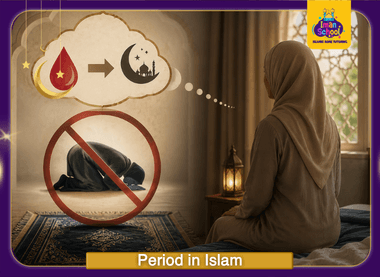
In Islam, menstruation (hayd) is considered a state of ritual impurity. Consequently, a Muslim woman is exempt from performing certain acts of worship during her menstrual cycle. The most prominent among these is formal prayer (Salah).
The concise answer to “why can’t Muslim women pray on their period?” is that it is a direct divine command found in the authentic teachings of Islam, designed to accommodate women’s natural physiological state and maintain a specific standard of ritual purity for formal worship. This ruling is part of the broader Menstruation Rules in Islam that govern a woman’s devotional life.
Wisdom Behind the Ruling
The prohibition of prayer during menstruation is not a punishment or a devaluation of women. Rather, it is a divinely prescribed ruling rooted in wisdom, mercy, and ease. Understanding why can’t Muslim women pray on their period requires looking beyond the ruling itself and considering the deeper principles emphasized by Islamic scholars throughout history.
They explain that this exemption acknowledges a woman’s physical condition, relieves her of certain obligations during menstruation, and reflects Allah’s compassion toward His servants.
- Ease and Compassion: Islam is a religion of ease. Menstruation often comes with physical discomfort, pain, fatigue, and emotional fluctuations. Exempting women from the physically demanding ritual of prayer offers them a period of rest and relief, a testament to Showing Compassion and Ease in Islamic Law.
- Ritual Purity (Taharah): Salah (prayer) requires a state of complete ritual purity, free from both major and minor impurities. Menstruation is a major impurity (najasah), which necessitates a full ritual bath (Ghusl) before prayer can be resumed. This emphasis on Purity in Islam Menstruation is central to understanding the ruling.
- Divine Command: Ultimately, the primary wisdom is simply that it is a command from Allah, revealed through the Prophet Muhammad (peace be upon him). Muslims submit to divine commands out of faith and trust in Allah’s infinite wisdom, even if the full rationale is not always immediately apparent to human intellect. This directly answers Why Can’t Women Pray on Period Islam from a theological perspective.
Read Also: Laser Hair Removal Islamic Ruling
What is Not Allowed During Menstruation? (Prayer, Fasting, Quran)
Understanding Why Can’t Muslim Women Pray on Their Period is just one part of the broader Islamic Rulings Menstruation. During her menstrual period, a Muslim woman is generally not permitted to perform the following acts of worship:
- Prayer (Salah): She is exempted from all five daily prayers. There is no requirement to make up these missed prayers after her period ends. This is the core of Muslim Women Prayer Period rulings.
- Fasting (Sawm): She is exempted from fasting during Ramadan or any voluntary fast. However, she must make up the missed days of Ramadan fasting after her period ends. This addresses Fasting During Periods Islam.
- Touching the Physical Mushaf (Copy of the Quran): The majority of scholars hold that a woman on her period, being in a state of major ritual impurity, should not directly touch the physical copy of the Quran (Mushaf).
- Circumambulating the Kaaba (Tawaf): Performing Tawaf during Hajj or Umrah is not permitted.
- Entering a Mosque (for residence or staying for worship): While passing through a mosque might be permissible if there’s no alternative, staying in one for worship is generally not allowed.
These exemptions are part of the detailed Period in Islam Rules ensuring Najasah and Taharah Menstruation guidelines are followed.
What is Still Permitted and Encouraged? (Dhikr, Du’a, Listening to Quran)
It is a common misconception that menstruation completely severs a woman’s connection to worship. This is far from the truth. While some acts are prohibited, many others are still permitted and even highly encouraged, ensuring that spiritual acts continue. Understanding why can’t Muslim women pray on their period helps clarify the practical side of Islamic rulings regarding menstruation.
- Dhikr (Remembrance of Allah): All forms of remembrance of Allah, such as Tasbeeh (Subhanallah), Tahleel (La ilaha illallah), Tahmeed (Alhamdulillah), and Takbir (Allahu Akbar), are highly encouraged.
- Du’a (Supplication): A woman can make all forms of personal supplication to Allah, asking for her needs, forgiveness, and blessings.
- Listening to the Quran: She can listen to Quranic recitations from a physical Mushaf (without touching it directly), from a phone, or via audio. This is permissible because it does not involve touching the sacred text directly or verbal recitation. This addresses Quran During Menstruation specifically regarding listening.
- Reading the Quran from Memory or Digital Devices: The majority of contemporary scholars permit reading the Quran from memory or from a digital device (like a phone or tablet) without touching the physical Mushaf, particularly for review, teaching, or seeking blessings. This is a crucial clarification regarding Quran During Menstruation.
- Reading Books of Islamic Knowledge: She can read books of Tafseer (Quranic commentary), Hadith, Fiqh, and other Islamic sciences.
- Giving Charity (Sadaqah):
- Maintaining Good Character: Continuing to uphold Islamic ethics, kindness, and good manners.
These activities allow a woman to maintain her spiritual connection and continue accumulating good deeds, showing the vast opportunities available during this time. Learning why can’t Muslim women pray on their period also highlights the wisdom behind the temporary exemption from prayer in Islam.
The Concept of Ritual Purity (Taharah)
Understanding purity in Islam during menstruation is rooted in the broader concept of Taharah, which encompasses both physical cleanliness and ritual purity. Islam places great emphasis on purity for acts of worship. Menstruation is a state of major ritual impurity (Hadath Akbar), similar to the state of Janabah. This is one of the key reasons behind the question: why can’t Muslim women pray on their period.
To exit this state of major impurity, a complete ritual bath, known as Ghusl, is required. Ghusl after menstruation is mandatory once the period ends, enabling a woman to resume prayers, fasting, and touching the Mushaf. Understanding why can’t Muslim women pray on their period becomes clearer when considering the concepts of Taharah, ritual purity, and the requirements for acts of worship.
View Details about Islamic Courses Online
Historical Context and Scholarly Consensus
The ruling that a menstruating woman does not pray is not a modern innovation but a well-established consensus among Islamic scholars throughout history. It is based on authentic Hadith (Prophetic traditions) and the consistent practice of the Companions and subsequent generations. Understanding why can’t Muslim women pray on their period begins with recognizing the clear evidence found in the Quran and Sunnah.
For instance, Aisha (RA), the wife of the Prophet (PBUH), narrated: “We used to menstruate at the time of the Messenger of Allah (PBUH), and we were commanded to make up the fasts, but we were not commanded to make up the prayers.” (Bukhari, Muslim). This authentic narration directly answers the question of why can’t Muslim women pray on their period and serves as one of the strongest proofs on the matter.
This historical consistency reinforces why can’t Muslim women pray on their period according to Islamic teachings. The guidelines fall under Islamic Fiqh of menstruation, which meticulously outlines these and other related rulings.
Learn More: Body Piercings Islamic Ruling
Showing Compassion and Ease in Islamic Law
The rulings surrounding menstruation beautifully illustrate the inherent compassion and ease in Islamic law. They highlight that Allah does not burden souls beyond their capacity. Instead of requiring prayer during a potentially difficult physical state, He grants relief and opens the door to other forms of worship, remembrance, and supplication. Understanding why can’t Muslim women pray on their period becomes easier when viewed through the lens of mercy and divine wisdom.
This reflects the deep understanding and compassion embedded in Islamic rulings regarding menstruation, ensuring that a woman maintains her spiritual connection while respecting her natural physiological cycle. The wisdom behind why can’t Muslim women pray on their period demonstrates how Islam balances devotion with ease, providing guidance that supports both spiritual well-being and physical realities.
Addressing Common Misconceptions and Questions
- “Is it unfair to women?” No. As mentioned, it’s a compassionate exemption and a divine command. It highlights Allah’s understanding of Women’s Health in Islam and His desire to ease burdens. It also signifies that worship is not limited to physical rituals.
- “Does it mean women are ‘unclean’?” The term ‘impure’ (najis) in Islamic jurisprudence refers to a state of ritual impurity, not moral or physical dirtiness. It’s a legal state that affects specific acts of worship, similar to a man needing Ghusl after sexual impurity. It does not imply personal dirtiness or spiritual inferiority.
- “Can I still make up for missed prayers?” No, missed prayers during menstruation are not to be made up. This is a unique exemption that differs from missed fasts during Ramadan, which must be made up. This is explicitly part of Salah During Periods Islam guidelines.
Explore More: Quran Memorization for Women
FAQ about Period in Islam
Why can’t Muslim women pray during their period?
Women do not pray during menstruation because Allah’s Messenger ﷺ instructed them to refrain from prayer during this time. Evidence is found in the hadith of Abu Sa’id Al-Khudri, where the Prophet ﷺ said regarding women: “Isn’t it true that a woman can neither pray nor fast during her menses?” (Sahih al-Bukhari, 304).
Do Muslim women have to make up missed prayers after menstruation?
No. Muslim women are not required to make up the prayers missed during menstruation. When Mu’adhah asked Aisha bint Abi Bakr why menstruating women make up fasts but not prayers, she replied: “We used to menstruate during the lifetime of the Messenger of Allah ﷺ and were ordered to make up the fasts but not ordered to make up the prayers.” (Sahih Muslim, 335).
Why do Muslim women make up fasts but not prayers?
This ruling is based directly on the Prophet’s ﷺ instruction. The missed fasts of Ramadan must be made up, while missed prayers are not. The wisdom mentioned by scholars is that prayers occur five times daily, making their makeup burdensome, whereas fasting occurs only once a year.
What does the Quran say about menstruation?
Allah says:
“They ask you concerning menstruation. Say: that is an inconvenience, so keep away from women during menstruation and do not approach them until they are pure.” (Quran 2:222)
The verse establishes specific rulings related to menstruation, while the details regarding prayer and fasting are explained in the Sunnah.
Can a woman pray if her period starts after the prayer time begins?
If the prayer time entered and she had enough time to perform the prayer before menstruation began but delayed it, many scholars hold that she should make up that prayer after becoming pure. This is the opinion of many jurists based on their understanding of the obligation becoming due when its time entered.
Can a woman resume prayer immediately after her period ends?
Yes. Once menstruation ends and she performs ghusl (ritual purification), she should resume prayer immediately. Allah says regarding menstruation: “And when they have purified themselves…” (Quran 2:222).
What should a woman do when her period ends?
She should perform ghusl as taught by the Prophet ﷺ. He instructed women regarding purification after menstruation in authentic narrations found in Sahih al-Bukhari and Sahih Muslim.
Is a menstruating woman sinful for not praying?
No. She is rewarded for obeying Allah’s command by refraining from prayer during menstruation. The prohibition itself is an act of worship because it follows the guidance of Allah and His Messenger ﷺ.
Can a menstruating woman make dua and remember Allah?
Yes. There is no authentic evidence prohibiting a menstruating woman from making dua, dhikr, saying SubhanAllah, Alhamdulillah, La ilaha illa Allah, or sending blessings upon the Prophet ﷺ. Scholars have agreed on the permissibility of these acts.
Can a menstruating woman listen to the Quran?
Yes. The scholars generally permit listening to the Quran during menstruation, and no authentic text prohibits it.
Can a menstruating woman read the Quran?
This is a matter of scholarly disagreement. Some scholars prohibit recitation from the Mushaf, while others permit reading, especially for learning, teaching, or fear of forgetting. The issue is based on differing interpretations of the evidences, and there is no unequivocal authentic hadith explicitly forbidding recitation.
Is menstruation considered a punishment in Islam?
No. The Prophet ﷺ described menstruation as something Allah decreed for the daughters of Adam. He told Aisha bint Abi Bakr during Hajj:
“This is something Allah has decreed for the daughters of Adam.” (Sahih al-Bukhari, 294; Sahih Muslim, 1211)
This shows that menstruation is a natural condition created by Allah, not a punishment.
Discover More: Understand Quran Tafsir Online in English
The question of “why can’t Muslim women pray on their period?” is answered by understanding the divine wisdom, compassion, and emphasis on ritual purity in Islamic law. This ruling, far from being a restriction, offers ease and allows women to maintain their spiritual connection through alternative acts of worship and remembrance during their menstrual cycle.
It underscores the comprehensive nature of Islam’s guidance, which caters to the realities of human life with profound mercy. Understanding why can’t Muslim women pray on their period helps clarify these Menstruation Rules in Islam and empowers Muslim women to navigate their faith confidently and peacefully.
For a deeper understanding of Islamic Fiqh Menstruation rulings, to address all ambiguities, and to gain clarity on any doubts, seeking knowledge from qualified scholars is paramount. Iman School is dedicated to providing authentic online Islamic education. We offer comprehensive courses in Fiqh (Islamic Jurisprudence), Aqeedah (Creed), and Sharia, taught by highly qualified male and female scholars and Shaykhs.
Our instructors are expertly trained to explain complex rulings, clarify doubts, and provide clear answers to all your questions, including detailed insights into why can’t Muslim women pray on their period and other matters related to Women’s Purity Islam. Join Iman School to deepen your knowledge and understanding of Islamic rulings with qualified teachers.