 -by
-by Mastering Daily Arabic Phrases is the fastest and most rewarding way to start speaking Arabic with confidence. Learning Daily Arabic Phrases allows you to navigate real-life situations, build social connections, and unlock a deeper understanding of Islamic culture. At Iman School, we make learning Daily Arabic Phrases natural, intuitive, and fun for your entire family.
Why Learn Daily Arabic Phrases?
Starting your language journey by mastering Daily Arabic Phrases bridges the gap between complex grammar textbook rules and real-life conversation. Memorizing basic arabic phrases allows beginners to express immediate needs, show polite manners, and connect warmly with native speakers right away.
When students focus on daily arabic phrases, they gain the momentum needed to stick with their studies long-term. Instead of getting bogged down in intricate sentence mechanics early on, learning useful arabic phrases builds immediate speaking confidence.
Whether your goal is to travel through the Arab world, connect with family members, or learn arabic for beginners, mastering practical arabic words and phrases creates a solid foundation for total fluency.
Common Arabic Greetings and Introductions
Greeting people warmly is central to Arab culture. Here are foundational arabic phrases for beginners to help you start any interaction smoothly:
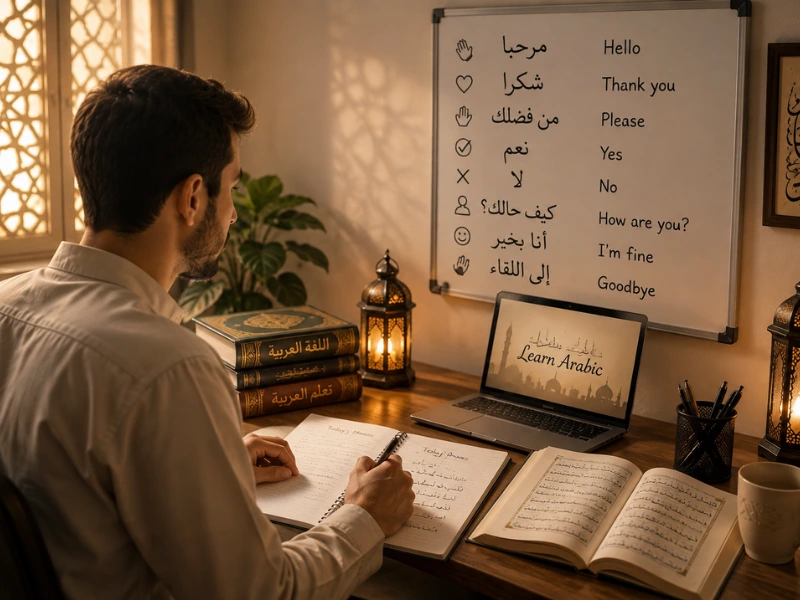
- مرحبا (Marhaban) — Hello: A universal, friendly greeting used anywhere.
- السلام عليكم (As-salamu alaykum) — Peace be upon you: The iconic Islamic greeting shared among believers worldwide.
- كيف حالك؟ (Kayfa haluk?) — How are you?: A polite query used constantly in basic arabic conversation.
- أنا بخير (Ana bikhayr) — I am fine: The standard, positive response to inquiries about your well-being.
- ما اسمك؟ (Ma ismuk?) — What is your name?: An essential phrase for introducing yourself to new acquaintances.
- اسمي… (Ismi…) — My name is…: The simple template used to introduce yourself confidently.
Useful Arabic Phrases for Saying Thank You and Apologizing
Showing gratitude and politeness is an integral part of using Daily Arabic Phrases effectively.
- شكرا (Shukran) — Thank you: The fundamental expression of gratitude used in every setting.
- شكرا جزيلا (Shukran jazilan) — Thank you very much: Used when expressing deeper appreciation.
- عفوا (Afwan) — You’re welcome: The polite response to Shukran, also used to say “excuse me.”
- من فضلك (Min fadlik) — Please: Added to requests to maintain a polite tone.
- آسف (Asif) — Sorry: Used when making minor mistakes or offering regrets.
- لا بأس (La ba’s) — No problem: A comforting phrase used to reassure others that everything is fine.
Arabic Phrases for Everyday Conversations
Keeping a conversation flowing smoothly requires mastering a handful of essential transition terms and responses.
- نعم (Na’am) — Yes: The clear affirmation used across all Arabic-speaking regions.
- لا (La) — No: The simple, direct negative response.
- حسنا (Hasanan) — Okay: A helpful filler word meaning “fine” or “all right.”
- بالطبع (Bi-ttawq) — Of course: Expresses enthusiastic agreement.
- لا أعرف (La a’rif) — I don’t know: A crucial phrase for beginners navigating new discussions.
- أفهم (Afham) — I understand: Confirms that you are following the speaker’s line of thought.
- لا أفهم (La afham) — I don’t understand: A life-saving phrase when learning Daily Arabic Phrases in real time.
Arabic Phrases for Asking Questions
Asking questions allows you to take control of conversations and gather crucial information quickly.
- ماذا؟ (Madha?) — What?: Used to ask for clarification or details.
- أين؟ (Ayna?) — Where?: Essential for locating places, items, or people.
- متى؟ (Mata?) — When?: Used to inquire about time, schedules, or appointments.
- لماذا؟ (Limadha?) — Why?: Perfect for seeking explanations and deeper understanding.
- كيف؟ (Kayfa?) — How?: Helps you ask about methods, conditions, or instructions.
- كم هذا؟ (Kam hadha?) — How much is this?: A key question for market visits and everyday shopping.
Useful Arabic Phrases for Shopping
Navigating traditional bazaars (souks) or modern shops is far easier when you know these practical expressions.
- كم السعر؟ (Kam as-si’r?) — How much is the price?: Direct question regarding cost.
- أريد هذا (Ureedu hadha) — I want this: Used to point out items you wish to purchase.
- هل لديك…؟ (Hal ladayka…?) — Do you have…?: Used to inquire about specific goods or stock.
- غالي جدا (Ghali jiddan) — Very expensive: Useful when negotiating or shopping in local markets.
- أريد أن أشتري… (Ureedu an ashtariya…) — I want to buy…: A helpful sentence opener when looking for specific products.
If you plan to teach your children how to communicate when traveling abroad, enrolling them in specialized Arabic Classes for Kids equips them with conversational tools early on.
Arabic Phrases for Restaurants and Food
Dining out becomes a delightful cultural experience when you order food using authentic phrasing.
- أريد هذا من فضلك (Ureedu hadha min fadlik) — I would like this, please: The standard polite way to order dishes from a menu.
- هل لديك قائمة الطعام؟ (Hal ladayka qa’imat at-ta’am?) — Do you have a menu?: Requested upon sitting down at a dining establishment.
- بدون سكر (Bidun sukkar) — Without sugar: Essential for requesting tea or coffee without added sweetness.
- الماء من فضلك (Al-ma’ min fadlik) — Water, please: A basic necessity for any meal.
- الحساب من فضلك (Al-hisab min fadlik) — The bill, please: Used when you are ready to complete your meal and pay.
Arabic Phrases for Asking for Directions
Finding your way around an unfamiliar city requires a working knowledge of navigational terms.
- أين…؟ (Ayna…?) — Where is…?: The foundation of every directional request.
- أين المسجد؟ (Ayna al-masjid?) — Where is the mosque?: A vital phrase for Muslim travelers seeking prayer locations.
- كيف أذهب إلى…؟ (Kayfa adhhabu ila…?) — How do I get to…?: Used when seeking step-by-step navigational guidance.
- هل هو قريب؟ (Hal huwa qarib?) — Is it nearby?: Helps determine if you can walk or need transport.
- يمين (Yameen) — Right: Directional indicator for turning right.
- يسار (Yasar) — Left: Directional indicator for turning left.
Arabic Phrases for Travel and Daily Situations
When navigating airports, hotels, or public transport, these practical expressions prove invaluable.
- أين المطار؟ (Ayna al-matar?) — Where is the airport?: Critical for transit and departure logistics.
- أحتاج إلى مساعدة (Ahtaju ila musa’adah) — I need help: Used in emergencies or confusing situations.
- لا أستطيع أن أفهم (La astati’u an afham) — I cannot understand: Signals that the speaker needs to simplify their words.
- تحدث ببطء من فضلك (Tahaddath bibut’ min fadlik) — Please speak slowly: Helps non-native learners keep up with native speech rates.
- هل تتحدث الإنجليزية؟ (Hal tatahaddath al-injleziyyah?) — Do you speak English?: A helpful backup question when communication stalls.
Adults who wish to balance language learning with busy work schedules can opt for tailored Arabic Lessons for Adults to practice these practical scenarios efficiently.
Islamic Arabic Phrases Every Muslim Should Know
Connecting language acquisition with faith adds immense spiritual value to your study routine. Here are key Islamic expressions embedded into daily conversation:
- بسم الله (Bismillah) — In the name of Allah: Recited before eating, drinking, or beginning any task.
- الحمد لله (Alhamdulillah) — Praise be to Allah: Spoken to express gratitude for blessings or when finishing meals.
- إن شاء الله (In sha Allah) — If Allah wills: Used when speaking about future plans or hopes.
- ما شاء الله (Ma sha Allah) — What Allah has willed: Uttered to express admiration while guarding against envy.
- جزاك الله خيرا (Jazak Allahu khayran) — May Allah reward you with good: The traditional Islamic way of showing deep appreciation.
- بارك الله فيك (Barak Allahu feek) — May Allah bless you: A warm supplication offered to express goodwill.
- السلام عليكم (As-salamu alaykum) — Peace be upon you: The obligatory greeting of peace among believers.
For students eager to connect these terms directly to divine scripture, taking a Quranic Arabic Course or choosing to Learn Arabic for Quran bridges everyday vocabulary with sacred understanding.
Arabic Phrases for Saying Goodbye
Ending conversations with warmth and grace leaves a lasting positive impression.
- مع السلامة (Ma’a as-salamah) — Goodbye: The standard, polite farewell meaning “with safety.”
- إلى اللقاء (Ila al-liqa’) — See you: A friendly expression used when expecting to meet again.
- أراك لاحقا (Araka lahiqan) — See you later: A casual farewell for friends and acquaintances.
- تصبح على خير (Tusbih ‘ala khayr) — Good night: Spoken when parting ways at night or going to bed.
How to Practice Arabic Phrases Every Day
Consistency is the secret ingredient to language acquisition. Integrating Daily Arabic Phrases into your routine turns casual study into lasting habit.
To lock common arabic phrases into your memory, speak them aloud during daily tasks, even when practicing by yourself. Try labeling household items, greeting family members using everyday arabic expressions, or listening to audio dialogues while commuting. Enrolling in an Arabic Course for Beginners or choosing to Learn Arabic Online provides structured exercises that make practicing Daily Arabic Phrases a fun part of your daily lifestyle.
Should You Learn Arabic with a Teacher?
While flashcards and language apps are helpful for vocabulary acquisition, practicing Daily Arabic Phrases with a qualified instructor transforms passive memorization into natural conversation.
A dedicated Arabic Teacher Online helps you master proper guttural pronunciation, correct subtle accent mistakes, and explain the exact social contexts behind arabic phrases for everyday conversation. Guided practice through One-on-One Arabic Lessons ensures you learn authentic arabic for non native speakers without picking up bad habits or feeling self-conscious when speaking.
Why Iman School Is a Great Place to Learn Arabic Online
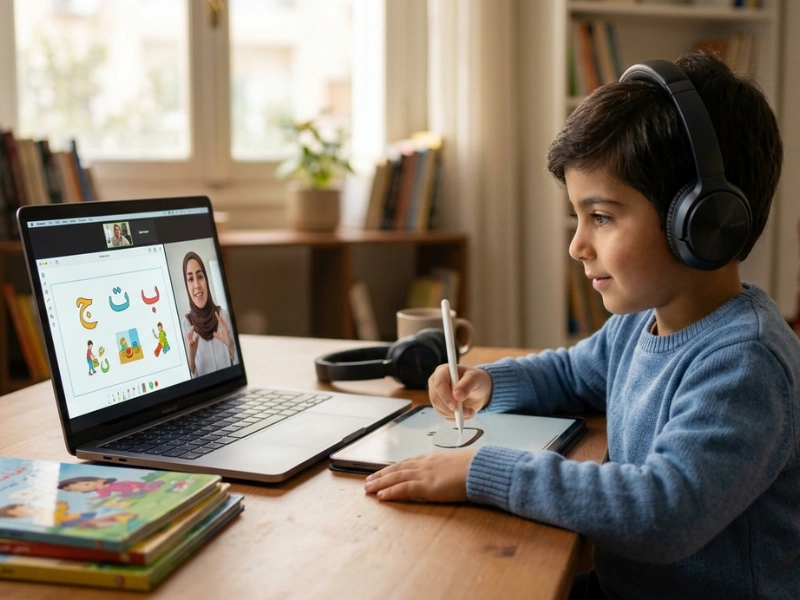
When putting your knowledge of Daily Arabic Phrases into practice, Iman School provides the ultimate interactive virtual environment. We bridge the gap between textbook theory and real-life conversational fluency.
Our academy offers specialized tracks in Online Arabic Classes tailored for families living across Western nations. Whether your goal is to master Daily Arabic Phrases, enroll your children in a foundational course, or Learn Quranic Arabic Online, our certified tutors make learning engaging and accessible. We combine flexible schedules, custom one-on-one sessions, and native English-fluent instructors to ensure you build speaking confidence without stress.
FAQ About Daily Arabic Phrases
What are the most common Arabic phrases?
The most common phrases include universal greetings like As-salamu alaykum (Peace be upon you), expressions of thanks like Shukran (Thank you), and everyday affirmations like Na’am (Yes) and La (No).
What Arabic phrases should beginners learn first?
Beginners should start with greetings (Marhaban), polite requests (Min fadlik), expressions of gratitude (Shukran), and basic questions (Ayna for “Where” and Kam for “How much”).
How can I practice Arabic every day?
You can practice by using Daily Arabic Phrases during everyday activities, labeling household items, speaking aloud, and taking interactive live lessons with native tutors.
What are the most useful Arabic phrases for travel?
Essential travel phrases include asking for directions (Ayna…?), asking prices (Kam as-si’r?), requesting help (Ahtaju ila musa’adah), and asking people to speak slowly (Tahaddath bibut’ min fadlik).
What Arabic phrases should Muslims know?
Muslims should know foundational spiritual phrases including Bismillah, Alhamdulillah, In sha Allah, Ma sha Allah, Jazak Allahu khayran, and As-salamu alaykum.
How long does it take to learn basic Arabic phrases?
With consistent practice and proper guidance, a beginner can memorize and confidently use dozens of essential Daily Arabic Phrases within 2 to 4 weeks.
Best Online Academy to Learn Arabic
Taking the step to master Daily Arabic Phrases opens the door to vibrant conversations, rich cultural traditions, and deeper spiritual appreciation. By practicing these expressions consistently and applying them in real-world contexts, you will find yourself communicating with ease far sooner than you think.
At Iman School, we take pride in being recognized as a leading digital academy for language acquisition. Our live classrooms allow you to practice Daily Arabic Phrases with supportive native tutors who guide you step by step.
Whether you wish to build casual speaking skills or embark on a complete journey toward Quranic comprehension, we cater to your unique goals. Visit our official platform today to book your zero-obligation Free Trial Arabic Class, and start speaking Arabic with confidence alongside Iman School.