 -by
-by The Battle of Badr stands as a pivotal turning point in human history, shaping the destiny of early believers and defining the spirit of devotion. Studying the Battle of Badr helps believers draw timeless courage, faith, and inspiration. At Iman School, we guide families through these inspiring historical events through engaging live online sessions.
What Was the Battle of Badr?
The Battle of Badr was the first major military encounter between the early Muslim community of Madinah and the pagan Quraysh tribe of Makkah. Understanding the Battle of Badr in Islam reveals how a small, ill-equipped group of believers stood firm against overwhelming odds to defend their faith, dignity, and survival.
When examining Battle of Badr history, historians recognize that this confrontation was far more than a standard military conflict. It was a decisive spiritual stand where truth confronted falsehood. Exploring a comprehensive Battle of Badr summary illustrates how divine help, strategic leadership, and unwavering faith transformed a small clash into a monumental victory that established Islam as a rising power in the Arabian Peninsula.
When Did the Battle of Badr Take Place?
Pinpointing the exact Battle of Badr date is essential for understanding the early prophetic timeline. The battle took place on the 17th day of Ramadan in the 2nd year after the Migration (Hijrah), which corresponds to March 624 CE.
The timing of the Battle of Badr carries immense spiritual symbolism. The Muslims were observing the prescribed fasts of Ramadan for the very first time in Islamic history when they were called to defend their community. Studying these chronological milestones through a structured Seerah Course Online allows students to connect historical events directly with the spiritual development of the early Muslim community.
Why Did the Battle of Badr Happen?
Understanding the primary Battle of Badr causes requires looking at the years of severe persecution endured by Muslims in Makkah. For over a decade, early believers suffered torture, social boycotts, and economic ruin at the hands of the Quraysh, eventually forcing them to migrate to Madinah.
Upon migrating, the Muslims had left behind their homes, livestock, and wealth, which the Quraysh confiscated and sold.
When news reached Madinah that a massive trade caravan led by Abu Sufyan was returning from Syria carrying Makkan wealth, Prophet Muhammad ﷺ proposed intercepting it to reclaim lost possessions. However, when Abu Sufyan altered his route and called for Makkan reinforcements, an army of over 1,000 warriors marched toward Madinah, triggering the Battle of Badr.
Who Fought in the Battle of Badr?
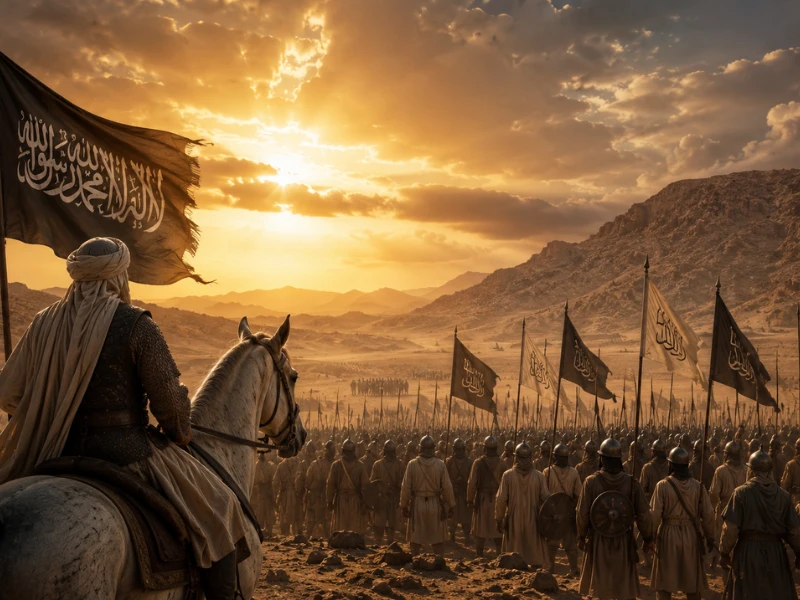
The forces engaged in the Battle of Badr were strikingly unequal in terms of numbers, armor, and weaponry. The Muslim army consisted of approximately 313 men, including both the Emigrants (Muhajirun) and the Helpers (Ansar). They possessed only two horses, 70 camels, and basic body armor.
In contrast, the Quraysh army numbered over 1,000 battle-hardened warriors equipped with 100 horses, hundreds of armored suits, and extensive supplies. Students exploring an Islamic History Course learn that despite this severe disparity, the unity, spiritual conviction, and trust in Allah SWT among the Muslim companions created an unbreakable bond that money and weapons could never buy.
The Importance of Badr in Islamic History
The Battle of Badr significance cannot be overstated. Prior to Badr, the Muslim community was viewed by neighboring tribes as a vulnerable group of refugees. A defeat at Badr could have resulted in the total annihilation of the young Islamic state.
Through the Battle of Badr, Allah SWT elevated the status of the believers across Arabia. The victory proved that divine support accompanies those who stand firmly upon truth. For families wanting to understand the theological dimensions of divine decree and trust (Tawakkul) demonstrated at Badr, taking an Islamic Creed Course provides deep spiritual clarity.
What Was the Outcome of the Battle of Badr?
When asking who won the Battle of Badr, the historical record is absolute: the Muslims achieved a decisive and miraculous victory. Despite being outnumbered three to one, the Muslim forces routed the Makkan army within a matter of hours.
The Battle of Badr outcome included the deaths of prominent Quraysh leaders who had persecuted Muslims for years, including Abu Jahl. Around 70 Makkan warriors were killed, and another 70 were taken as prisoners of war, while only 14 Muslim soldiers achieved martyrdom. To explore detailed prophetic traditions surrounding these events, adult learners can Learn Hadith Online with qualified mentors.
Why Is the Battle of Badr Important in Islam?
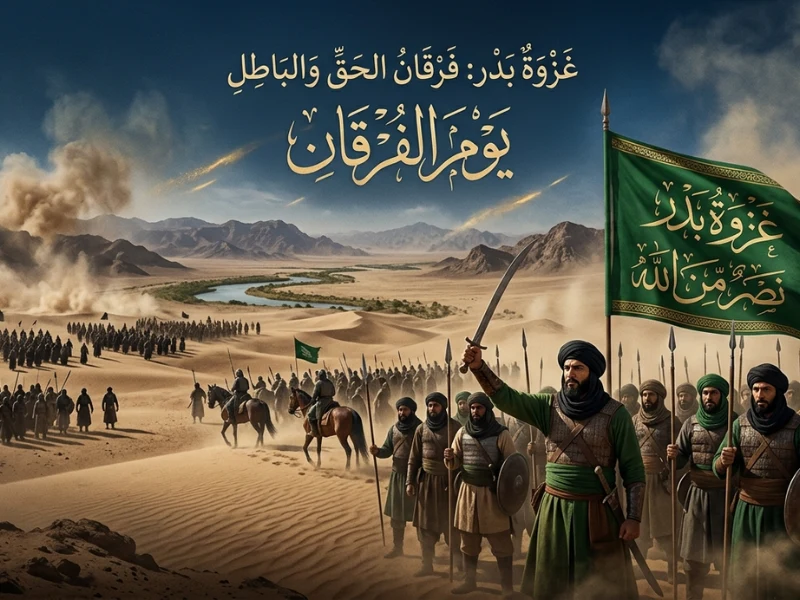
In the Holy Quran, Allah SWT refers to the day of the Battle of Badr as Yawm al-Furqan (The Day of Criterion), the day that separated truth from falsehood. The battle established that victory comes from faith, unity, and divine aid rather than material superiority.
Furthermore, the companions who fought at the Battle of Badr hold the highest spiritual rank among all Muslims. If you want to understand how Quranic verses were revealed during these critical events, enrolling in Quran Tafsir Online illuminates the context of Surah Al-Anfal and Surah Ali ‘Imran.
What Can Muslims Learn from the Battle of Badr?
The practical lessons from the Battle of Badr remain deeply relevant for modern believers facing personal, moral, or societal challenges. Here are three core lessons extracted from this historic victory:
- Reliance on Allah SWT (Tawakkul): True victory comes from divine grace when effort is coupled with sincere supplication (Dua).
- Consultation and Shura: Prophet Muhammad ﷺ actively consulted his companions regarding military tactics, demonstrating humility and collective leadership.
- Mercy and Justice: The humane treatment of prisoners of war established unprecedented standards for international combat ethics.
To help your children internalize these noble values, enrolling them in Islamic Classes for Kids fosters a deep love for Islamic heritage early in life.
10 Important Facts About the Battle of Badr
Here is a detailed breakdown of 10 essential facts detailing the timeline, strategy, and events of the Battle of Badr.
The Date and Location
The battle took place on Friday, the 17th of Ramadan, 2 AH, near the wells of Badr, located approximately 80 miles southwest of Madinah.
The Muslims and Quraysh
The Muslim army numbered around 313 men facing a Makkan force of more than 1,000 soldiers.
The Events Before the Battle
Prophet Muhammad ﷺ initially set out to intercept a Makkan trade caravan to recover stolen assets, not expecting a full-scale military conflict.
The Role of Prophet Muhammad ﷺ
The Prophet ﷺ spent the night before the Battle of Badr in intense supplication, begging Allah SWT for victory and guidance.
The Small Number of Muslim Fighters
The Muslims were vastly ill-equipped, sharing camels in turns and lacking professional armor, yet their morale remained exceptionally high.
The Major Events of the Battle
The battle began with traditional single combats, where Muslim champions including Ali ibn Abi Talib, Hamza ibn Abdul-Muttalib, and Ubaydah ibn al-Harith defeated Quraysh leaders.
The Muslim Victory
Allah SWT sent down thousands of angels to reinforce the Muslim army, striking terror into the hearts of the aggressors and securing a swift victory.
The Martyrs of Badr
Fourteen Muslims achieved martyrdom during the Battle of Badr, six from the Emigrants (Muhajirun) and eight from the Helpers (Ansar).
The Prisoners of War
Prisoners were treated with unprecedented kindness; those who could read were offered freedom if they taught ten Muslim children how to read and write.
The Lasting Legacy of Badr
The victory solidified Madinah as a formidable sovereign state and marked the beginning of a new era for Islam.
Our interactive classrooms feature live One-on-One Islamic Classes led by Certified Islamic Teachers who speak fluent English and excel at making classical knowledge engaging. From introductory tracks in an Islamic Studies Course to specialized history courses, Iman School provides complete scheduling flexibility and personalized attention.
Take the step today to connect your family with their sacred heritage. Visit our official platform to claim your zero-obligation Free Trial Islamic Class, and start a rewarding educational journey with Iman School.
FAQ About the Battle of Badr
When was the Battle of Badr?
The Battle of Badr took place on the 17th of Ramadan in the 2nd year of Hijrah (March 624 CE).
Where did the Battle of Badr take place?
It took place near the water wells of Badr, situated southwest of the illuminated city of Madinah.
Why did the Battle of Badr happen?
The conflict arose after Muslims sought to intercept a Makkan trade caravan to reclaim wealth confiscated during their forced migration, leading the Quraysh to send an invading army.
Who won the Battle of Badr?
The Muslim forces won a decisive victory against the Quraysh army against extraordinary odds.
How many Muslims fought at Badr?
Approximately 313 Muslim companions fought in the battle.
How many Quraysh fought at Badr?
The Quraysh force consisted of over 1,000 well-equipped warriors.
What happened after the Battle of Badr?
The victory established Madinah’s political authority, boosted Muslim morale, and weakened Makkan economic influence in the region.
Why is the Battle of Badr important?
It was the first decisive victory for Islam, referred to in the Quran as the “Day of Criterion” between truth and falsehood.
What lessons can Muslims learn from Badr?
Key lessons include total trust in Allah SWT, strategic planning, mutual consultation, and treating captives with mercy.
Learn Islamic History with Qualified Teachers at Iman School: The Best Online Islamic Learning Academy
Studying the pivotal moments of Islamic history like the Battle of Badr builds unwavering faith, character, and identity in both adults and youth. Reading articles provides a great foundation, but diving into structured historical studies under certified guidance transforms abstract historical facts into actionable life lessons.
At Iman School, we offer comprehensive programs in Online Islamic Studies designed specifically for Western families. Whether you want your family to Learn Seerah Online, explore jurisprudence through Fiqh for Beginners, or enroll in dedicated Islamic Classes for Adults, our modern platform brings traditional scholarship directly into your home.