 -by
-by Instilling authentic Islamic Manners for Kids is the greatest gift a parent can provide to ensure their children thrive morally in today’s world. For families raising Muslim children in Western societies, cultivating a strong prophetic character requires consistent, intentional effort. At Iman School, we offer engaging digital programs designed to support you in anchoring your child’s identity beautifully.
What Are Islamic Manners for Kids?
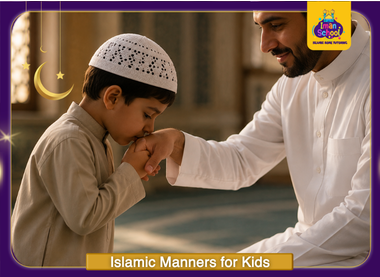
When we explore the concept of Islamic Manners for Kids, we are looking at Adab and Akhlaq, the foundational system of manners, etiquette, and moral behavior taught by the Prophet Muhammad ﷺ. These are not merely social expectations or soft skills; they are an essential component of a Muslim’s faith (Iman).
Teaching islamic manners for kids involves training young hearts to act with kindness, honesty, modesty, and deep respect in every single interaction.
Introducing structured good manners in islam for kids ensures that children understand that their faith is an active, living practice.
It connects their daily actions, such as how they speak to friends or how they sit at the dining table, directly to their love for Allah. By focusing on islamic behavior for kids, parents can help their children transform ordinary, routine habits into beautiful acts of worship that earn massive spiritual rewards.
Why Is Teaching Adab Important in Islam?
In the Islamic tradition, acquiring Adab (right conduct) has always taken priority over accumulating dry academic facts. The Prophet Muhammad ﷺ explicitly stated that he was sent solely to perfect good character.
Therefore, prioritizing teaching adab to children is a fundamental obligation for every household. Without proper manners, extensive knowledge of Arabic or memorized chapters loses its practical brilliance and spiritual impact.
Residing in modern Western nations presents unique social challenges for the younger generation. Actively implementing islamic etiquette for children helps your kids build a reliable inner compass, shielding them from peer pressure and negative media influences.
By focusing heavily on teaching respect in islam, you give your children the confidence to navigate diverse school and social settings while proudly maintaining their faith.
How Good Manners Shape a Child’s Character
The habits a child internalizes during their early formative years will dictate their behavior as teenagers and adults. Focusing on continuous islamic character building for kids reshapes how children view their role within the family unit and the wider global community. It shifts their perspective from a self-centered mindset to one rooted in empathy, responsibility, and prophetic grace.
When parents actively promote core islamic values for children, they notice a profound transformation in how their kids handle emotions, conflicts, and challenges. Good manners foster emotional intelligence, resilience, and patience.
This steady moral growth forms the bedrock of successful muslim parenting tips, ensuring that children grow into balanced, trustworthy citizens who represent the true beauty of Islam to the world.
Read Also: Islamic Crafts for Kids
10 Essential Islamic Manners Every Child Should Learn
1- Respecting Parents
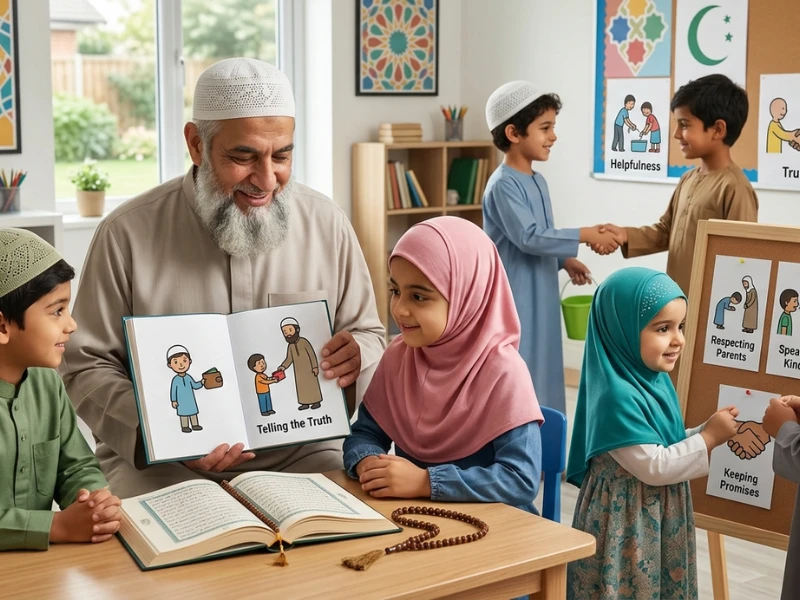
The Quran elevates the duty of respecting parents right next to the worship of Allah Himself. Children must learn to speak to their parents with soft tones, avoid rolling their eyes, and rush to help them with household chores. Emphasizing this vital component of Islamic Manners for Kids builds a peaceful, loving home environment where parental authority is deeply honored and protected.
2- Speaking Kindly to Others
Our words have immense power, and the Prophet ﷺ taught us that a good word is a form of continuous charity. Children should practice using polite phrases like Jazak Allah Khair (May Allah reward you with goodness) and As-Salamu Alaykum (Peace be upon you). Training your kids in this aspect of islamic behavior for kids ensures their speech remains clean, gentle, and welcoming.
3- Telling the Truth
Honesty (Sidq) is the foundational pillar of an Islamic identity. Children must understand that telling the truth is non-negotiable, even if they have made a mistake and fear getting into trouble. Teaching good manners in islam for kids means showing them that honesty brings peace and divine protection, while deception leads to long-term regret and a loss of trust.
4- Showing Respect to Elders
Prophetic etiquette dictates that we must always honor our elders, whether they are grandparents, teachers, or older neighbors. Children should learn to offer their seats, let elders speak first, and greet them with warmth. This crucial lesson in teaching respect in islam fosters deep community bonds and keeps the household aligned with traditional Islamic values.
5- Practicing Good Manners at the Table
Eating is a spiritual activity that begins by saying Bismillah (In the name of Allah) and ends with Alhamdulillah (Praise be to Allah). Teach your kids to eat with their right hand, take food from what is directly in front of them, and avoid criticizing meals. These simple steps of islamic etiquette for children turn everyday family dinners into blessed, mindful experiences.
Learn More: Islamic Summer Activities for Kids
6- Being Helpful and Generous
Islam encourages children to look out for the needs of others rather than focusing solely on themselves. Encourage your kids to share their toys willingly, help clear the table, and donate a portion of their pocket money to charity. These practical actions plant the seeds of empathy, ensuring that generosity becomes a permanent part of their character.
7- Keeping Promises and Trust
A true Muslim is recognized by their absolute reliability. When your child makes a promise to a friend or sibling, they must understand the importance of keeping it. Instilling this element of adab in islam for children at an early age builds personal integrity, helping them grow into responsible, trustworthy individuals who value their commitments.
8- Asking Permission Before Entering
Privacy is a fundamental right highlighted clearly in Islamic jurisprudence. Children must learn to knock gently and ask for permission before entering their parents’ or siblings’ rooms, especially during designated resting hours. Practicing this specific form of Islamic Manners for Kids instills a deep respect for personal boundaries and household order.
9- Maintaining Cleanliness and Personal Hygiene
The Prophet ﷺ taught us that cleanliness is half of faith. Children should learn the habit of making wudu correctly, brushing their teeth regularly, and keeping their bedrooms organized. Linking cleanliness directly to Islamic Manners for Kids helps children realize that taking care of their bodies and surroundings is a beautiful religious duty.
10- Showing Kindness to Neighbors and Friends
Our faith places an immense emphasis on treating neighbors and peers with absolute kindness, regardless of their religious backgrounds. Encourage your kids to smile, share treats, and support friends when they are feeling down. This practical expression of islamic values for children makes them a source of safety and love within their local Western neighborhoods.
Discover More: Friday Muslim Routine
Common Mistakes Parents Make When Teaching Adab
Even with the best intentions, it is easy to fall into counterproductive patterns when trying to instill Islamic Manners for Kids. Avoiding these ten common pitfalls will make your character-building efforts much more successful:
- Prioritizing academic metrics over character, like focusing solely on school grades or fast Quran memorization while ignoring daily behavioral slips.
- Yelling and screaming to enforce respect, forgetting that screaming at a child to teach them respect contradicts the very essence of prophetic gentleness.
- Failing to model the manners personally, expecting children to speak softly or stay off screens while parents display aggressive behavior or device addiction.
- Inconsistency in applying family rules, like punishing a behavior one day and completely ignoring the exact same mistake the following week.
- Using fear and shame as primary motivators, making children feel worthless or broken after a mistake rather than guiding them toward sincere repentance (Tawbah).
- Expecting perfection instantly, forgetting that building deep, long-lasting prophetic habits requires years of patient repetition and gentle correction.
- Comparing sibling behavior publicly by saying “Why can’t you be well-mannered like your brother?” which breeds deep resentment and destroys confidence.
- Neglecting the spiritual connection and teaching manners as hollow cultural rules rather than linking them directly to pleasing Allah.
- Overlooking minor misbehaviors early on, allowing small acts of disrespect or lying to slide, assuming the child will simply outgrow them naturally.
- Isolating the child from good peer groups and failing to surround your children with righteous friends and mentors who reinforce identical values.
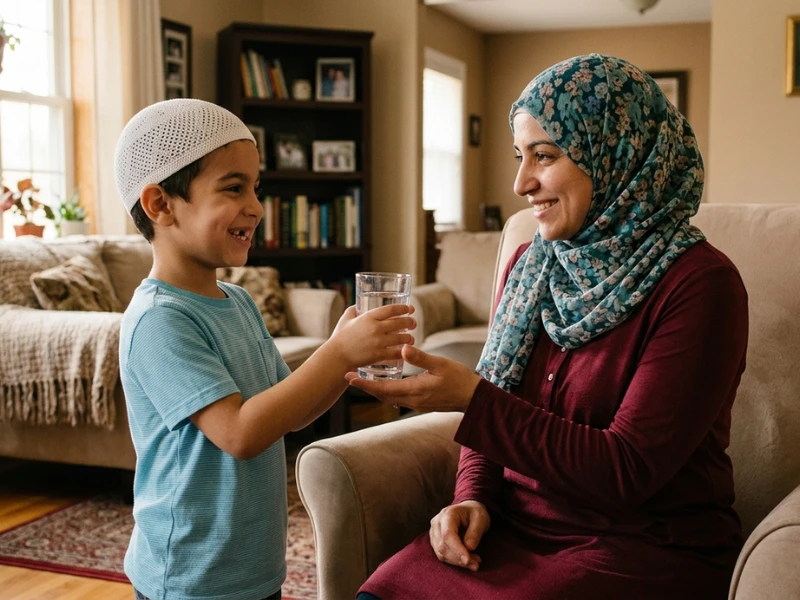
How Online Islamic Classes Can Reinforce Good Character
While daily parenting forms the foundational canvas, partnering with an elite virtual academy provides the structured enforcement required for lifelong retention. Relying on professional guidance ensures that your lessons on Islamic Manners for Kids are validated by external mentors whom your children look up to and respect.
At Iman School, we integrate character development into every single lesson. Here are ten distinct ways our structured programs actively reinforce beautiful manners in our young students:
- Bilingual Scholars as Role Models: Our teachers actively embody prophetic patience and gentleness during live sessions.
- Direct Validation of Good Manners: Instructors reward children with points and praise when they display proper greeting and listening etiquettes.
- Structured Hadith Studies: We analyze clear prophetic narrations that highlight honesty, kindness, and respecting parents.
- Safe 1-on-1 Virtual Spaces: Personalized attention allows tutors to address specific behavioral challenges gently and privately.
- Accountability and Consistency: Attending scheduled classes teaches children the essential value of keeping promises and respecting time.
- Interactive Behavioral Tracking: We collaborate directly with parents to monitor how students practice their lessons at home.
- Contextualized Lessons for Western Youth: We discuss how to maintain integrity and Islamic values in Western schools.
- Encouraging Practical Application: Homework assignments frequently focus on executing real good deeds for family members.
- Gentle, Constructive Correction: Mistakes in reading or behavior are handled with immense empathy, building confidence rather than fear.
- A Lifelong Spiritual Bond: We help children develop a genuine, deep-seated love for Islamic education that outlasts their vacation months.
Our comprehensive curriculum blends elite Quran and Islamic Studies for Kids, guiding your family step-by-step from foundational reading rules to deep moral execution. When you trust your children with our Expert Islamic Teachers, you are investing in a future defined by confidence, integrity, and faith.
Take the first step toward transforming your child’s moral development today by registering on our platform to secure your Free Trial Quran Class.
FAQ About Islamic Manners for Kids
How can parents teach Islamic manners to children?
The most effective way to teach Islamic Manners for Kids is through personal example, consistent daily tracking, reading prophetic stories, and enrolling them in structured classes that reinforce character.
What does Islam teach about good character?
Islam teaches that good character (Akhlaq) is the heaviest weight on a believer’s scale on the Day of Judgment. It is an active reflection of a person’s faith and love for the Prophet Muhammad ﷺ.
At what age should children learn Adab?
Children should begin absorbing basic manners, such as saying Bismillah and greeting family members gently, as early as age 3 or 4 through simple observation and tracking.
What are the most important manners children should learn?
The most critical manners include showing deep respect to parents, practicing absolute honesty, speaking kindly, maintaining cleanliness, and showing empathy to friends and neighbors.
Why are manners important in Islamic education?
Manners in Islamic education are the container that preserves sacred knowledge. Without Adab, learning the basics loses its spiritual purpose and practical value.
How can kids practice Islamic manners every day?
They can practice by starting their meals with gratitude, keeping their rooms clean, telling the truth even when it is difficult, and helping their parents without complaining.
Iman School: The Best Online Islamic Education Academy for Kids
Nurturing an authentic, deeply rooted prophetic character within your children is a monumental responsibility that shapes their ultimate success in this life and the hereafter. To ensure your daily parenting efforts lead to lasting moral stability, you need to anchor their education within a premier academy that places character refinement on equal footing with academic excellence. At Iman School, we stand out globally as the absolute ultimate destination for families seeking comprehensive, premium digital guidance from home.
Our specialized Islamic Character Building Programs are meticulously crafted to engage modern minds living in Western countries. We avoid standard, rigid lecturing methods, focusing instead on delivering vibrant, interactive Online Islamic Classes for Children that make learning truly enjoyable. We hand-pick our native Arabic scholars for their complete English fluency and deep training in child pedagogy, ensuring they serve as inspiring, compassionate mentors for your household.