 -by
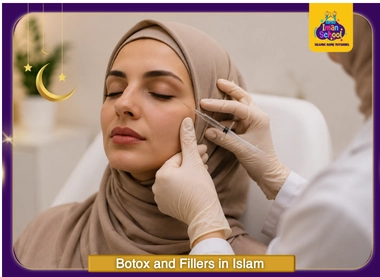
-by Understanding the ruling on Botox and Fillers in Islam is a pressing topic for modern Muslims navigating cosmetic treatments. Examining Botox and Fillers in Islam helps clarify what is permissible versus what alters Allah’s creation. At Iman School, our scholars provide clear guidance on contemporary Fiqh through interactive online learning.
Are Botox and Fillers Halal or Haram in Islam?
When asking whether botox and fillers in islam are permissible or forbidden, the short answer is: it depends entirely on the purpose, the materials used, and the medical safety of the procedure. Contemporary scholars distinguish clearly between therapeutic medical treatments and unnecessary cosmetic modifications.
The botox halal or haram debate boils down to intent (Niyyah). If an injection is used to treat a recognized medical condition, such as chronic migraines, muscle spasms, or severe facial asymmetry caused by injury, it is generally considered halal.
Conversely, when examining fillers halal or haram for purely aesthetic enhancements that alter natural human features out of vanity, scholars lean toward prohibition. Analyzing the botox islamic ruling requires looking at specific guidelines surrounding harm, ingredients, and the principle of avoiding permanent alterations to Allah’s creation.
The Islamic Bioethics Framework (Maqasid al-Shari’ah)
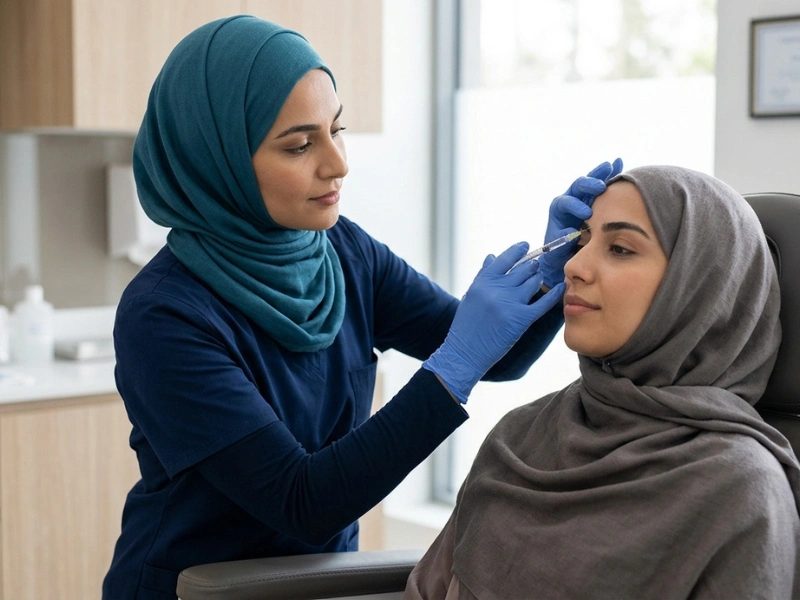
When evaluating Botox and Fillers in Islam, scholars rely on the higher objectives of Islamic law (Maqasid al-Shari’ah). The primary objective here is the Preservation of Health and Life (Hifz al-Nafs). If a procedure removes genuine physical or psychological harm, it is encouraged.
However, the objective of Preserving Human Dignity (Hifz al-Karāmah) prohibits altering the body out of mere vanity or dissatisfaction with Allah’s natural design. This framework ensures that every medical decision aligns with divine wisdom.
Learn More: Body Piercings Islamic Ruling
Botox and Fillers in Islam: 10 Key Points
To navigate the complex discussions surrounding Botox and Fillers in Islam, here are 10 key legal and ethical factors derived from classical and modern Islamic jurisprudence:
1- Botox for Medical Treatment
When Botox is administered as a therapeutic medical treatment, scholars universally agree on its permissibility. Conditions like severe hyperhidrosis (excessive sweating), cervical dystonia, or chronic facial ticks fall under the Islamic legal maxim: “Harm must be removed.” In these cases, using Botox and Fillers in Islam for health restoration is fully justified.
2- Botox for Cosmetic Purposes
Using Botox purely for cosmetic smoothing of minor aging lines is a major point of discussion. Many scholars argue that injecting substances to paralyze muscles solely for vanity risks violating the Quranic prohibition against changing the creation of Allah SWT (Tagheyir Khalq Allah). This perspective forms a central part of the overall fillers islamic ruling.
Read Also: Laser Hair Removal Islamic Ruling
3- Fillers for Medical Reasons
Reconstructive fillers used to restore volume lost due to accidents, surgical procedures, or congenital deformities are widely permitted. When evaluating cosmetic injections in islam, restoring a organ or feature to its natural baseline is seen as healing rather than unwarranted alteration.
4- Fillers for Cosmetic Enhancement
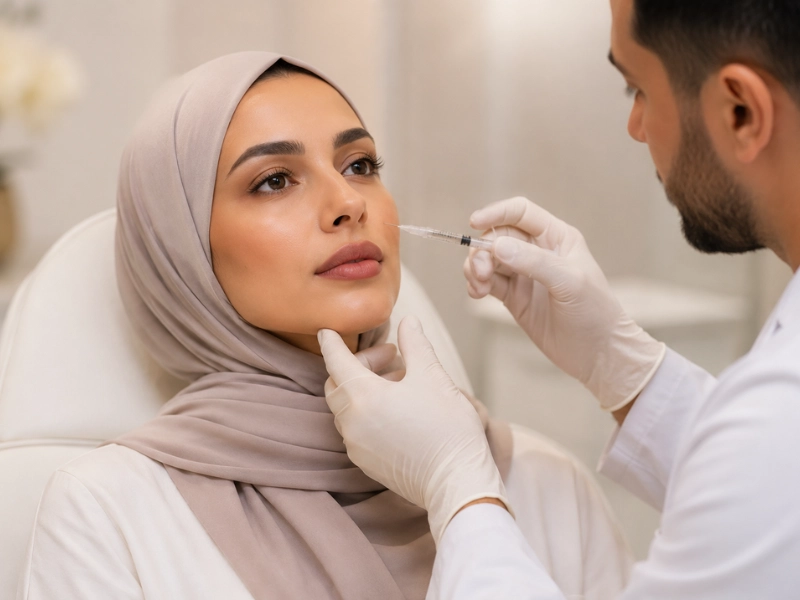
Applying lip fillers, cheek volumizers, or jawline sculptors simply to follow beauty trends or alter normal features falls under severe scholarly criticism. Most contemporary jurists consider purely aesthetic cosmetic surgery in islam impermissible if it seeks to modify a healthy, normal human appearance.
5- Correcting a Physical Defect
Islamic jurisprudence makes a clear exception for correcting genuine physical defects (Ayb). If a birth defect, burn, or traumatic injury causes emotional distress or social harm, using Botox and Fillers in Islam to restore normal human appearance is considered permissible under Islamic law.
6- Changing Normal Appearance
A foundational rule in islamic ruling on cosmetic procedures is that altering an otherwise healthy appearance purely to achieve artificial perfection is forbidden. Islam teaches contentment with the natural form Allah SWT designed for each individual.
Resolutions from Major Islamic Fiqh Councils
To provide absolute clarity on Botox and Fillers in Islam, it is vital to reference established legal bodies. The International Islamic Fiqh Academy (IIFA), affiliated with the Organization of Islamic Cooperation (OIC), has issued clear resolutions on cosmetic surgery.
The Academy ruled that cosmetic operations are permissible only to remove a congenital or acquired defect that causes physical or psychological harm. Conversely, operations performed solely for beautification (Tajmeel) or to change healthy features are strictly prohibited, as they fall under the forbidden alteration of Allah’s creation.
Discover More: Why can’t Muslim women pray on their period
7- Temporary vs. Permanent Changes
While temporary injections eventually dissolve, the temporary nature alone does not make an impermissible act halal. Scholars studying Botox and Fillers in Islam emphasize that even temporary modifications are frowned upon or prohibited if the underlying intent is unnecessary vanity.
8- The Ingredients Used in Injections
Muslims must ensure that all substances injected into their bodies are spiritually pure (Tahiyyib) and free from forbidden components, such as porcine derivatives or non-halal animal proteins. Verifying ingredient safety is essential when studying Botox and Fillers in Islam.
Read Also: Does a Woman Have to Wear Hijab When Reading Quran
9- Potential Harm and Medical Safety
The Prophet Muhammad ﷺ stated: “There should be neither harming nor reciprocating harm.” If cosmetic injections carry a risk of severe side effects, facial necrosis, or long-term nerve damage, the procedure becomes prohibited due to health hazards.
10- The Importance of Consulting a Qualified Islamic Scholar
Because individual health circumstances vary, Muslims seeking procedures involving Botox and Fillers in Islam should consult a knowledgeable scholar. Enrolling in a course like Fiqh for Beginners helps individuals evaluate personal situations through proper legal frameworks.
Through our specialized programs, you can Learn Fiqh Online, explore an Islamic Creed Course, or build a strong foundational knowledge in Islamic ethics. We offer flexible scheduling, one-on-one virtual instruction, and engaging curricula for both adults and children. Take charge of your Islamic education today.
What Is the Difference Between Treatment and Cosmetic Enhancement?
The core distinction regarding Botox and Fillers in Islam rests on the line between treatment (Ilaj) and cosmetic enhancement (Tahseen):
- Treatment (Tadawi): Refers to medical interventions designed to cure disease, alleviate physical pain, or restore damaged tissue back to its normal state. Removing harm is inherently encouraged in Islamic tradition.
- Cosmetic Enhancement (Tazyeen): Refers to unnecessary procedures performed on a healthy body to alter normal features in pursuit of idealized beauty standards.
Understanding this vital distinction is a cornerstone of modern jurisprudence. Students taking an Islamic Studies Course learn how classical legal maxims apply directly to modern medical ethics, allowing them to navigate contemporary dilemmas with clarity and confidence.
Psychological Well-being vs. Body Dysmorphia
A nuanced aspect of the Islamic ruling on cosmetic procedures is addressing the root cause of the desire for change. Islam encourages believers to find peace and contentment (Rida) with Allah’s decree.
If a person suffers from Body Dysmorphic Disorder (BDD) or severe psychological distress due to a perceived flaw, Islamic guidance prioritizes psychological counseling and spiritual healing (Tazkiyat al-Nafs) alongside, or even before, physical intervention. True beauty in Islam is rooted in piety (Taqwa) and good character, which no injection can replicate.
Prophetic Alternatives for Skin Care and Beauty
While modern medicine offers quick fixes, Islam provides a holistic, natural approach to skin health and beauty.
The Prophet Muhammad ﷺ encouraged the use of natural, pure substances for skincare and hygiene. Practices such as using olive oil (Zayt), black seed oil (Habbah Sawda’), and maintaining rigorous cleanliness (Taharah) are foundational to Islamic skincare.
For those seeking to enhance their appearance, focusing on these halal skincare routines and a healthy diet aligns perfectly with the Sunnah, offering a spiritually rewarding alternative to invasive cosmetic injections in Islam.
FAQ About Botox and Fillers in Islam
Is Botox haram in Islam?
Understanding whether is botox haram in islam depends on its purpose. If used for medical treatment (like migraines or muscle spasms), it is halal. If used purely for cosmetic vanity to alter normal aging, many scholars consider it impermissible.
Is filler haram in Islam?
Regarding whether is filler haram in islam, fillers used for reconstructive medical purposes or defect correction are allowed. However, fillers used solely to enlarge lips or reshape normal facial features for beauty trends are generally considered haram.
Is Botox halal for medical treatment?
Yes, using Botox as a prescribed medical treatment for therapeutic conditions like muscle dystonia, severe sweating, or chronic pain is universally considered halal by Islamic scholars.
Are lip fillers haram in Islam?
Lip fillers injected purely to enlarge healthy, normal lips for cosmetic reasons are considered impermissible by the vast majority of contemporary scholars because they alter natural creation.
Is Botox allowed for wrinkles?
Using Botox for routine aging wrinkles is controversial. Most traditional scholars advise against it, viewing aging as a natural process that should not be artificially disguised through muscle-paralyzing injections.
Is cosmetic enhancement allowed in Islam?
Cosmetic procedures are allowed in Islam only when performed to correct genuine physical defects, injuries, or birth abnormalities. Unnecessary enhancements on healthy bodies are generally not permitted.
Learn Islamic Rulings with Qualified Teachers at Iman School
Navigating modern legal issues such as Botox and Fillers in Islam highlights how vital it is for every Muslim to understand the principles of Islamic jurisprudence (Fiqh). Having a solid grasp of sacred law empowers you to make informed, spiritually sound decisions in your personal and professional life.
When looking to deepen your understanding of Islamic law and ethics, Iman School provides top-tier Online Islamic Classes tailored specifically for Western students. Our virtual academy connects you directly with certified, English-fluent scholars who explain classical knowledge in an accessible, practical way.