 -by
-by Deciding to learn arabic to understand quran for beginners is a deeply beautiful and life-changing spiritual milestone. Reading a translation cannot match the power of experiencing the direct Word of Allah in its original tongue. At Iman School, our custom programs make it incredibly easy to learn arabic to understand quran for beginners today.
Why Learn Arabic to Understand the Quran?
When you make the intention to learn arabic to understand quran for beginners, you are opening a direct door to divine communication. For generations, translations have served as useful bridges, but they can never fully capture the deep eloquence, root-word miracles, and poetic depth of the original text. Stepping up to learn arabic to understand quran for beginners transforms your daily relationship with worship completely.
Here are 10 vital reasons why every Muslim should focus on this study:
- Experience the Pure Miracle: The Quran was revealed explicitly in Arabic; experiencing it in its true linguistic form lets you witness its structural miracle first-hand.
- Achieve Deep Focus in Prayer (Khushu): When you learn arabic to understand quran for beginners, your daily Salah shifts from routine physical movements into an intimate, conscious conversation with Allah.
- Connect Without Middlemen: You no longer have to rely solely on translated footnotes to grasp the emotional and spiritual tone of a verse.
- Multiply Your Rewards: Navigating the linguistic nuances during your arabic language for quran study brings massive spiritual blessings for every single effort made.
- Understand Your Salah Completely: Beyond the Quran, this study helps you learn arabic to understand salah, making your remembrance phrases deeply meaningful.
- Unlock the Science of Tafsir: A robust baseline in Arabic allows you to access an arabic course for understanding tafsir and classical scholarship later on.
- Appreciate Root-Word Connections: Arabic words are linked by a beautiful three-letter root system that gives single words layers of deep meaning.
- Hear the Subtle Emotional Shifts: The specific grammatical structures in Arabic indicate immediately whether a verse carries glad tidings, warnings, or structural laws.
- Establish a Lifelong Daily Habit: A daily quranic arabic practice schedule protects your mind from daily anxiety and fills your home with spiritual light.
- Honor the Prophetic Legacy: The Prophet Muhammad ﷺ spoke Arabic, and loving the language is a beautiful way to connect with Islamic history and identity in the West.
The Spiritual Impact of Direct Connection
When you bypass translations and engage directly with the text, you experience a unique spiritual tranquility (Sakinah). Translations often struggle to convey the rhythmic beauty and emotional weight of the original Arabic. By choosing to Learn Arabic to Understand Quran, you unlock the ability to feel the verses as they were revealed, creating a deeper emotional bond with the Divine words during your daily worship.
Benefits of Learning Quranic Arabic for Beginners
Starting your journey to Learn Arabic to Understand Quran with a structured beginner guide to Quranic Arabic brings massive intellectual and personal benefits. You do not need to become a master of street slang or modern political news; focusing on the sacred text allows you to get straight to the point.
Here are 10 distinct benefits of entering a quran understanding course as a beginner:
- A Highly Focused Vocabulary: The Quran uses a specific set of words that repeat constantly; mastering them gives you massive comprehension fast.
- Accelerated Learning Curve: By focusing strictly on classical text rules, you can bypass casual dialects, making it an easy quranic arabic for beginners pathway.
- Enhanced Mental Sharpness: Studying classical arabic sentence structure for quran exercises your cognitive abilities and sharpens your memory retention.
- Deep Emotional Resonance: Hearing a verse recited live can move you to tears instantly because your mind decodes the divine meaning in real-time.
- True Independent Study: It builds the confidence needed to open any page of the Mushaf and gather general context without checking an English translation first.
- A Solid Foundation for Children: When parents learn arabic to understand quran for beginners, they naturally pass correct pronunciation and habits to their kids.
- Universal Connection to the Ummah: It links you directly to the universal language of global Islamic scholarship, brotherhood, and traditional heritage.
- Protection from Common Misconceptions: Understanding the true linguistic context protects your mind from skewed translations or modern misinterpretations.
- A Structured Daily Mindset: Following a quranic arabic learning plan brings immense discipline, organization, and spiritual balance to your week.
- Direct Access to Divine Wisdom: It fulfills the Quranic invitation: “We have revealed it as an Arabic Quran so that you may understand.” (Surah Yusuf).
Enroll in: Quran Recitation program
Difference Between Quranic Arabic and Modern Arabic
To learn arabic to understand quran for beginners successfully, you must understand exactly where to direct your focus. The Arabic language is broadly divided into two major spheres: Classical (Quranic) Arabic and Modern Standard Arabic (MSA), alongside various regional spoken dialects.
Quranic Arabic (Fusha Al-Turath)
Quranic Arabic is the timeless, classical form of the language used in the Holy Revelation and early Islamic literature. When you decide to Learn Arabic to Understand Quran, you are studying a vocabulary that has remained perfectly preserved for over 1,400 years. Its rules are highly structured, immutable, and intensely poetic. The focus here is strictly on textual comprehension, root-word variations, and classical grammar.
Modern Standard Arabic (MSA / Fusha Al-Asr)
Modern Standard Arabic is the direct evolution of Classical Arabic used today across the Arab world in newspapers, television broadcasts, novels, and official government speeches.
While it shares the same foundational grammar as Quranic Arabic, MSA includes modern vocabulary words (like “computer,” “politics,” or “airplane”) that do not exist in the Quran. Understanding this distinction is essential for anyone who wants to Learn Arabic to Understand Quran effectively.
| Quranic Arabic | Modern Standard Arabic |
| Focuses on classical, sacred texts. | Used in modern media, news, and official modern writing. |
| Unchanged vocabulary for 1400+ years. | Continually evolving with new technological and modern terms. |
| Rooted heavily in deep, poetic eloquence and metaphor. | Streamlined for quick, dailycontemporary communication. |
At Iman School, our specialized learn arabic for quran beginners tracks ensure you do not waste valuable time studying modern political jargon or street slang. We place your attention entirely on the classical vocabulary and structural rules needed to decode the holy text with ease.
Why You Don’t Need to Learn Dialects?
A common misconception is that one must learn a spoken dialect (like Egyptian or Levantine) to understand the Quran. This is incorrect. Quranic Arabic for beginners focuses exclusively on Fusha (Classical Arabic), which is standardized and unchanged.
Learning dialects would actually distract from your primary goal. At Iman School, we streamline your path by focusing strictly on the classical rules needed to decode the Holy Text, ensuring you Learn Arabic to Understand Quran efficiently without unnecessary linguistic baggage.
How Beginners Can Start Learning Quranic Arabic
Starting out from scratch can feel daunting, but following a logical, step-by-step methodology makes the entire process incredibly smooth. If you approach the language systematically, your comprehension will compound rapidly, especially when your goal is to Learn Arabic to Understand Quran with clarity and confidence.
Here are 10 structural steps to start your learning journey correctly:
- Correct Your Intention (Niyyah): Dedicate this educational effort purely for the sake of Allah to unlock deep spiritual blessings.
- Master the Alphabet Phonetically: Avoid using English transliterations; learn the true sounds of the Arabic letters immediately.
- Study Root Word Mechanics: Learn how the three-letter root system works to decode multiple words simultaneously.
- Focus on High-Frequency Vocabulary: Prioritize learning the specific words that appear hundreds of times across various Surahs.
- Learn Basic Pronouns: Master the core pronouns (He, She, You, We, I) to identify who is speaking in a verse.
- Analyze Short Surahs First: Apply your quranic arabic grammar basics to short chapters like Surah Al-Ikhlas or Surah Al-Asr.
- Listen to Quality Recitations Daily: Pair your studies with arabic listening practice for quran to train your ear.
- Use Color-Coded Texts: Use visual aids that highlight nouns, verbs, and particles separately to train your eyes.
- Set a Consistent Routine: Dedicate 20 minutes every single day rather than studying for a massive block once a week.
- Partner with an Expert Academy: Enroll in online quranic arabic classes at Iman School for structured, certified guidance.

Learning the Arabic Alphabet for Quran Reading
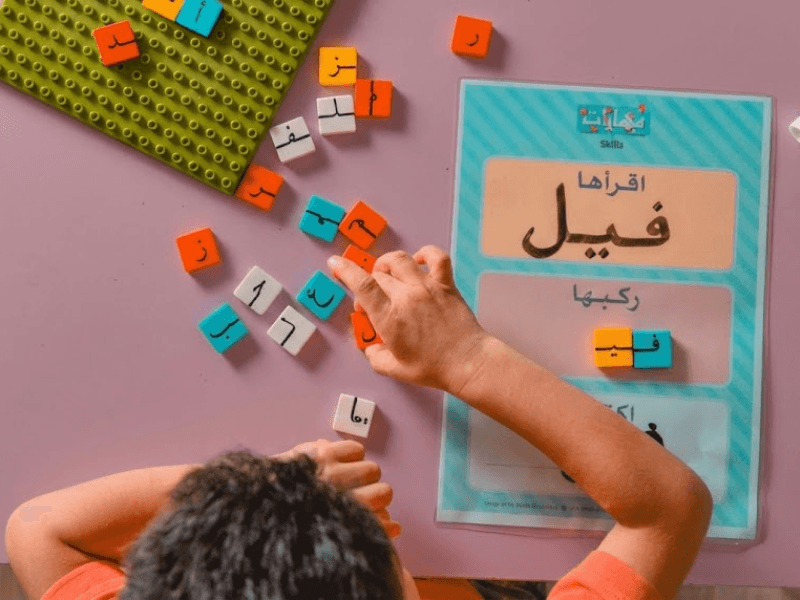
The absolute starting block for any Arabic alphabet learning program is mastering the letters in their pure phonetic forms. Arabic is a phonetic language; every symbol correlates directly to a specific physical location in the throat or mouth. This foundational step is crucial if you truly want to Learn Arabic to Understand Quran and pronounce verses correctly.
To learn the alphabet effectively, you must understand that letters change their visual appearance depending on their position within a word. Let us take an interactive look at a brilliant three-letter connection technique using the root letters ك – ت – ب (Kaf, Ta, Ba), which relate to writing:
- Isolated Forms: Seen alone, the letters are written as ك (Kaf), ت (Ta), and ب (Ba).
- Connecting the Word: When joined together to form the verb “He wrote” (Kataba), they transform visually:
- The ك changes into its initial form: كـ
- The ت changes into its medial form: ـتـ
- The ب retains its final shape: ـب
- Combined perfectly, it reads: كتب
By practicing this exact layout with your tutor at Iman School, your eyes learn to scan words as fluid shapes rather than individual blocks. This physical training is the core of successful arabic reading for quran preparation.
Basic Arabic Grammar Needed to Understand the Quran
Many beginners quit early because they are introduced to complex linguistic rules too quickly. To learn arabic to understand quran for beginners, you only need a solid grasp of the core foundational structures.
Here are the 10 most critical grammar basics to focus on first:
- The Three Parts of Speech: Understand that every single word in Arabic is either a Noun (Ism), a Verb (Fi’l), or a Particle (Harf).
- The Root System (Wazn): Most words are derived from a 3-letter core root that carries the primary theme.
- Past Tense Verbs (Fi’l Madi): Learning how actions that already occurred are structured in text.
- Present/Future Tense Verbs (Fi’l Mudari): Recognizing ongoing or upcoming actions within a verse.
- Gender Agreement: Arabic nouns and verbs are strictly masculine or feminine; learning to spot the markers (like the Ta Marbutah).
- Singular, Dual, and Plural: Unlike English, Arabic has a specific grammatical form for exactly two people or things (Muthanna).
- The Definite Article (Al): Recognizing how adding “ال” turns a general noun into a specific, definite noun.
- Prepositions (Huroof Al-Jarr): Small words like Min (from) and Ila (to) that change the vowel endings of the words that follow them.
- Possessive Phrases (Idafah): Understanding how two nouns are linked to show ownership (e.g., Kitabullah – The Book of Allah).
- Basic Vowel Endings (I’rab): Understanding why a word ending changes from a ‘u’ sound to an ‘a’ or ‘i’ sound based on its role in the sentence.
Understanding Sentence Structure (Jumla)
Beyond individual words, understanding how sentences are constructed is vital. In Arabic, sentences are generally divided into two types:
- Nominal Sentence (Jumla Ismiyyah): Starts with a noun, indicating stability or state of being.
- Verbal Sentence (Jumla Fi’liyyah): Starts with a verb, indicating action or occurrence.
Recognizing these structures helps you quickly grasp the main message of a verse. This structural awareness is a key component when you Learn Arabic to Understand Quran, allowing you to see the flow of meaning rather than just isolated words.
Most Common Quranic Arabic Words and Phrases
One of the most encouraging secrets of the Quran is that roughly 80% of its total word count is made up of a small pool of high-frequency words. Mastering a basic Quranic vocabulary list can dramatically accelerate your ability to Learn Arabic to Understand Quran and understand verses with greater ease and reflection.
Here is an essential selection of high-frequency terms to learn immediately:
20 Core Quranic Arabic Words
- الله (Allah) — The One True God
- رب (Rabb) — Lord, Sustainer
- كتاب (Kitab) — Book
- رسول (Rasool) — Messenger
- نبي (Nabi) — Prophet
- أرض (Ard) — Earth
- سماء (Samaa) — Sky / Heaven
- قلب (Qalb) — Heart
- يوم (Yawm) — Day
- ناس (Naas) — Mankind / People
- عليم (Aleem) — All-Knowing
- غفور (Ghafoor) — Oft-Forgiving
- رحيم (Raheem) — Most Merciful
- صراط (Siraat) — Path
- حق (Haqq) — Truth
- نور (Noor) — Light
- خير (Khayr) — Good / Better
- أهل (Ahl) — Family / People of
- عبد (Abd) — Servant / Slave
- آية (Ayah) — Sign / Verse
15 Essential Quranic Arabic Phrases
- الحمد لله (Alhamdulillah) — All praise is due to Allah
- إن شاء الله (In sha Allah) — If Allah wills
- سبحان الله (Subhanallah) — Glory be to Allah
- جزاك الله خيرا (Jazakallahu Khayran) — May Allah reward you with goodness
- في سبيل الله (Fi Sabeelillah) — In the path of Allah
- بِسْمِ اللَّهِ (Bismillah) — In the name of Allah
- الله أكبر (Allahu Akbar) — Allah is the Greatest
- لا إله إلا الله (La ilaha illallah) — There is no deity worthy of worship except Allah
- أعوذ بالله (A’udhu billah) — I seek refuge in Allah
- عليه السلام (Alayhi s-salam) — Peace be upon him
- صلى الله عليه وسلم (Sallallahu alayhi wa sallam) — May Allah bless him and grant him peace
- يا أيها الذين آمنوا (Ya ayyuhalladhina amanu) — O you who have believed
- هدى للمتقين (Hudan lil-muttaqin) — A guidance for the God-fearing
- رحمة للعالمين (Rahmatan lil-alamin) — A mercy to the worlds
- يوم الدين (Yawm ad-Deen) — The Day of Judgment
How Tajweed Helps in Understanding Quranic Arabic
Many students view Tajweed simply as a set of rules for vocal beauty, but it is actually a vital key for those who want to Learn Arabic to Understand Quran correctly and deeply. When you learn Arabic with Tajweed, you ensure that the linguistic barriers between sound and meaning disappear entirely.
Tajweed acts as a protective system for the classical language. For instance, the rules of elongation (Madd) tell you exactly where emphasis lies, completely changing the grammatical weight of a sentence. If you pronounce a letter incorrectly by ignoring its proper characteristics, you do not just make an incorrect sound; you often transform the word into a completely different meaning.
This is why Tajweed is essential for anyone aiming to Learn Arabic to Understand Quran with accuracy and confidence.
At Iman School, we integrate phonetic precision directly into our grammar tracks, creating a highly comprehensive beginner experience for students who want to Learn Arabic to Understand Quran through a practical and structured approach.
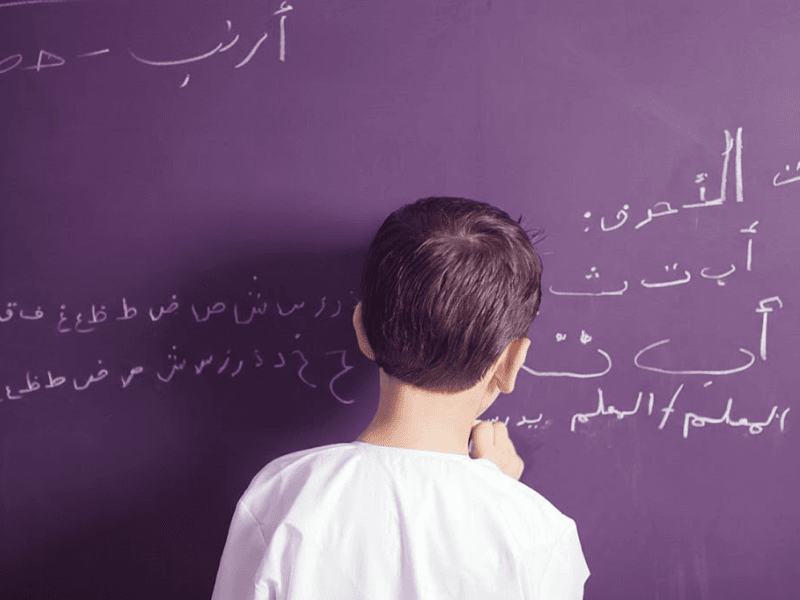
The Link Between Pronunciation and Meaning
Tajweed is not just about melodious recitation; it is about precision. A slight change in vowel length or letter characteristic can alter the meaning entirely.
For example, confusing a Dhad (ض) with a Za (ز) changes the word completely. Therefore, integrating Tajweed rules for Quran reading with your language studies ensures that your comprehension is built on accurate pronunciation.
This holistic approach ensures that when you Learn Arabic to Understand Quran, you are reciting and understanding it exactly as intended.
Best Methods to Learn Arabic for Quran Understanding
1- The Living Feedback Dynamic
The absolute best way to Learn Arabic to Understand Quran is through live, personal audio correction. Because classical Arabic relies heavily on subtle throat movements, learning from an app or a book alone cannot catch pronunciation mistakes. Working with a dedicated tutor ensures that your ears and tongue adapt perfectly to the sacred text while helping you Learn Arabic to Understand Quran with proper pronunciation and understanding.
2- The High-Frequency Vocabulary System
Instead of studying random words, this method focuses entirely on terms that repeat hundreds of times within the Mushaf. By mastering a small collection of core nouns and verbs, students can rapidly Learn Arabic to Understand Quran and unlock meaning across almost every page of the Quran with greater confidence.
3- The Reverse Verse Breakdown Method
This approach takes a short Surah that you already know by heart from your daily prayers and breaks it down word-by-word. By analyzing root structures and grammar rules in familiar verses, abstract concepts become easier to grasp. It is one of the most practical strategies to Learn Arabic to Understand Quran naturally and effectively.
4- Continuous Structural Exposure
Instead of memorizing endless translation lists, this method immerses you directly into the Arabic text from the very beginning. You practice identifying nouns, verbs, and prepositions visually within Quranic verses, helping your brain rapidly Learn Arabic to Understand Quran through continuous exposure and repetition.
5.-The Root Association Matrix
This method takes advantage of the structural beauty of Arabic by teaching vocabulary through three-letter roots. Once you understand that the root ع – ل – م relates to knowledge, your mind automatically connects words like Alim (scholar), Mu’allim (teacher), and Ilm (knowledge). This powerful linguistic system makes it much easier to Learn Arabic to Understand Quran and expand vocabulary in a logical, memorable way.
Online Resources and Courses for Quranic Arabic
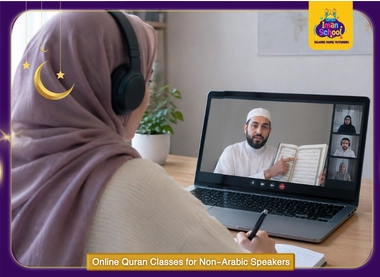
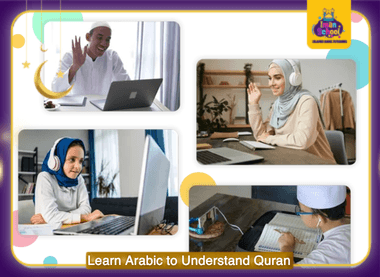
While the internet is full of static learning materials, an interactive live academy remains the premier choice for busy Western families. At Iman School, we provide a fully integrated digital ecosystem custom-built for learn arabic online for muslims tracks, offering structured guidance and personalized support for learners at all levels.
Our custom learning platform avoids outdated, boring textbooks, replacing them with dynamic whiteboards, visual color-coded slides, and real-time tracking dashboards. By avoiding generic language software and routing all your efforts through our structured, Ijazah-led quranic arabic course, you save valuable time and achieve authentic literacy without unnecessary confusion.
The Advantage of Live Interactive Learning
While apps and recorded videos offer convenience, they lack the critical element of immediate feedback. Language learning, especially for a phonetic-rich language like Arabic, requires correction in real-time.
Live online Arabic classes allow instructors to correct your pronunciation and grammar instantly, preventing bad habits from forming. This interactive environment is the most effective way to Learn Arabic to Understand Quran quickly and accurately, providing a personalized experience that static resources cannot match.
How Long Does It Take to Learn Quranic Arabic?
The timeline for your journey depends heavily on your consistency and study design. For an absolute beginner who wants to Learn Arabic to Understand Quran and puts in regular effort, here is a practical expectation:
- Months 1 to 3: Perfecting the alphabet, learning correct arabic pronunciation for quran, and mastering the Noorani Qaida.
- Months 4 to 6: Building a baseline quranic arabic vocabulary list and mastering basic pronouns and prepositions.
- Months 7 to 12: Diving into core arabic grammar for quran mechanics and breaking down short Surahs independently.
By dedicating just a year of structured and consistent study with your personal online Quranic Arabic classes instructor at Iman School, you can successfully Learn Arabic to Understand Quran and transition from a complete beginner to someone capable of reading the Quran fluently while understanding its general meanings with confidence and ease.
Common Challenges Beginners Face and How to Overcome Them
10 Obstacles You May Encounter
- Alien Phonetics: Struggling to produce unique Arabic throat sounds.
- Visual Overwhelm: Feeling confused by cursive letters that change shapes.
- Confusing Vowel Shifts: Getting lost when word endings change vowels.
- Western Accent Interference: Overcoming deep-seated English or French speech habits.
- Busy Life Dynamics: Finding consistent time slots for study amid work or school.
- Translation Crutch Dependency: Relying too much on English footnotes.
- Vocabulary Forgetfulness: Forgetting high-frequency terms easily.
- Dialect Confusion: Mixing up classical text rules with casual modern dialects.
- Stagnant Self-Study: Feeling stuck when trying to learn from books alone.
- Losing Motivation: Feeling discouraged when a specific grammar rule gets complex.
10 Proven Solutions Used by Iman School
- Anatomical Guidance: Instructors show you exactly where to place your tongue for every sound.
- Color-Coded Blueprints: Visual layouts break down word connections clearly.
- Gradual Step-by-Step Milestones: Grammar is introduced in bite-sized, logical pieces.
- Rigorous Audio Drills: Focused daily pronunciation practice targets accent issues directly.
- Flexible 24/7 Scheduling: Sessions are booked entirely around your personal lifestyle.
- Context-First Reading: Tutors encourage decoding text before looking at any translations.
- Smart Flashcard Systems: High-frequency words are reinforced using active recall.
- Strict Classical Focus: Bypassing slang entirely to save you time and energy.
- Live One-on-One Classrooms: Continuous feedback keeps your progress steady.
- Constant Encouragement: Spiritual tracking keeps your mind focused on the massive rewards.
Tips to Improve Quranic Arabic Quickly
Accelerating your comprehension requires moving beyond passive reading into active, deliberate interaction with the language, especially if your goal is to Learn Arabic to Understand Quran effectively.
Follow these 10 trusted tips to speed up your learning:
- Vocalize Everything Out Loud: Never read silently; speaking the words aloud builds fast mouth muscle memory.
- Shadow Professional Reciters: Listen to slow audio tracks and repeat the verses simultaneously with the reader.
- Label Your Vocabulary Visuals: Write down high-frequency root meanings and keep them near your study desk.
- Deconstruct Your Daily Prayers: Apply your grammar rules to the specific Surahs you recite in your Salah every day.
- Avoid All Romanized Script: Force your brain to process the true Arabic characters from day one.
- Track Your Errors Intentionally: Keep a small personal journal of letters or rules you mix up often.
- Focus Intensely on Nouns First: Nouns provide immediate situational context even if you don’t know the exact verb action yet.
- Replay Your Class Recordings: Re-watch your live session over the weekend to lock in the concepts.
- Connect New Words to Core Roots: Always ask yourself what three-letter root a new term belongs to.
- Rely on an Expert Mentor: Let an online Tajweed teacher audit your pronunciation to keep your foundation perfect.
A Practical Application Example
Imagine you are reading Surah Al-Asr and come across the word والعصر (Wal-Asr). Instead of looking at an English sheet, your mind uses its training: You recognize the و as a particle meaning “By,” the ال as the definite article meaning “The,” and the root ع – ص – ر as relating to time or afternoon. Instantly, you decode the structural meaning yourself: “By the time!”
Best Daily Routine for Learning Quranic Arabic
Consistency is far more powerful than occasional long study blocks. Implementing this simple 10-step daily routine will yield massive results over time:
- Morning Supplication (Dua): Ask Allah for an open mind right after Fajr.
- 5-Minute Vocabulary Flash: Review 5 high-frequency words from your list.
- Read One Page Aloud: Spend 5 minutes reading a text block from the Mushaf.
- Identify One Grammar Rule: Find three examples of a specific rule (like a preposition) on the page.
- Audio Listening Immersion: Play a slow recitation in your car or during your daily commute.
- Mid-Day Revision Check: Write down the 5 vocabulary terms from memory.
- Salah Connection: Focus on the meaning of the verses during your afternoon prayer.
- Evening Academy Class: Attend your scheduled live lesson with your Iman School tutor.
- Track Your Growth: Check off your daily milestone on your quranic arabic learning plan.
- Nighttime Meditation Reflection: Recite a short Surah quietly before sleep, appreciating its linguistic beauty.
FAQ About Learning Arabic to Understand Quran for Beginners
Can I learn Quranic Arabic without speaking fluent conversational Arabic?
Yes, absolutely. You can Learn Arabic to Understand Quran without needing fluent conversational Arabic. Classical Quranic Arabic is a focused textual language, so you do not need everyday slang or market dialogue. By concentrating on the grammar and vocabulary of the Mushaf, you can effectively understand the Quran without mastering spoken dialects.
Is Quranic Arabic difficult for native English speakers?
While it uses a different alphabet and sentence structure, anyone who wants to Learn Arabic to Understand Quran will find it highly logical. Its root-based system works like a pattern: once you understand how 3-letter roots function, vocabulary expands naturally and meaning becomes clearer over time.
What is the best age to start a child on this path?
While children absorb phonetic sounds effortlessly between the ages of 5 and 10, adults often grasp the structural grammar rules much faster due to their advanced analytical skills. Therefore, any age is the perfect age to begin.
Why shouldn’t I use English transliteration to read?
Transliteration fails to capture unique Arabic sounds. For example, the English letter ‘H’ cannot differentiate between the soft هـ and the deep throat ح. Relying on English script creates incorrect pronunciation habits that distort textual meanings.
What is an Arabic root word?
An Arabic root (Jidhr) is a foundational 3-letter combination that carries a core meaning. For example, the root س – ل – م (S-L-M) relates to peace or submission. From this root, multiple words are created, such as Islam, Muslim, Salam, and Tasleem.
Do online classes work for complete beginners?
Yes, live one-on-one Tajweed classes and Arabic tracks are far superior to physical classrooms. The tutor focuses 100% on your specific voice and pronunciation, ensuring you get rapid correction and customized guidance without any distractions.
Can I learn Arabic to understand Salah specifically?
Yes, and this is often the fastest motivation. If you aim to Learn Arabic to Understand Quran, many programs also teach the phrases and Surahs used in Salah so you can immediately feel deeper connection during prayer.
Enroll in the best online Arabic language courses
Embarking on the path to learn arabic to understand quran for beginners is the ultimate gift you can give to your soul. It transforms your relationship with the divine revelation, turning every recitation into a profound experience of clarity and light.
Iman School stands proudly as the best online school for learning Arabic and Quran. We recognize the unique schedules and needs of Muslims living in the West, and we have custom-tailored our dynamic online platform to serve your household perfectly. Whether you want to master Classical Fusha, explore core grammar basics, or focus on daily conversation and Tajweed, our world-class, bilingual instructors are ready to guide you step-by-step and help you Learn Arabic to Understand Quran.
Through our structured curriculum, students can Learn Arabic to Understand Quran in a practical and engaging way, combining grammar, vocabulary, and Tajweed with real guided practice from expert teachers.