 -by
-by Embarking on the spiritual journey of a lifetime requires knowledge and preparation. This Hajj Guide for Beginners is designed to simplify the complex rituals of the pilgrimage. At Iman School, we help you understand how to perform Hajj with confidence, ensuring your heart is ready for this sacred pillar.
What Is Hajj and Why Is It Important in Islam?
Hajj is the fifth pillar of Islam, a mandatory religious duty for those who are able. It is a total submission to Allah, retracing the footsteps of Prophet Ibrahim (AS) and Prophet Muhammad (PBUH).
Allah says in the Quran:
“And proclaim to the people the Hajj [pilgrimage]; they will come to you on foot and on every lean camel; they will come from every distant pass” (Surah Al-Hajj, 22:27).
According to this Hajj Guide for Beginners, its importance lies in spiritual purification. The Prophet (PBUH) said:
“Whoever performs Hajj and does not speak obscenely or commit any sin will return as the day his mother gave birth to him” (Bukhari).
Hajj Guide for Beginners explains that Hajj is a universal gathering that demonstrates the equality and unity of the Muslim Ummah.
Who Is Required to Perform Hajj?
According to this Hajj Guide for Beginners, the Hajj requirements in Islam are specific. It is obligatory once in a lifetime for every Muslim who meets these criteria:
- Islam: Must be a Muslim.
- Puberty (Bulugh): Children can attend, but Hajj is only a pillar after reaching adulthood.
- Sanity (Aql): Must be of sound mind.
- Freedom: Must not be in a state of slavery.
- Ability (Istita’ah): This includes physical health and financial sufficiency to cover the journey and the family’s needs at home.
What Are the Main Types of Hajj?
A comprehensive Hajj Guide for Beginners must explain the three methods of performing the pilgrimage:
- Hajj al-Tamattu’: Performing Umrah during the Hajj months, exiting Ihram, then re-entering Ihram for Hajj on the 8th of Dhul Hijjah. This is the most recommended for international pilgrims.
- Hajj al-Qiran: Combining Umrah and Hajj in a single state of Ihram without a break.
- Hajj al-Ifrad: Performing only Hajj without Umrah.
When Does Hajj Take Place Each Year?
This Hajj Guide for Beginners explains that Hajj occurs during the Islamic month of Dhul Hijjah. The specific Hajj days begin on the 8th of Dhul Hijjah and conclude on the 13th. Because the Islamic calendar is lunar, the dates move roughly 10–11 days earlier each Gregorian year. For those preparing for Hajj 2026, tracking the moon sighting is essential to know the exact start.
How Should Pilgrims Prepare for Hajj?
Hajj preparation tips should focus on three areas:
- Spiritual: Repent for past sins and learn the Hajj rituals explained through authentic sources.
- Physical: Start a walking routine, as the pilgrimage involves miles of walking.
- Educational: Enroll in an online Islamic course at Iman School to master the Fiqh of the journey.
What Are the Rules of Ihram During Hajj?
In this Hajj Guide for Beginners, entering Ihram for Hajj is described as a state of sacredness, not just clothing. The Ihram rules for Hajj include:
- No cutting of hair or nails.
- No use of perfume or scented soaps.
- No hunting or killing of animals.
- No marital relations.
- No arguing, fighting, or foul language.
Allah says: “Hajj is [during] well-known months, so whoever has made Hajj obligatory upon himself therein [by entering the state of ihram], there is [to be for him] no sexual relations and no disobedience and no disputing during Hajj” (Surah Al-Baqarah, 2:197).
What Should Pilgrims Wear for Hajj?
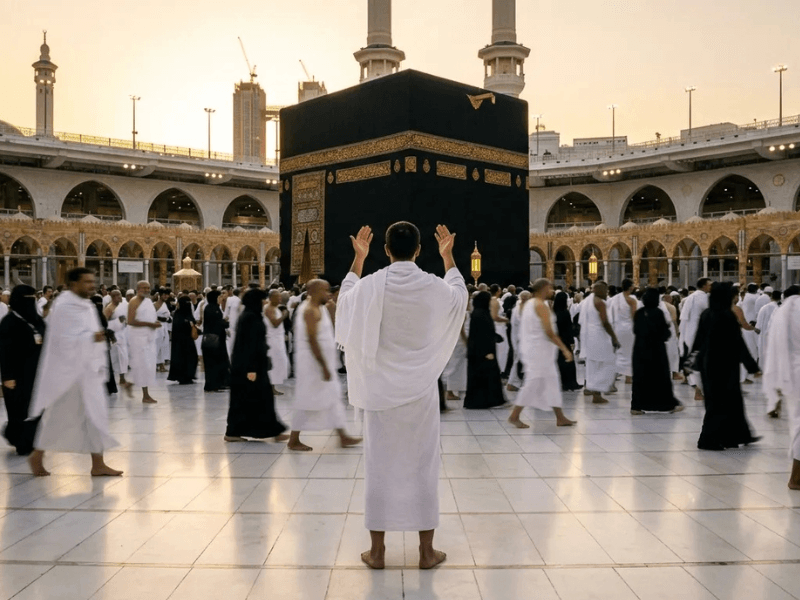
For men, the clothing consists of two unstitched white cloths, one wrapped around the waist (Izar) and one over the shoulders (Rida). For women, any modest, loose-fitting clothing that covers the body is acceptable, but the face and hands must remain uncovered. This Hajj Guide for Beginners emphasizes that the simplicity of these clothes symbolizes the equality of all humans before Allah.
Register for a Free Trial Class at Iman School today
and ensure you perform your Hajj exactly according to the Sunnah
What Happens During Tawaf Around the Kaaba?
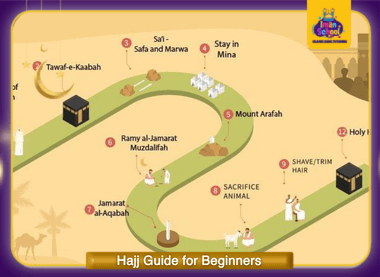
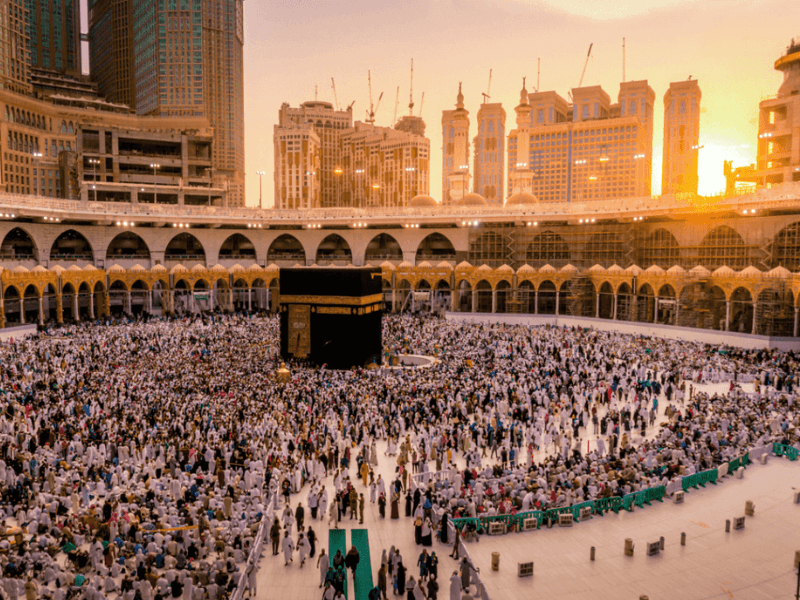
This Hajj Guide for Beginners explains that Tawaf consists of circling the Kaaba seven times in a counter-clockwise direction, starting at the Black Stone (Hajar al-Aswad). Tawaf is considered a form of prayer. The Prophet (PBUH) said: “Tawaf around the House is similar to prayer, except that you may speak during it” (Tirmidhi). Pilgrims should maintain Wudu and keep their hearts focused on Dhikr.
What Is Sa’i Between Safa and Marwah?
Sa’i is the walking (and jogging for men in certain areas) seven times between the hills of Safa and Marwa. It commemorates the struggle of Hajar (AS), the wife of Ibrahim (AS), searching for water for her son Ismail (AS). This ritual is an essential part of the step by step Hajj guide, teaching us the value of trust in Allah (Tawakkul) combined with effort.
Why Is the Day of Arafat So Important?
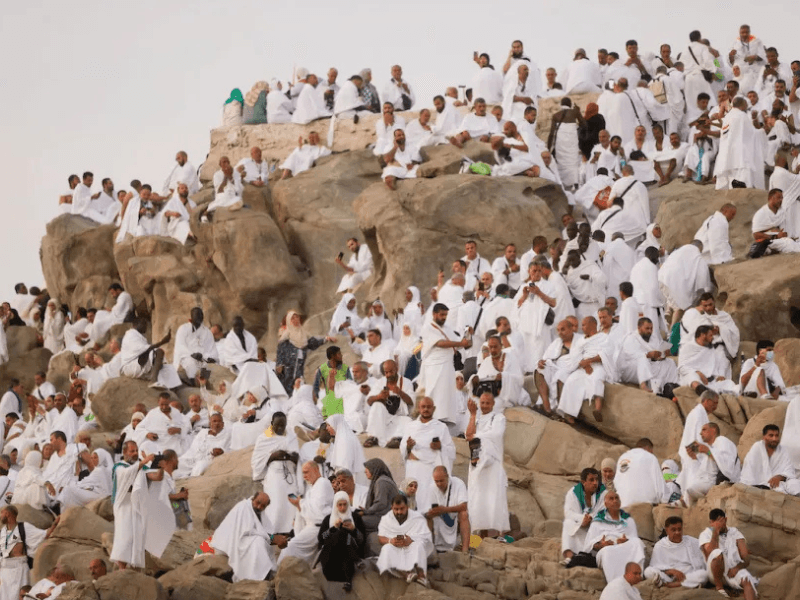
The Day of Arafat (9th Dhul Hijjah) is the pinnacle of Hajj. The Prophet (PBUH) said:
“Hajj is Arafat” (An-Nasa’i).
Pilgrims gather on the plain of Arafat from Dhuhr to sunset for Wuquf (standing), engaging in intense Hajj duas. It is the day Allah frees the most souls from the fire and descends to the lowest heaven to listen to His servants.
What Happens in Muzdalifah During Hajj?
After sunset on the Day of Arafat, pilgrims travel to Muzdalifah. Here, they pray Maghrib and Isha together and spend the night under the open sky. In this Islamic pilgrimage guide, Muzdalifah is also the place where pilgrims collect pebbles (usually 49 or 70) for the stoning ritual in Mina.
What Are the Rituals Performed in Mina?
Mina is the “City of Tents.” The Mina Arafat Muzdalifah explained sequence is vital:
- 8th Dhul Hijjah: Spend the day in prayer.
- 10th–13th Dhul Hijjah: Perform the stoning of the Jamarat, offer sacrifice (Hady), and shave or cut hair (Halq/Taqsir).
How Is the Stoning of the Jamarat Performed?
This easy Hajj tutorial clarifies the stoning: Pilgrims throw seven pebbles at the pillars representing the devil (Shaytan). It symbolizes the rejection of evil and temptation. On the 10th, you stone only the largest pillar (Jamarat al-Aqaba). On the following days, you stone all three.
Step by Step for Beginners: How to Perform Hajj
What Are the Most Important Duas During Hajj?
The most iconic of the Hajj duas is the Talbiyah:
“Labbayk Allahumma Labbayk, Labbayka la sharika laka Labbayk…” (Here I am, O Allah, here I am…).
On the Day of Arafat, the best Dua is:
“La ilaha illallah wahdahu la sharika lah, lahul-mulku wa lahul-hamdu, wa huwa ‘ala kulli shay’in qadir.”
What Mistakes Should Pilgrims Avoid During Hajj?
A Hajj Guide for Beginners must warn against common Hajj mistakes:
- Crossing the Meeqat (boundary) without entering Ihram.
- Engaging in arguments or losing patience with the crowds.
- Stoning with large rocks or shoes instead of small pebbles.
- Neglecting to learn the Hajj rituals in order.
- Wasting the precious hours of Arafat on phone calls or photos.
How Long Does Hajj Usually Take?
The core rituals of Hajj take five to six days. However, most Hajj days explained in travel packages include extra days in Mecca and Medina for worship, totaling 14 to 21 days.
Join Iman School Today: Top Rated Online Quran School
What Is the Difference Between Hajj and Umrah?
The difference between Hajj and Umrah is significant:
- Hajj: Mandatory once, occurs only in Dhul Hijjah, includes Arafat/Mina/Muzdalifah.
- Umrah: Sunnah, can be done anytime, only includes Ihram, Tawaf, and Sa’i.
What Should Women Know Before Performing Hajj?
This Hajj guide for women highlights that women are excused from certain rituals like Tawaf during their menstruation but must complete them once they are pure. Women do not shave their heads; they only cut a finger-tip’s length of hair.
What Essential Items Should Be Included in a Hajj Packing List?
Your Hajj checklist for pilgrims should include:
- Unscented soap and toiletries.
- Comfortable walking sandals (tested before the trip).
- A small waist pouch for documents.
- A power bank and a pocket Quran.
- Medication for common ailments like cough or fever.
What Should Muslims Do After Returning from Hajj?
The “Hajj Mabrur” (accepted Hajj) is shown through one’s character. A pilgrim should return with a commitment to be a better Muslim. In our Hajj Guide for Beginners, we suggest maintaining the habit of Quran recitation and continuing your Islamic education at Iman School to keep the spiritual fire alive.
Is Fasting the First Ten Days of Dhul Hijjah Recommended Before Hajj?
For those not performing Hajj, fasting the first nine days (especially the Day of Arafat) is highly recommended. The Prophet (PBUH) said:
“There are no days in which righteous deeds are more beloved to Allah than these ten days” (Bukhari).
For Hajj for first time pilgrims, the focus is on the pilgrimage itself, but families at home can join in the reward through fasting.
Mastering the Hajj steps for beginners is the first step toward a successful pilgrimage. This Hajj Guide for Beginners provides the blueprint, but real success comes from a heart filled with Taqwa and knowledge.
Don’t wait until you land in Mecca to start your learning. Iman School offers specialized online Quran and Islamic studies to help you prepare for the greatest journey of your life.