 -by
-by For many Muslims, learning how to perform Hajj is the fulfillment of a lifelong spiritual yearning. This sacred journey to Mecca is a profound pillar of faith that requires careful preparation. At Iman School, we provide this comprehensive guide to ensure you understand how to perform Hajj with ease, devotion, and accuracy.
What is Hajj in Islam?
Hajj in Islam is the annual pilgrimage to the holy city of Mecca in Saudi Arabia. It is the fifth pillar of the faith and a religious obligation that every adult Muslim must fulfill at least once in their lifetime, provided they have the physical and financial means. The Islamic pilgrimage to Mecca occurs during the month of Dhul-Hijjah, the final month of the Islamic lunar calendar. Unlike Umrah, which can be performed at any time, Hajj has specific Hajj days explained by the Sharia that must be followed strictly to be valid.
Difference Between Hajj and Umrah
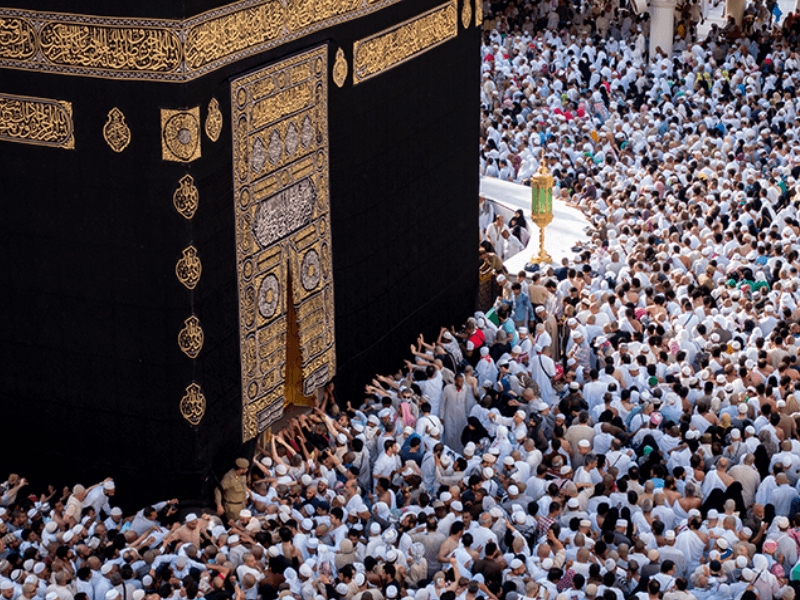
The main difference between Hajj and Umrah is time and obligation. Hajj is a pillar and occurs only in Dhul-Hijjah. Umrah is a Sunnah and can be performed any time. Hajj includes Arafat, Muzdalifah, and Mina, which Umrah does not.
Why is Hajj Important for Muslims?
The importance of learning how to perform Hajj correctly cannot be overstated. It is a transformative experience that resets a believer’s spiritual clock. Here are 7 reasons why it is vital:
- Forgiveness of Sins: The Prophet (PBUH) said: “Whoever performs Hajj for Allah’s pleasure… will return as if he were born anew” (Bukhari). This is the ultimate goal of performing Hajj.
- Unity of the Ummah: Hajj brings together millions from every corner of the globe, regardless of race or status, showcasing the true equality of Hajj in Islam.
- Spiritual Rebirth: By following a step by step Hajj guide, pilgrims strip away worldly ego and focus solely on their Creator.
- Following the Sunnah: Learning how to perform Hajj correctly allows you to walk the path of Prophet Muhammad (PBUH) and Prophet Ibrahim (AS).
- Discipline and Patience: The Hajj rituals require physical endurance and emotional restraint, building a stronger character.
- Answered Supplications: Arafat is the place where Duas are most likely to be accepted, making Hajj preparation tips focused on spirituality essential.
- Fulfillment of an Obligation: It is one of the five core pillars, and knowing how to perform Hajj ensures you complete your religious duty perfectly.
Who Is Required to Perform Hajj?
The Hajj requirements are specific to ensure that the ritual remains an act of worship rather than a burden. A person must be:
- Muslim: The pilgrimage is an Islamic act of worship.
- Adult: Children can attend, but they must perform it again after reaching puberty.
- Sane: The person must have full mental capacity.
- Physically Able: One must be healthy enough to complete the Hajj steps.
- Financially Capable: You must have enough money for the journey and for your family’s needs while you are away.
Types of Hajj Explained
Before starting your Hajj pilgrimage guide, you must understand the three types of Hajj.
Hajj al-Tamattu’
This is the most common type for those coming from abroad. You perform Umrah during the Hajj months and then “break” your Ihram. On the 8th of Dhul-Hijjah, you enter Ihram for Hajj again to complete the pilgrimage. This is often recommended in any easy Hajj guide for beginners.
Hajj al-Qiran
In this type, you perform both Umrah and Hajj in a single state of Ihram. You do not exit Ihram between the two. This requires great discipline as all Hajj rules in Islam regarding Ihram must be followed for a longer duration.
Hajj al-Ifrad
This is the “isolated” Hajj. The pilgrim enters Ihram only for Hajj, with no Umrah involved. It is usually performed by those living within the Meeqat boundaries in Saudi Arabia.
Step-by-Step Guide on How to Perform Hajj
If you are looking for a complete Hajj tutorial, follow these Hajj steps in order:
Step 1: Entering Ihram
This is the first step in how to perform Hajj. After making the intention (Niyyah), you wear the two white seamless cloths (for men) and modest dress (for women). You recite the Talbiyah: “Labbayka Allahumma Labbayk…”
Step 2: Heading to Mina (8th Dhul-Hijjah)
The first of the Hajj days explained starts in Mina. Pilgrims spend the day in prayer and reflection. This is a day for quiet contemplation and Hajj preparation for first time pilgrims.
Step 3: The Day of Arafah (9th Dhul-Hijjah)
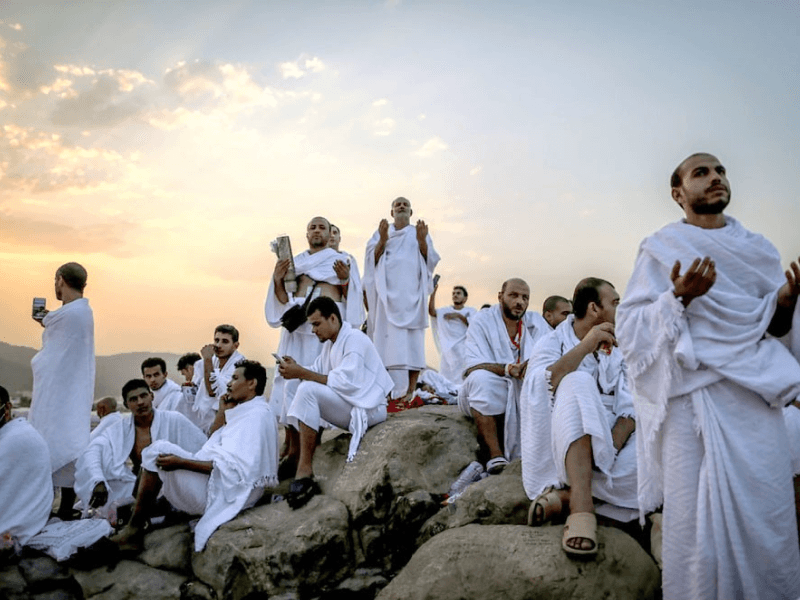
This is the “pinnacle” of Hajj. Pilgrims move to the plain of Arafat. From noon until sunset, you engage in Wuquf (standing) and intense Hajj supplications.
Step 4: Muzdalifah (Night of the 9th)
After sunset, pilgrims leave Arafat for Muzdalifah. You pray Maghrib and Isha together and collect small pebbles for the next phase of the Hajj rituals.
Step 5: Rami al-Jamarat & Eid (10th Dhul-Hijjah)
You return to Mina to stone the Jamarat al-Aqaba (the large pillar). This is followed by the sacrifice (Hady), shaving or cutting hair, and performing Tawaf al-Ifadah at the Kaaba.
Step 6: The Days of Tashreeq (11th-13th)
You spend these days in Mina, stoning all three pillars daily and celebrating Eid with fellow Muslims.
Understanding the Main Rituals of Hajj
The Hajj rituals explained simply revolve around two major acts at the Kaaba: Tawaf and Sa’i. Tawaf involves circling the Kaaba seven times in a counter-clockwise direction, while Sa’i is the walk between the hills of Safa and Marwa seven times, commemorating the struggle of Hajar (AS).
Important Duas and Supplications During Hajj
Essential Hajj duas are your spiritual weapons. While you can pray in any language, the Talbiyah and the prayers of Arafat are the most critical. Use this Hajj guide for first timers to memorize the “Dua of Arafah”:
“La ilaha illallah wahdahu la sharika lah, lahul-mulku wa lahul-hamdu, wa huwa ‘ala kulli shay’in qadir.”
Online Hifz Guide: Quran Memorization for Women
Common Mistakes to Avoid During Hajj
Learning how to perform Hajj also means knowing what not to do. Avoid these common mistakes during Hajj:
- Crossing the Meeqat without entering Ihram.
- Thinking that “touching” the Kaaba is a requirement; it is a Sunnah if the crowd allows.
- Cutting hair before the sacrifice is confirmed.
- Pushing and shoving during Tawaf and Sa’i.
- Wasting time on social media during the Day of Arafat.
- Stoning the pillars with large rocks or shoes (only small pebbles should be used).
- Performing the Farewell Tawaf before completing all Mina rituals.
- Losing patience with fellow pilgrims.
- Reciting the Talbiyah too softly (it is Sunnah for men to raise their voices).
- Forgetting to make a clear Hajj packing list of essential items.
Tips for a Smooth and Spiritually Rewarding Hajj
To ensure a best way to prepare for Hajj spiritually, you must also prepare physically. Use these Hajj travel tips:
- Start walking 3-5 km a day weeks before you leave.
- Stay hydrated; use the provided Zamzam water.
- Carry a small Hajj checklist in your pocket.
- Enroll in an online Quran academy like Iman School to perfect your recitation before you go.
Ihram Rules and Restrictions During Hajj
While in Ihram for Hajj, you are in a state of sanctity. You must not:
- Cut hair or nails.
- Use scented soaps or perfumes.
- Cover the head (for men) or the face (for women, except in specific conditions).
- Engage in hunting or marital relations.
- Argue or use foul language.
How Women Can Perform Hajj Comfortably
In this women’s guide to Hajj, it is important to note that women do not have a specific color for Ihram but should wear modest, loose clothing. Women are excused from certain rituals like Tawaf during their monthly cycle but can still participate in Mina and Arafat rituals.
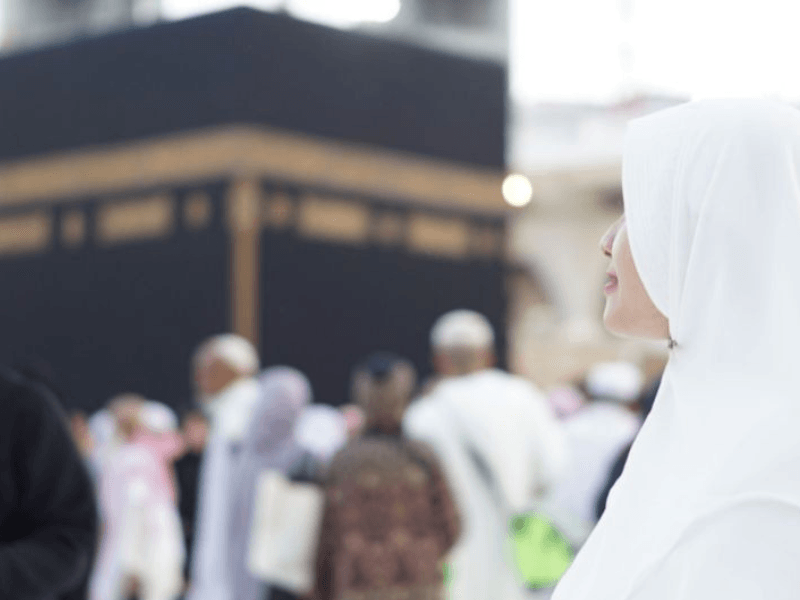
Meaning and Importance of the Day of Arafah
What happens on the Day of Arafah? It is the day Allah descends to the lowest heaven and expresses pride to the angels about the pilgrims. It is the best day for forgiveness. Knowing how to perform Hajj correctly means dedicating every second of this day to repentance.
Quranic Verses Regarding the Pilgrimage
Divine Revelations: Quranic Foundations of the Holy Journey
The foundation of the fifth pillar of Islam is rooted deeply in the Holy Quran. These verses provide the Divine Decree and the legal framework for every pilgrim learning how to perform Hajj with sincerity.
- Key Verse (Surah Al-Baqarah, 2:197): This verse clarifies that the pilgrimage takes place during sacred months, stating: “Hajj is [during] well-known months, so whoever has made Hajj obligatory upon himself therein… there is [to be] no sexual relations and no disobedience and no disputing during Hajj.”
- The Invitation (Surah Al-Hajj, 22:27): Following the ancient Ibrahimic Tradition, Allah commanded Prophet Ibrahim (AS) to proclaim the pilgrimage to mankind, outlining the spiritual obligations that draw people from every distant pass to fulfill their duty.
Prophetic Traditions (Hadith) on Hajj
The Prophetic Guide: Hadiths on the Virtues and Rites of Hajj
While the Quran establishes the obligation, the Sunnah provides the practical application. To truly understand how to perform Hajj, one must look at the life and sayings of Prophet Muhammad (PBUH) recorded in Sahih Bukhari and other collections, as he famously instructed, “Take your rituals from me.”
- The Ultimate Reward: Through Prophetic Wisdom, we learn that the Prophet (PBUH) stated an accepted Hajj (Hajj Mabrur) has no reward except Paradise.
- A New Beginning: He also taught that whoever performs Hajj for the sake of Allah and avoids sin returns as pure as the day they were born.
- Practical Wisdom: Detailed traditions specify the Miqat (designated start points) and the sequence of events, providing the essential blueprint for the entire pilgrimage.
Famous Supplications (Dua) for the Pilgrimage
Sacred Echoes: Essential Supplications for Every Pilgrim
Communication with the Creator is the heart of the journey. When learning how to perform Hajj, memorizing each specific supplication transforms the physical acts into a deep spiritual connection.
- The Talbiyah: The most famous chant of the pilgrim is the Talbiyah: “Labbayk Allahumma Labbayk” (Here I am, O Allah, here I am). This represents the soul’s response to the divine call and a commitment to remembrance (Dhikr).
- Dua of Arafah: The Prophet (PBUH) mentioned that the best prayer is the one made on the Day of Arafah. This powerful moment focuses on the Oneness of Allah (Tawheed).
Tawaf Supplications: While there are no fixed words for every circuit, the Prophet (PBUH) encouraged saying: “Rabbana atina fid-dunya hasanatan…” (Our Lord, give us in this world that which is good…), blending physical movement with constant prayer.
Health and Safety Tips During Hajj
Your Hajj safety tips should include:
- Wearing a mask in crowded areas.
- Identifying your group’s tent location in Mina immediately.
- Using an umbrella for shade during the day.
- Keeping a copy of your Hajj visa and travel preparation documents digitally.
Best Spiritual Practices Before and After Hajj
Before you go, learn how to perform Hajj by studying the Fiqh. After you return, the “sign of an accepted Hajj” is being a better person than you were before. Keep up with your Quranic studies and stay connected to your faith.
Hajj Checklist for First-Time Pilgrims
Your Hajj packing list should include:
- Two sets of Ihram.
- Unscented toiletries.
- Comfortable walking sandals.
- A power bank for your phone.
- A small Dua book and a pocket-sized Quran.
Easy Guide for Kids: Holy Quran Memorization for Children
FAQ About How to Perform Hajj
What are the latest health and safety requirements for Hajj this year?
To ensure a safe environment, the Saudi Ministry of Hajj and Umrah mandates specific vaccinations, including Meningococcal meningitis, COVID-19, and seasonal influenza. Pilgrims are advised to maintain physical fitness months before travel, as the journey requires significant walking. It is also essential to stay hydrated and use sun protection (like umbrellas) to avoid heatstroke during the rituals in Makkah and Madinah.
How to Perform Hajj: A Step-by-Step Guide for Beginners?
Learning how to perform Hajj involves five main stages:
- Ihram: Entering a state of consecration and wearing the white garments at the Miqat.
- Mina: Spending the day and night in prayer and reflection.
- Arafah: The pinnacle of Hajj, standing from noon to sunset seeking forgiveness.
- Muzdalifah: Staying overnight and gathering pebbles.
- Jamarat & Tawaf: Casting stones at the pillars, performing the animal sacrifice, and the final Tawaf al-Ifadah at the Kaaba.
What is the difference between Hajj and Umrah, and can I perform both?
Hajj is the “Major Pilgrimage” and is mandatory once in a lifetime for those who are able, occurring only during specific Islamic months. Umrah is the “Minor Pilgrimage,” is voluntary, and can be performed at any time of the year. You can perform both by choosing the Tamattu or Qiran types of Hajj, where you complete an Umrah first and then transition into the Hajj rituals.
What are the essential items to pack for a safe and comfortable Hajj journey?
Preparation is key to a successful experience. Your packing list should include:
- Two sets of Ihram clothing (for men) and modest, breathable clothes (for women).
- Comfortable, sturdy walking shoes (already broken in to avoid blisters).
- Unscented toiletries (soap, deodorant, and lip balm) to maintain the state of Ihram.
- A portable power bank, a small prayer mat, and a waist pouch for valuables.
- Necessary personal medications and a basic first-aid kit.
How long does Hajj take?
The core rituals of performing Hajj take 5 to 6 days, starting from the 8th of Dhul-Hijjah.
What if I make a mistake in the rituals?
Depending on the mistake, you may need to offer a Fidyah (sacrifice of a sheep) to compensate.
Is Hajj according to Sunnah different for beginners?
The rules are the same for everyone. A Hajj for beginners guide simply breaks them down into easier steps.
Can I perform Hajj on behalf of someone else?
Yes, this is called Hajj al-Badal, provided you have already performed your own Hajj.
How much walking is involved?
You may walk up to 10-15 miles throughout the various Hajj rituals.
Do I need a guide?
While you can learn how to perform Hajj from books, having a qualified teacher from Iman School can help clarify complex points.
Online Islamic Studies Courses
Learning how to perform Hajj is a beautiful beginning to a new life. By understanding the specific steps of how to perform Hajj through rituals explained simply, you can focus on the spiritual depth of the journey rather than just the logistics.
At Iman School, we are dedicated to helping Muslims in the West prepare for their sacred duties through expert online Quran and Islamic studies. Iman School is the best online school for those seeking a deep and authentic understanding of their faith and a clear guide on how to perform Hajj from the comfort of their homes.
Don’t wait until you reach Mecca to start your learning; join us today to master the essentials of your religion.