 -by
-by Understanding What Is Ijazah helps students appreciate the preservation of classical Islamic scholarship and divine revelation. Exploring What Is Ijazah reveals a traditional system of scholarly authorization that connects modern reciters directly to early centuries of Islam. At Iman School, our certified tutors guide students across the UAE and Western countries toward complete recitation mastery.
What Is Ijazah?
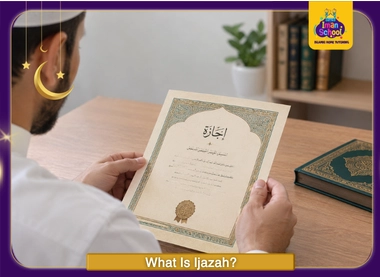
To truly grasp What Is Ijazah, we must examine its linguistic root and historic function in Islamic scholarship. The word comes from the Arabic verb Ajaaza, which literally means “to permit,” “authorize,” or “grant permission.” In sacred tradition, it represents a formal certification granted by an authorized scholar permitting a student to transmit a specific body of knowledge.
Looking at what is Ijazah in Islam, it functions as a rigorous quality-assurance framework. Rather than acting as a standard academic degree based on attendance alone, it confirms that a student has demonstrated exact mastery over a text, recitation style, or legal compilation directly before an authorized teacher.
Read Also: What is the best way to learn quran
What Is Ijazah in the Quran?
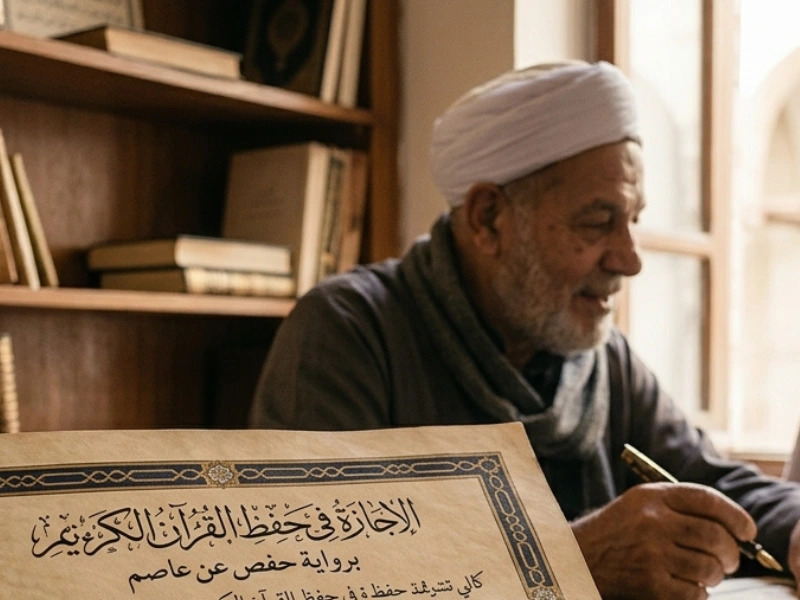
When examining what is Ijazah in Quran studies, the term specifically refers to an official authorization to recite and teach the Holy Quran with perfect Tajweed. A candidate must read the entire Quran aloud from memory or text before a qualified scholar who monitors every phonetic detail.
Securing Ijazah in Quran recitation guarantees that the student’s pronunciation, articulation points (Makharij), and Tajweed rules match authentic prophetic tradition. When people ask what is Ijazah, in the context of Quranic study, it represents the highest stamp of recitation accuracy.
What Is the Difference Between Ijazah and Sanad?
Understanding the relationship between Ijazah and Sanad is essential when exploring sacred Islamic traditions:
- Ijazah: The formal authorization, license, or permission granted by the teacher to the student certifying their recitation mastery.
- Sanad: The historical chain of authorized transmitters (Isnad) connecting the scholar directly back through famous historical reciters, the Companions, the Angel Jibreel, and ultimately to Prophet Muhammad (peace be upon him).
While the Ijazah meaning focuses on the permit itself, the Sanad is the continuous unbroken chain that authenticates the transmission.
The Spiritual Significance of the Ijazah Chain
Beyond its academic value, the Ijazah system holds profound spiritual significance for Muslims. When a scholar grants an Ijazah, they are not merely issuing a piece of paper; they are formally attesting that they have heard the student recite the Quran exactly as they recited it to their teacher, and their teacher to theirs, in an unbroken chain reaching back to the Prophet Muhammad (peace be upon him).
This direct spiritual link (Tawatur) provides immense peace of mind to the student, knowing that their recitation is authentically connected to the divine revelation as it was originally revealed, preserving the Quran’s purity across generations.
Learn More: The Importance of Reciting the Quran Daily
What Are the Different Types of Quran Ijazah?
Evaluating the types of Ijazah in Quran studies shows that authorizations cater to specific levels of scholarly achievement:
Ijazah in Quran Recitation
This permit authorizes a student who reads the entire Quran aloud directly from the page (Mushaf) with complete Tajweed application, demonstrating precise vocal accuracy.
Ijazah in Quran Memorization
Granted to a Hafiz who recites the entire Quran completely from memory without looking at the page, verifying both flawless retention and perfect Tajweed execution.
Ijazah in Different Qira’at
Advanced authorization covering one or all of the ten recognized historical recitation modes (Qira’at), such as Hafs ‘an ‘Aasim, Warsh ‘an Nafi’, or Qaloon.
(This advanced level is highly sought after by students wishing to deepen their understanding of the linguistic miracles and varied authentic readings of the Quran).
Understanding What Is Ijazah across these branches helps students set clear targets for their personal study.
Discover More: How to Revise Quran Hifz Effectively
How Do You Get an Ijazah in Quran?
Understanding how to get Ijazah in Quran studies involves a structured, demanding process that tests both skill and dedication:
- Master Basic Foundations: Achieve total fluency in Arabic reading and advanced Tajweed rules through foundational courses like our Online Quran Reading Course.
- Select an Authorized Scholar: Connect with an Ijazah certified Quran teacher who holds a verified, unbroken chain (Sanad).
- Complete the Recitation (Khatmah): Recite the complete Quran line-by-line from cover to cover directly to the teacher during live sessions.
- Receive Real-Time Corrections: The scholar catches and corrects subtle articulation errors throughout the entire recitation.
- Final Evaluation & Licensing: Upon successfully completing the Khatmah without errors, the scholar issues an official Quran Ijazah certificate.
Following this process clarifies What Is Ijazah in practical terms for aspiring scholars.
How Long Does It Take to Earn a Quran Ijazah?
The timeline for earning an Ijazah varies significantly based on the student’s starting point and dedication. For a student who already reads Arabic fluently with strong Tajweed, completing the full recitation (Khatmah) before a scholar typically takes between 6 to 12 months of consistent weekly sessions.
However, for beginners or those still mastering basic pronunciation, the journey requires building a solid foundation first. This may take 1 to 3 years of dedicated study before the actual Ijazah recitation begins. The key factor is not speed, but consistent, error-free practice under the guidance of a qualified teacher.
Is an Ijazah the Same as a Course Completion Certificate?
Clarifying what constitutes a what is a Quran Ijazah certificate prevents common confusion among new learners. A standard course completion certificate confirms that a student attended a specific online class, completed modules, or passed basic quizzes.
In contrast, understanding What Is Ijazah reveals that an authorization is a formal license of transmission. It verifies that the recipient possesses verified mastery to pass down the sacred text to others, serving as a formal academic permit rather than a simple attendance record.
Explore More: Translation of the Quran
Can You Get a Quran Ijazah Online?
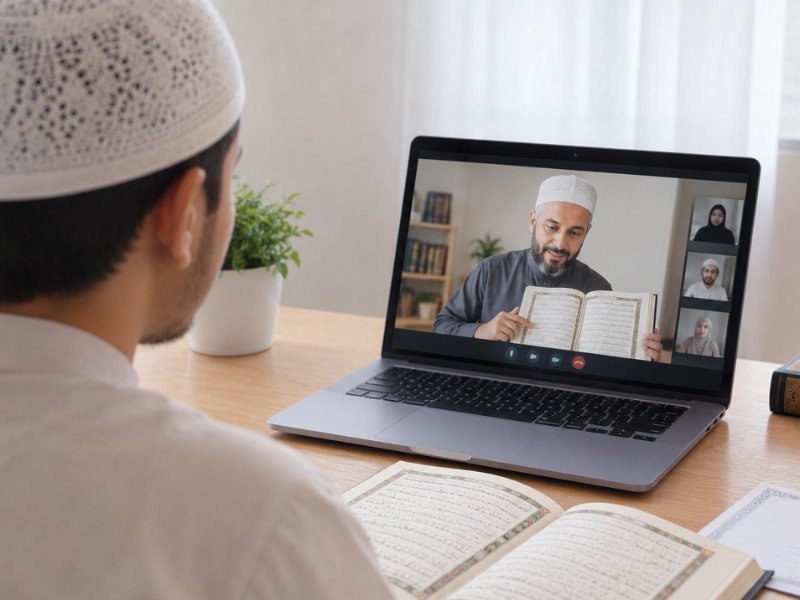
With modern digital technology, many ask What Is Ijazah acquisition like in virtual settings, and whether it is valid online. The answer is yes, provided that the essential classical condition—live, direct one-on-one recitation before a certified scholar—is strictly maintained.
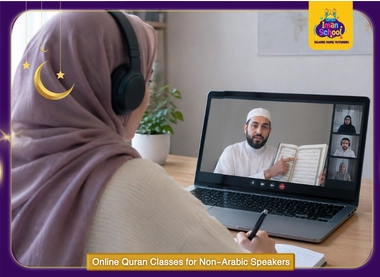
High-definition audio and video platforms allow an Ijazah certified Quran teacher to listen to a student’s voice, observe mouth movements, and offer immediate corrections. As long as the entire Khatmah is recited live to the scholar, earning a Quran Ijazah online is fully valid.
How to Verify an Ijazah and Choose a Qualified Quran Teacher
When selecting an instructor, validating credentials ensures you receive authentic instruction. To verify a scholar’s background, check:
- The Teacher’s Sanad: Confirm that the scholar’s chain lists recognized master reciters leading back to Prophet Muhammad (peace be upon him).
- Issuing Authority: Ensure the authorization was issued by a recognized Islamic institution or famous master reciter.
- Scope of the Permit: Check whether the authorization covers reading, memorization, or specific recitation modes (Qira’at).
- Teaching Capability: Verify that the scholar possesses strong English communication skills alongside technical scholarship.
Understanding What Is Ijazah verification protects students from unverified claims.
Find Out More: Quran Memorization Certificates
Do You Need an Ijazah to Learn or Teach the Quran?
A common question regarding What Is Ijazah is whether every Muslim needs one to recite or teach basic Quran. The simple answer is no. Every Muslim is encouraged to learn Quranic reading, apply basic Tajweed, and teach short Surahs to family members.
However, an authorization becomes necessary if you intend to teach advanced Tajweed professionally, grant formal certifications to others, or serve as an official Qari. Understanding What Is Ijazah distinguishes general personal worship from formal scholarly authorization.
Have Questions? We’re Here to Help!
Whether you want to book a session or need more details about our courses, our team is ready to assist you instantly.
Join our global community of learners today.
Learn Quran with Qualified Teachers at Iman School
Studying under certified scholars gives students the structure, accuracy, and spiritual connection needed to excel in Quranic study. At Iman School, our team includes certified male and female scholars who guide children and adults through personalized online instruction.
Whether you want your child to learn foundational reading in our Online Quran Classes for Beginners, refine Tajweed rules in our Online Tajweed Course, or begin memorization in our Online Quran Memorization Course, our faculty provides supportive virtual mentorship across the UAE and Western countries.
FAQ about Ijazah and Sanad
What does Ijazah mean in Islam?
It refers to a formal authorization or license granted by a qualified scholar permitting a student to transmit specific Islamic knowledge or Quranic recitation.
What is an Ijazah in Quran recitation?
It is a certification granted after a student recites the entire Quran aloud to a scholar with perfect Tajweed, verifying recitation accuracy.
What is the difference between Ijazah and Sanad?
The Ijazah is the authorization document itself, while the Sanad is the continuous, unbroken chain of scholars linking the reciter back to Prophet Muhammad (PBUH).
Is an Ijazah the same as a Quran certificate?
No, a standard certificate indicates course completion, whereas an authorization grants formal permission to transmit and teach the Quran based on verified mastery.
Can you get an Ijazah online?
Yes, as long as the student recites the entire Quran live one-on-one to an authorized scholar who provides real-time feedback and evaluation.
How long does it take to get a Quran Ijazah?
Completing the full recitation (Khatmah) before a scholar typically takes 6 to 12 months, depending on student fluency and weekly class frequency.
Do you need to memorize the entire Quran to get an Ijazah?
Not necessarily for recitation authorizations, but a memorization authorization (Hifz) requires reciting the complete Quran entirely from memory.
Can anyone receive an Ijazah in Quran recitation?
Yes, any student—male or female, Arab or non-Arab—who achieves flawless recitation and masters Tajweed rules can earn an authorization under a certified scholar.
Learn Quran with Qualified Ijazah-Certified Teachers
Partnering with an Ijazah certified Quran teacher at Iman School guarantees that your family receives authentic Quranic education tailored to modern schedules. Our interactive virtual classrooms allow students across Dubai, Abu Dhabi, London, and worldwide to master fluent recitation comfortably from home.
Understanding What Is Ijazah highlights the importance of learning from verified scholars. Whether you are aiming for formal certification or simply want to correct your daily reading, Iman School provides dedicated support every step of the way.