 -by
-by Understanding the fundamental Rules of Tartil is essential for anyone seeking to recite the Holy Quran beautifully, accurately, and with deep spiritual devotion. Following the proper Rules of Tartil transforms your daily reading into a reverent act of worship. At Iman School, our qualified teachers guide students to master these divine principles smoothly and step by step.
What Is Tartil in the Quran?
When discussing tartil in Quran, many people wonder what sets this sacred recitation style apart from regular reading. The word Tartil comes from an Arabic root implying order, harmony, and measured arrangement.
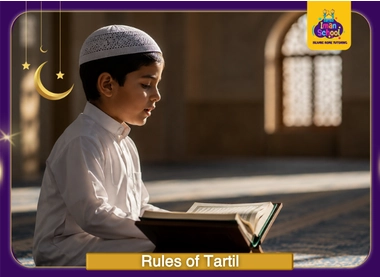
In the context of divine revelation, following the Rules of Tartil means reciting every verse in a measured, distinct, and rhythmic pace, ensuring that every sound is given its precise phonetic value.
It is important to note that Rules of Tartil involve far more than merely adopting a slow Quran recitation. While slowing down your speed is a major component, true Tartil requires combining slow speed with flawless articulation, proper pauses, and heart-centered reflection.
When you understand the deeper meaning of tartil, you realize it is the precise method commanded by Allah SWT in the Quran when He revealed: “And recite the Quran with measured recitation.”

What Does Tartil Mean in Islam?
To understand the full tartil meaning in Islam, one must look at how Prophet Muhammad ﷺ and his noble companions recited the divine revelation. The Prophet ﷺ never rushed his recitation; instead, he recited word by word, letter by letter, allowing the majesty of the Quranic text to resonate with the listener’s heart.
In Islamic tradition, adhering to the Rules of Tartil is considered an obligation for anyone reading the divine scriptures. Applying these principles elevates your relationship with the text, turning mechanical decoding into a tranquil, meditative experience.
For Western families seeking to instil these spiritual values at home, choosing Online Quran Classes or enrolling in an Online Quran Course provides a structured path toward mastering this noble art.
What Is the Difference Between Tartil and Tajweed?
Understanding the connection between tartil and tajweed is a common point of interest for non-native learners. While both terms relate directly to proper Quranic reading, they cover slightly different dimensions of recitation:
- Tajweed: Refers to the specific technical rules governing letter exits (Makharij), characteristics (Sifat), nasalization (Ghunnah), and elongation (Madd).
- Tartil: Refers to the overall style, pace, rhythm, and spiritual state of the reciter as they apply those Tajweed rules measuredly and reflectively.
In simple terms, Tajweed provides the essential building blocks, while the Rules of Tartil govern how those blocks are assembled in real-time recitation. Studying both together ensures that students receive comprehensive Quran Recitation for Beginners training without confusion.
10 Essential Rules of Tartil
Mastering the Rules of Tartil requires a clear, practical approach. Here are 10 essential guidelines to help you elevate your Quranic recitation:
1- Recite the Quran Slowly and Clearly
The first core principle among the Rules of Tartil is pacing. Avoid rushing through verses simply to finish a chapter quickly. A measured tempo gives your tongue time to pronounce every consonant accurately and gives your mind time to absorb the meaning.
2- Pronounce Every Letter Correctly
Giving every letter its full rights (Makharij and Sifat) prevents mispronunciations that could alter sacred meanings. Focusing on clean articulation is a central priority when learning basic Quran Recitation Rules.
3- Apply the Rules of Tajweed
You cannot fulfill the Rules of Tartil without applying Tajweed rules like Ikhfa, Idgham, and Izhhar. These technical guidelines give Quranic recitation its distinct beauty and linguistic precision.
4- Observe the Correct Madd
Madd refers to the controlled elongation of vowel sounds for two, four, or six counts. Observing proper elongation times maintains the natural, balanced rhythm of the divine text.
5- Apply Ghunnah Correctly
Ghunnah is the resonant nasal sound produced during the recitation of the letters Noon and Meem when stressed. Applying Ghunnah for its full two counts adds a beautiful, melodic warmth to your reading.
6- Observe Qalqalah
Qalqalah is the slight bouncing sound produced when five specific letters (ق, ط, ب, ج, د) appear in a state of Sukun. Applying this rule ensures these letters do not sound clipped or muted.
7- Pay Attention to Waqf and Ibtida
Knowing where to stop (Waqf) and where to restart (Ibtida) is one of the most vital Rules of Tartil. Stopping at incorrect places can break sentence structures or distort spiritual meanings.
8- Avoid Rushing Through Verses
Rushing often leads to slurred consonants, dropped vowels, and missed Tajweed rules. Maintaining a steady, unhurried pace keeps your recitation clear, graceful, and reverent.
9- Give Each Letter and Word Its Proper Pronunciation
Treat every word with equal care and respect. Balancing heavy (Tafkheem) and light (Tarqeeq) letters ensures your recitation sounds authentic and harmonious from start to finish.
10- Recite with Reflection and Understanding
The ultimate goal of the Rules of Tartil is Tadabbur—deep reflection on Allah’s message. Reciting with presence of heart allows the divine words to penetrate your soul and transform your daily conduct.
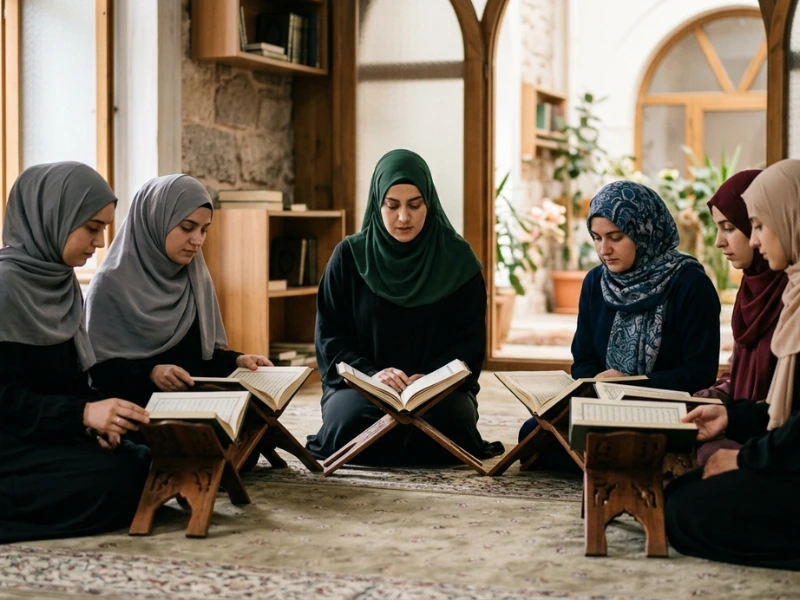
Common Mistakes When Practicing Tartil
When non-native speakers attempt Quran recitation with tartil, they often encounter a few common pitfalls. Identifying these early makes implementing the Rules of Tartil much easier:
- Mixing Up Speed and Quality: Reading too quickly to complete daily quotas while ignoring essential Tajweed rules.
- Monotone Reading: Reciting without emotion or spiritual presence, treating the divine speech like standard text.
- Ignoring Stopping Signs: Disregarding the small pause indicators (Muzhaf symbols) printed above Quranic verses.
- Exaggerating Prolongations: Stretching Madd vowels far beyond their designated counts, which disrupts the natural flow.
Working with an experienced Quran Teacher Online helps you catch and correct these tendencies before they become ingrained habits.
How to Practice Tartil at Home
Consistency is key when learning how to recite Quran with tartil. Here are three practical methods to build your skills during independent home practice:
- Listen and Repeat: Listen to short passages recorded by master reciters like Sheikh Mahmoud Khalil Al-Husary, then repeat after them phrase by phrase, mimicking their pace and pauses.
- Record Your Voice: Use your phone to record your reading sessions. Listening back to your audio helps you identify missed elongations or rushed stops.
- Read Small Portions Daily: Dedicate 15 to 20 minutes every day to focused reading rather than attempting long, sporadic sessions once a week.
If you are an adult managing a busy work schedule, enrolling in specialized Quran Classes for Adults allows you to structure this home practice effectively around your life.
Can Beginners Learn Tartil Online?
Yes, absolutely! Modern virtual platforms make learning the Rules of Tartil accessible to students all over the world. Through live audio-video tools, digital Quran scripts, and interactive whiteboards, learning online offers the same personal attention as attending a local Islamic center.
Virtual learning is especially advantageous for non-Arabic speakers living in Western countries who may not have access to qualified local scholars. Taking part in structured Online Tajweed Classes provides the exact step-by-step guidance beginners need to transition smoothly from basic Arabic reading to fluent, measured recitation.
How Tajweed Classes Help You Master Tartil
Self-guided apps and recorded videos are helpful supplementary aids, but they cannot listen to your voice or correct subtle vocal positioning errors. Enrolling in live classes bridges this gap completely.
An experienced instructor observes your mouth movements, corrects improper letter exits, and ensures you apply every one of the Rules of Tartil in real time. Moreover, taking structured Learn Quran Online sessions gives you the personal accountability and encouragement required to stay consistent on your educational journey.
FAQ About the Rules of Tartil
What are the rules of Tartil?
The Rules of Tartil include reciting at a measured pace, pronouncing every Arabic letter from its correct exit point, applying Tajweed rules like Madd and Ghunnah, observing proper stopping signs, and reflecting on the verses.
What does Tartil mean in the Quran?
In the Quran, Tartil refers to reciting the divine verses in a slow, clear, orderly, and rhythmic manner, giving every letter its proper phonetic weight and reverence.
What is the difference between Tartil and Tajweed?
Tajweed provides the specific technical rules for letter pronunciation, while Tartil refers to the overall slow, rhythmic, and reflective style of recitation that incorporates those Tajweed rules.
How do you recite the Quran with Tartil?
To recite with Tartil, slow down your tempo, focus on crisp articulation, observe proper pauses and restarts, apply Tajweed rules systematically, and engage your heart with the meaning of the verses.
Is Tartil the same as slow Quran recitation?
Slowness is a key element of Tartil, but Tartil also requires correct Tajweed application, proper letter exits, rhythmic balance, and spiritual presence—not just slow speed alone.
Can beginners learn Tartil online?
Yes, beginners can easily learn Tartil online through live, one-on-one sessions led by certified Quran tutors who offer instant feedback and personalized guidance.
Why is Tartil important when reading the Quran?
Tartil is important because it fulfills the divine command of Allah SWT, preserves the authentic pronunciation of the Quran, prevents errors in meaning, and fosters deeper reflection.
Why Learn Quran Recitation with Iman School?
Mastering the Rules of Tartil is a transformative journey that deepens your devotion, refines your speech, and fills your heart with peace whenever you open the Holy Quran. Applying these guidelines consistently ensures that your recitation remains pleasing to Allah SWT and faithful to divine revelation.
When selecting an educational partner for your spiritual journey, Iman School stands out as the Best Online Academy to Learn Quran Recitation. We specialize in bringing traditional, authentic Quranic education directly to Western families through flexible, interactive virtual classrooms.
At Iman School, our certified scholars are fluent in English and hold Ijazah credentials, ensuring top-tier instruction for both children and adults. We offer tailored one-on-one lessons, flexible scheduling, and comprehensive programs ranging from foundational reading to advanced Tajweed and memorization.