 -by
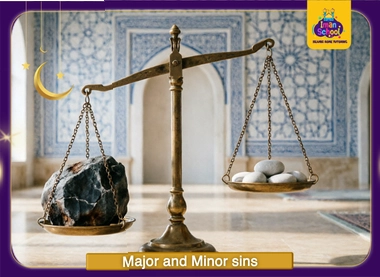
-by Understanding spiritual boundaries is essential for every believer striving for spiritual growth. A foundational aspect of Islamic theology involves grasping the Difference Between Major and Minor Sins in Islam. By understanding the Difference Between Major and Minor Sins in Islam, Muslims can protect their hearts and seek true purification. At Iman School, our specialized programs make mastering these core concepts simple, engaging, and accessible.
What Are Major Sins (Kaba’ir) in Islam?
In Islamic jurisprudence, understanding what are major sins requires looking at how classical scholars define transgression based on primary divine texts. Major sins, known in Arabic as Kaba’ir, refer to those specific acts of disobedience for which Allah SWT or His Messenger ﷺ attached an explicit legal punishment (Hadd) in this life, a specific warning of severe punishment in the Hereafter, a curse, or a declaration of divine anger.
When examining the Difference Between Major and Minor Sins in Islam, scholars emphasize that major sins are severe transgressions that directly harm a person’s spiritual standing, their society, or the fundamental rights of others. These are not mere slip-ups or accidental errors; they are grave missteps that break the spiritual bond between a servant and their Creator.
To understand these categories deeply, students often explore classical works like Imam Al-Dhahabi’s famous compilation, Kitab al-Kaba’ir. Recognizing the kaba’ir and sagha’ir classification helps believers recognize spiritual dangers before falling into them. Because these transgressions carry such heavy weight, simply doing good deeds like making ablution or offering voluntary prayers is not automatically enough to erase them—they require specific, sincere repentance (Tawbah).
The Seven Destructive Sins (Al-Mubiqat)
While scholars have listed varying numbers of major sins, the Prophet Muhammad ﷺ specifically highlighted seven destructive sins (Al-Mubiqat) in a famous Hadith narrated by Abu Hurairah. Understanding these specific transgressions provides a clear baseline for what constitutes a grave sin in Islam:
- Associating partners with Allah (Shirk).
- Practicing magic (Sihr).
- Killing a soul unjustly.
- Consuming usury (Riba).
- Consuming the property of an orphan.
- Fleeing from the battlefield.
- Slandering chaste believing women.
Examples of Major Sins in Islam
To gain practical clarity on the Difference Between Major and Minor Sins in Islam, it helps to review clear examples established in the Quran and Sunnah. Among the most critical major sins in islam highlighted by the Prophet Muhammad ﷺ are the following:
- Shirk (Associating partners with Allah): The greatest of all major sins, which completely destroys a person’s faith if they die upon it without repenting.
- Murder: Unlawfully taking an innocent human life, which the Quran equates to slaying all of humanity.
- Magic and Sorcery (Sihr): Engaging in occult practices that seek assistance from forces other than Allah.
- Consuming Interest (Riba): Engaging in usurious financial transactions that exploit others and corrupt economic fairness.
- Consuming the Wealth of Orphans: Taking advantage of vulnerable children and stealing their rightful inheritance.
- Disrespecting Parents (Uquq al-Walidayn): Treating one’s father or mother with harshness, cruelty, or severe neglect.
- False Testimony and Slander: Lying in court or accusing innocent individuals of immoral acts.
Reviewing these severe examples reinforces the key Difference Between Major and Minor Sins in Islam: major sins cause catastrophic social and spiritual harm, which is why Islamic law treats them with utmost seriousness.
Read Also: Quran and Sunnah Relationship
What Are Minor Sins (Sagha’ir) in Islam?
To properly evaluate the Difference Between Major and Minor Sins in Islam, we must also analyze the second category: minor sins, or Sagha’ir. Minor sins refer to smaller errors, slip-ups, or minor acts of negligence that do not carry an explicit legal penalty in Islamic law, nor do they invoke a specific divine curse or severe threat of hellfire in sacred texts.
Understanding what are minor sins is crucial because human beings are naturally imperfect and prone to subtle mistakes. A minor sin might involve a fleeting dishonest thought, looking at something inappropriate for a second, or speaking a slightly careless word that does not rise to the level of malicious slander.
One of the greatest manifestations of Allah’s mercy is that minor sins can be expiated through daily acts of worship and good deeds. Practices such as performing your five daily prayers, fasting during Ramadan, giving voluntary charity, or making Wudu actively wipe away these small daily blunders.
As students build their foundational reading skills through a structured Noorani Qaida Course, they learn that constant spiritual polishing keeps the heart clean. However, as scholars continuously warn when explaining islamic sins explained, neglecting minor sins or treating them with persistent indifference can slowly darken the heart over time.
Examples of Minor Sins in Islam
By contrast, observing examples of minor sins in islam helps us recognize the daily errors that require constant spiritual polish. Understanding these examples highlights the Difference Between Major and Minor Sins in Islam in everyday life:
- Unnecessary Idle Talk: Engaging in meaningless, wasteful conversations that lead nowhere productive.
- A Fleeting Inappropriate Gaze: Looking accidentally or briefly at something forbidden without dwelling on it intentionally.
- Minor Impatience: Showing mild irritation or annoyance during small daily inconveniences instead of maintaining perfect composure.
- Slight Excess in Permissible Things: Overindulging excessively in food, sleep, or entertainment beyond moderation.
- Delaying a Recommended Act: Postponing a voluntary act of worship out of mild laziness without missing mandatory obligations.
Understanding these examples clarifies the Difference Between Major and Minor Sins in Islam: while minor sins do not destroy a person’s religious foundation overnight, keeping track of them prevents spiritual carelessness. Many students choose to refine their spiritual devotion by enrolling in dedicated [Quran Recitation Classes] to keep their tongue constantly occupied with divine remembrance.
The Role of Intention in Minor Sins
In Islamic theology, the severity of a small sin often depends on the intention behind it. A fleeting mistake made out of forgetfulness is treated differently than one done deliberately. Scholars note that unintentional errors in worship or daily conduct are often overlooked by Allah’s mercy, provided the believer does not persist in them. This highlights the importance of Niyyah (intention) when evaluating daily spiritual mistakes.
Key Differences: Major vs. Minor Sins
When comparing these two categories directly, the distinction comes down to three main factors: their legal consequences, their impact on the heart, and how a believer obtains divine forgiveness.
Below is a clear comparison to help you visualize the differences:
| Feature | Major Sins (Kaba’ir) | Minor Sins (Sagha’ir) |
| Definition | Acts with explicit divine threats, legal penalties, or curses. | Small errors or slip-ups without specific severe threats. |
| Impact | Causes deep spiritual damage and harms societal welfare. | May darken the heart if ignored, but doesn’t destroy faith instantly. |
| Forgiveness | Requires dedicated, formal repentance (Tawbah Nasuh). | Wiped away by regular good deeds, prayers, and Wudu. |
| Examples | Shirk, Murder, Riba, Disrespecting Parents. | Idle talk, slight impatience, fleeting glances. |
Analyzing these differences reveals that major sins leave a heavy mark on a person’s faith, requiring immediate, conscious correction. In contrast, minor sins are the subtle friction of daily life that a believer constantly cleanses through regular remembrance (Dhikr) and good character.

How Good Deeds Expiate Minor Sins
One of the most hopeful aspects of understanding Islamic sin categories is knowing how to erase minor faults. The Prophet ﷺ taught that regular acts of worship serve as spiritual cleansers. Key deeds that wipe away Sagha’ir include:
- Performing Wudu correctly.
- Attending the five daily prayers in congregation.
- Fasting the month of Ramadan.
- Performing Hajj or Umrah.
- Giving sincere charity (Sadaqah).
This mechanism ensures that a believer’s record remains clean through consistent devotion, preventing the accumulation of minor spiritual errors.
Learn More: Friday Muslim Routine
Can Minor Sins Become Major Sins?
A vital concept every student of knowledge must grasp when studying the Difference Between Major and Minor Sins in Islam is that minor sins do not always remain minor. Under certain conditions, a small error can escalate in severity and turn into a major sin.
scholars emphasize with the famous principle: “There is no minor sin if it is accompanied by persistence, and there is no major sin if it is accompanied by sincere repentance.” Here are the main ways a minor sin transforms:
1- Persistence (Al-Israr)
Repeating a minor sin continuously without care or remorse changes its nature. When a person treats a small wrong as a permanent habit, it demonstrates a lack of respect for divine boundaries, effectively escalating it into a major sin.
2- Belittling the Sin (Istighar al-Dhanb)
When a believer views a minor sin as meaningless or says, “This doesn’t matter, it’s just a small thing,” that arrogance magnifies the sin in the sight of Allah.
3- Publicly Boasting About the Sin (Al-Mujaharah)
Committing a minor sin in private, only to proudly talk about it or advertise it to others in public, turns a small mistake into a major transgression due to public defiance.
Recognizing these factors is an important part of understanding the Difference Between Major and Minor Sins in Islam, showing us that our heart’s attitude often matters just as much as the action itself.
How Can Muslims Seek Forgiveness for Their Sins?
Understanding the Difference Between Major and Minor Sins in Islam naturally leads us to explore how to clean our records. The pathway to forgiveness in islam is always wide open, as Allah’s mercy constantly encompasses all things.
For Grave sins in Islam, a believer must engage in sincere repentance in islam (Tawbah Nasuh), which requires fulfilling specific, essential steps:
- Stop the Sin Immediately: Instantly abandon the bad action and remove yourself from the situation.
- Feel Sincere Regret: Experience genuine sorrow in your heart for violating Allah’s command.
- Firmly Resolve Never to Repeat It: Make a strong, conscious commitment never to return to that transgression.
- Restore Human Rights (If Applicable): If the sin involved harming another person—such as stealing their money or slandering them—you must return their property or seek their forgiveness.
For Small spiritual mistakes, continuing to perform regular good deeds—such as attending daily prayers, giving charity, and frequently reciting Astaghfirullah—continuously washes them away before they can accumulate. Advanced scholars often strive for complete spiritual mastery through specialized programs such as a Quran Ijazah Course to teach and pass down this divine guidance with absolute accuracy.

The Danger of Underestimating Small Sins
While minor sins are forgiven through good deeds, scholars warn against the danger of Istikbar (arrogance) toward them. When a believer says, “It is just a small sin,” this attitude itself can become a major spiritual disease. Imam Al-Ghazali noted that persistence in small errors hardens the heart, making it difficult to feel remorse later. Therefore, maintaining spiritual vigilance against even tiny slips is crucial for long-term faith health.
Discover More: Zakat in Islam
Why Learning Islamic Fiqh Helps You Avoid Major Sins?
Trying to navigate your spiritual life without studying basic jurisprudence (Fiqh) is like driving through an unfamiliar city without a map. Understanding the Difference Between Major and Minor Sins in Islam requires systematic learning rather than guessing.
When you study fiqh for beginners, you gain clear, objective knowledge of what Allah has commanded and forbidden. Studying jurisprudence helps you:
- Identify subtle forms of financial prohibition like hidden interest (Riba).
- Understand the legal rights of family members and neighbors so you never violate them.
- Distinguish between valid acts of worship and dangerous innovations (Bid’ah).
- Recognize the Difference Between Major and Minor Sins in Islam so you can prioritize your spiritual efforts effectively.
By enrolling in structured Online Islamic Studies courses, you build a protective wall of knowledge around your faith, empowering you to live confidently and avoid spiritual pitfalls. For those who wish to master the traditional variants of recitation, exploring a comprehensive Ten Qira’at Course offers deep academic enrichment.
Why Iman School Is the Best Online Academy to Learn Islamic Fiqh
If you are looking for an authentic, structured, and flexible way to master jurisprudence, Iman School stands out as the ultimate digital destination. We bring classical Islamic scholarship directly to your screen, custom-tailored for Western families and modern schedules.
Our specialized jurisprudence department offers clear, accessible programs on the Difference Between Major and Minor Sins in Islam and broader legal principles. Whether you want an introductory Fiqh for Beginners class, a comprehensive Islamic Studies Course, or want to Learn Hadith Online with real scholars, our platform delivers an exceptional learning experience.
At Iman School, we do not rely on cold, pre-recorded videos or crowded forums. Instead, we offer personalized, One-on-One Islamic Classes led by Certified Islamic Scholars who speak fluent English and hold traditional authorizations (Ijazahs). We guide you step by step through foundational topics, helping you master our Islamic Creed Course, explore sacred history, and understand the Difference Between Major and Minor Sins in Islam with complete confidence.
Explore More: Tawheed Meaning in Islam
FAQ About Major and Minor Sins in Islam
What are the major sins in Islam?
Grave sins in Islam (Kaba’ir) are grave transgressions—such as Shirk, murder, consuming interest, disrespecting parents, and false testimony—that carry explicit legal punishments, severe warnings in the Hereafter, or divine curses in sacred texts.
What are minor sins in Islam?
Small spiritual mistakes (Sagha’ir) are smaller daily mistakes or slip-ups that do not carry explicit legal penalties or severe divine threats. They can be expiated through regular good deeds, prayers, and daily acts of worship.
Can Allah forgive Grave sins in Islam?
Yes! Allah forgives all sins, including major ones, if a person turns to Him in sincere repentance (Tawbah) before their death. The only sin that is unforgivable if a person dies upon it without repenting is Shirk.
Can minor sins become major sins?
Yes. A minor sin can escalate into a major sin if a person repeats it persistently without care, belittles its severity, boasts about it publicly, or commits it with arrogance.
How can I sincerely repent in Islam?
Sincere repentance requires four steps: stopping the sin immediately, feeling genuine regret, firmly resolving never to return to it, and restoring any rights stolen from or wronged to other people.
Best Online Academy to Learn Islamic Fiqh
Taking the step to understand your religion deeply and grasp the Difference Between Major and Minor Sins in Islam is a deeply rewarding milestone. While searching for answers online is a great starting point, joining a structured, live academy ensures long-term clarity and correct understanding. At Iman School, we take pride in being recognized as the Best Online Academy to Learn Islamic Fiqh for students living in the West.
Our digital platform provides comprehensive opportunities to receive a high-quality Islamic Education Online. Through our interactive portals, you can easily [Learn Quran Online] in our Online Quran Classes, study Quranic commentary via Quran Tafsir Online, or build a firm foundation in sacred law. We carefully select our instructors for their academic credentials, teaching warmth, and ability to communicate complex concepts clearly.