 -by
-by Studying The Noble Hadith is the ultimate key to unlocking a true, practical understanding of the Holy Quran and Islamic life. For Muslims living in the West, finding authenticated prophetic traditions can feel overwhelming. At Iman School, our specialized online curriculum brings The Noble Hadith directly to your screen with absolute scholarly precision.
What Is The Noble Hadith in Islam?
To build a solid spiritual foundation, every beginner must first grasp the core hadith meaning in islam. In classical terminology, The Noble Hadith refers to the comprehensive collection of the sayings, physical actions, silent approvals, and beautiful character traits of the Prophet Muhammad ﷺ.
While the Holy Quran represents the direct, literal word of Almighty Allah, The Noble Hadith acts as the living, practical manifestation of that divine message. It is the real-world application of the law.
When we speak about the noble hadith, we are diving into an expansive oral and textual repository that covers everything from complex state governance, legal transactions, and international treaties, down to the subtle etiquettes of eating, sleeping, and interacting with family members. It is the prophetic blueprint for human excellence.
The Three Categories of Prophetic Traditions
To fully grasp The Noble Hadith, it is helpful to understand its three primary forms. Scholars classify these traditions into:
- Qawli (Sayings): The direct verbal statements and teachings of the Prophet Muhammad ﷺ.
- Fi’li (Actions): The physical actions and practices of the Prophet ﷺ, such as how he performed Wudu or prayed.
- Taqriri (Approvals): Instances where the Prophet ﷺ witnessed an action or heard a statement from his Companions and remained silent, thereby implicitly approving it as permissible.
Understanding these categories helps students recognize that authentic Islamic narrations encompass much more than just spoken words; they represent a complete, living methodology.
What Is the Difference Between the Quran and Hadith?
Understanding the distinct boundaries between the Holy Quran and The Noble Hadith is a vital milestone for any student trying to learn Islam online. While both sources are entirely foundational to the Islamic faith, they differ sharply in their nature, transmission, and theological status.
| Comparison Feature | The Holy Quran | The Noble Hadith |
| Origin & Text | Direct, literal word of Allah in both meaning and wording. | Meanings are divinely inspired, but wordings belong to the Prophet ﷺ. |
| Transmission | Mass-transmitted (Mutawatir) without a single letter altered. | Transmitted through rigorous parallel chains of narration (Asaneed). |
| Worship Status | Formally recited inside the mandatory five daily prayers (Salah). | Studied for law, character, and theology, but not recited inside Salah. |
| Preservation Rule | Guaranteed preservation by Allah Himself in Surah Al-Hijr. | Preserved through a highly meticulous human science of verification. |
Read: How to Memorize Quran Fast
Why Is The Noble Hadith Important for Muslims?
A common inquiry among those entering online Islamic education tracks is exploring why is the noble hadith important. Without this sacred archive, it is physically impossible to practice Islam correctly. The Quran gives generalized divine commands, while The Noble Hadith provides the necessary details, explanations, and context.
Clarifying the Mechanics of Worship
For instance, the Holy Quran explicitly commands the believers to establish prayer (Salah) and pay the mandatory charity (Zakat). However, you will not find a single verse in the Quran that states how many units (Rak’ahs) to pray at dawn, or what exact percentage of your savings must be given to the poor. The Prophet ﷺ clarified these mechanics, stating: “Pray as you have seen me praying.”
Navigating Timeless Legal Rulings
Furthermore, the influence of the noble hadith provides the foundational framework for Islamic jurisprudence (Fiqh). It explains complex business contracts, dietary laws, civil rights, and marital responsibilities. Without this prophetic light, the global Ummah would fall into severe ideological fragmentation, making it a mandatory lifeline for anyone pursuing an authentic Quran and Islamic studies education.
The Inseparable Link Between Hadith and the Sunnah
While often used interchangeably, there is a subtle distinction between Hadith and Sunnah that every student of knowledge should know. Hadith refers to the specific textual report (the narration itself), while Sunnah refers to the actual established practice, custom, or way of life of the Prophet ﷺ derived from those reports.
Therefore, studying The Noble Hadith is the primary gateway to understanding and implementing the Prophetic Sunnah in our daily lives.
Who Narrated and Preserved the Hadith?
When investigating who narrated the noble hadith, history points directly to the elite generation of the Companions (Sahabah). These dedicated men and women spent decades shadowing the Prophet ﷺ, memorizing his speech, and recording his actions with unmatched precision.
Among the prominent male companions, figures like Abu Hurayrah, Abdullah ibn Umar, and Anas ibn Malik dedicated their entire lives to collecting and passing down thousands of individual narrations.
Alongside them stood the noble women scholars of hadith, led by the Mother of the Believers, Aisha bint Abi Bakr, who single-handedly preserved the private lifestyle, deep character traits, and familial rulings of the Prophet ﷺ. These early narrators served as the first line of defense, acting as disciples of hadith the noble guardians who protected the prophetic legacy from human alteration.
Aslo Read: Information About the Holy Quran
How Were Hadith Collections Compiled?
To truly appreciate a hadith collection, a student must look at the monumental efforts of early Islamic compilers. For the first century of Islam, traditions were primarily transmitted through oral chains, though many companions kept personal written journals (Sahifas).
As the borders of the Islamic state expanded rapidly, the risk of regional dialect changes and fabrication grew. This prompted formal compilation efforts. Scholars traveled across vast deserts for months just to verify a single text. They cross-referenced oral testimonies with immediate written documents, sorting through hundreds of thousands of individual reports to build the highly organized, thematic encyclopedias we study today in modern Islamic classes online.
What Are the Main Types of Hadith?
When you dive into an introduction to the science of the noble hadith, you quickly discover that narrations are classified into distinct structural categories based on their historical strength and transmission.
Understanding the 4 types of hadith classifications helps students evaluate textual reliability:
- Sahih (Authentic): The highest grade of narration, meeting every strict criterion of textual and chain perfection.
- Hasan (Good): A reliable, fully authoritative narration whose narrators possess a slightly lesser degree of memory retention.
- Da’if (Weak): A narration that fails to meet one or more conditions of authenticity, often due to a broken chain or a narrator with questionable memory.
- Mawdu’ (Fabricated): A completely forged text falsely attributed to the Prophet ﷺ, which is rejected by all scholars.
Mutawatir vs. Ahad: Understanding Transmission Volume
Beyond the grading of authenticity, prophetic traditions are also classified by the number of narrators at each stage of the chain:
Mutawatir (Mass-Transmitted)
Narrated by such a large number of reliable people at every level of the chain that it is logically impossible for them to have conspired to lie. These yield absolute certainty (e.g., the number of daily prayers).
Ahad (Solitary)
Narrated by a limited number of individuals. While they do not yield absolute certainty on their own, authentic (Sahih) Ahad hadiths are fully binding in Islamic law and form the majority of the Hadith collections we study today.
The Six Authentic Hadith Books in Islam
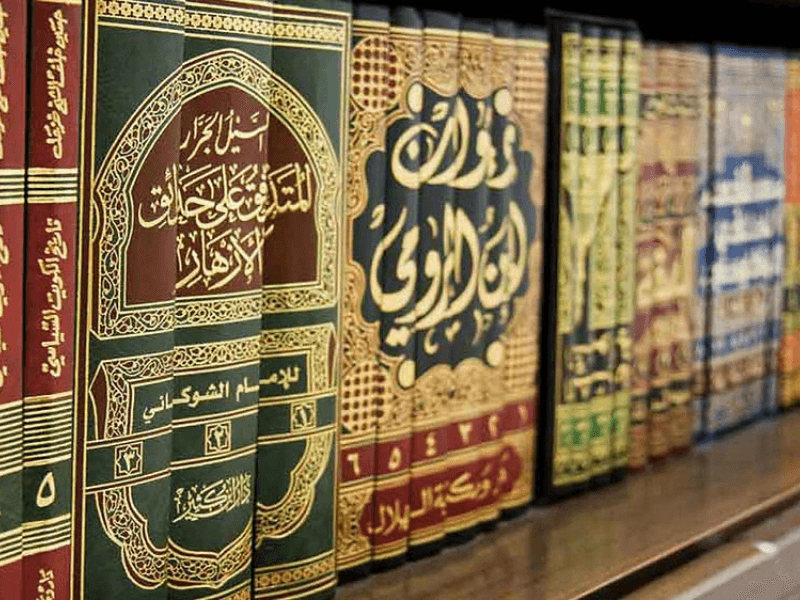
For anyone looking for a 6 authentic hadith books pdf download or an authoritative curriculum layout, classical scholarship centers around six master compilations, collectively known as Al-Kutub Al-Sittah.
When answering how many hadees books in islam hold foundational authority, these six books form the core framework:
- Sahih al-Bukhari: Compiled by Imam Muhammad ibn Ismail al-Bukhari; universally recognized as the most authentic book after the Quran.
- Sahih Muslim: Compiled by Imam Muslim ibn al-Hajjaj; highly praised for its impeccable organization of chains.
- Sunan al-Tirmidhi: Renowned for explaining legal differences and classifying the types of hadith after every entry.
- Sunan Abi Dawud: Highly focused on extracting practical jurisprudential rulings for daily life.
- Sunan al-Nasa’i: Famous for its strict conditions regarding narrator integrity and microscopic chain details.
- Sunan Ibn Majah: Completes the six books, containing rich thematic collections on faith, character, and trials.
See More: Online Quran Education for Children Abroad
What Is the Science of The Noble Hadith?
To protect the purity of the faith, classical Muslim scholars pioneered a historic academic methodology known as the science of the noble hadith (Mustalah al-Hadith). Long before Western academia developed historical criticism tools, Islamic scholars built a flawless system to audit historical data.
This field of study splits every single narration into two main components:
- The Isnad (The Chain of Narrators): The chronological list of individual speakers who passed the statement down from one person to the next.
- The Matn (The Main Text): The actual speech, action, or description attributed to the Prophet ﷺ.
Studying an introduction to the science of the noble hadith vol 1 reveals how scholars tracked the biography, birthdates, travel routes, and mental health of thousands of individual narrators to ensure no broken links occurred. At Iman School, our specialized online Islamic courses online guide Western students through this incredible academic science with total ease.
How Scholars Verify Authentic Hadith?
To ensure a text is graded as Sahih, hadith masters applied five strict, unbending conditions during their verification workflows:
- Continuous Chain (Ittisal al-Sanad): Every single narrator in the chain must have physically met and learned directly from the person before him.
- Upright Character (Adalah): Every narrator must be a practicing, highly moral Muslim free from public sins or dishonesty.
- Flawless Memory Retention (Dabt): The narrator must be proven to accurately memorize or write down statements without mixing details over time.
- Freedom from Anomalies (Shudhudh): The text must not contradict an even stronger, more widely narrated report on the same topic.
- Absence of Hidden Flaws (Illah): The narration must be free from subtle, hidden defects that only a master scholar can detect.
The Etiquette (Adab) of Studying The Noble Hadith
In classical Islamic tradition, acquiring knowledge is not just an intellectual pursuit; it is a spiritual discipline. When embarking on a journey to learn Hadith online, students are encouraged to adopt specific etiquette:
- Purifying Intention (Niyyah): Seeking knowledge solely for the sake of Allah and to act upon it, not for debate or status.
- Respecting the Chain: Honoring the scholars and narrators who sacrificed to preserve these texts.
- Acting Upon the Knowledge: The ultimate goal of studying The Noble Hadith is to transform one’s character and actions to align with the Prophetic example.
The Influence of The Noble Hadith on Islamic Life
The societal and psychological impact of these traditions cannot be overstated. Downloading a text on the influence of the noble hadith pdf shows how these teachings completely reformed the social landscape of Arabia, transitioning an entire civilization away from tribal warfare and racism toward global human brotherhood.
In modern life, the influence of the noble hadith serves as a vital spiritual compass for Western Muslims. It teaches us how to maintain moral integrity in secular professional spaces, guides our financial investments, shapes our character, and ensures our marriages are built on compassion. It is a living, breathing manual for daily psychological peace and community success.
Discover More: Understand Quran Tafsir Online in English
Famous Hadiths of Prophet Muhammad ﷺ and Their Meanings
To truly connect with the heart of The Noble Hadith, a beginner must move past abstract terms and explore the actual speech of the Prophet ﷺ. The Prophet’s speech was famously characterized as Jawami’ al-Kalim—meaning he could express massive, life-altering concepts using just a few beautifully selected words.
A prime example is the noble hadith that shows the reward of truthfulness:
“Indeed, truthfulness leads to righteousness, and righteousness leads to Paradise. A man keeps telling the truth until he is recorded with Allah as a truthful person.” (Sahih al-Bukhari).
This powerful tradition teaches us that truthfulness is not a passive character trait; it is an active spiritual discipline that transforms an individual’s destiny, serving as a pillar of Islamic learning for beginners.
The 20 Most Important Hadiths of the Prophet
To help you kickstart your journey of prophetic literacy, our academic board at Iman School has curated a list of the 100 hadith of prophet muhammad core topics, summarized here into the 20 most vital traditions every believer should master:
- The Hadith of Intentions: “Actions are judged strictly by intentions.” — The foundation of all Islamic actions.
- The Definition of a Muslim: “A Muslim is one from whose tongue and hands other Muslims are safe.”
- The Golden Rule of Faith: “None of you truly believes until he loves for his brother what he loves for himself.”
- The Importance of Character: “The heaviest thing placed on the Scale of Deeds on Judgment Day is good character.”
- Seeking Knowledge: “Seeking knowledge is a mandatory obligation upon every single Muslim.”
- Kindness to Parents: “The pleasure of the Lord is found in the pleasure of the parents.”
- The Pursuit of Ease: “Make things easy for people, and do not make things difficult.”
- Avoiding Harm: “There should be no inflicting of harm, nor reciprocating of harm.”
- The Beauty of Kindness: “Allah is kind and He absolutely loves kindness in all matters.”
- The Reward of Patience: “Whosoever tries to be patient, Allah will grant him patience.”
- Controlling Anger: “The strong person is not the one who wrestles well; it is the one who controls his anger.”
- Fulfilling Trusts: “There is no faith for the one who cannot be trusted.”
- The Importance of Neighborhood: “Gabriel kept recommending me to treat neighbors well until I thought he would give them inheritance rights.”
- Guarding the Tongue: “Whosoever believes in Allah and the Last Day should speak good or remain silent.”
- The Value of Small Deeds: “Do not look down upon any good deed, even if it is just meeting your brother with a smiling face.”
- True Wealth: “Wealth is not found in an abundance of worldly possessions; true wealth is the contentment of the soul.”
- Connecting Family Bonds: “The one who cuts off family ties will not enter Paradise.”
- The Power of Dua: “Supplication is the absolute essence of worship.”
- Maintaining Cleanliness: “Cleanliness represents half of a believer’s entire faith.”
- The Path to Paradise: “Whosoever treads a path in pursuit of sacred knowledge, Allah makes his path to Paradise easy.”
Learn More: How Do I Start Learning Quran Online
How to Start Learning Hadith for Beginners
If you want to transition from a casual reader into a structured student of prophetic traditions, you must adopt a step-by-step approach designed for long-term retention.
Follow this simple framework to begin your studies correctly:
- Start with Forty Hadith Compilations: Begin by studying Imam al-Nawawi’s Forty Hadith. It covers the absolute essentials of faith, law, and character in a highly manageable format.
- Prioritize Understanding Over Memorization: Focus on learning the contextual background (Asbab al-Wurud) of a text before trying to memorize the wording.
- Learn from an Authenticated Academy: Avoid browsing random forums. Enroll in a professional Islamic learning academy like Iman School to ensure you learn under Ijazah-certified mentors.
- Apply One Tradition Daily: The ultimate goal of knowledge is action. When you learn a tradition regarding kindness, honesty, or prayer, implement it immediately in your household.
Book Your Free Trial Lesson at Iman School Today
Avoiding Common Pitfalls in Self-Study
In the digital age, it is tempting to search for random Islamic narrations on social media. However, taking texts out of their classical context can lead to severe misunderstandings.
This is why enrolling in a structured Hadith course with Ijazah is highly recommended. A qualified teacher provides the necessary context (Asbab al-Wurud), explains complex terminology, and ensures that your understanding remains aligned with mainstream, orthodox Islamic scholarship.
Benefits of Studying The Noble Hadith
Dedicating your time to studying The Noble Hadith yields massive, life-altering rewards that transform your personal character, mind, and standing before Allah.
Explore these 10 distinct benefits of entering this advanced field of study:
- Deep Emotional Connection to the Prophet ﷺ: Knowing his exact speech allows you to love him, mirror his character, and feel his presence in your life.
- Protection from Misconceptions: Gaining deep knowledge shields your mind from modern doubts regarding the preservation and authenticity of Islamic law.
- Flawless Clarification of Quranic Verses: It turns abstract divine commands into actionable daily steps.
- An Unshakable Shield of Character: It refines your speech, manners, and daily interactions with your spouse, children, and parents.
- Massive Intellectual Growth: Studying the science of the noble hadith sharpens your logical reasoning, memory retention, and critical thinking skills.
- Multiplied Spiritual Rewards: Every time you read or pass down a tradition, you earn immense rewards for honoring the prophetic legacy.
- True Peace of Mind (Sakina): Filling your home with the study of prophetic words invites the noble angels to surround your living space with tranquility.
- A Sources of Pride for Families: Raising children who can readily quote authentic prophetic traditions builds a resilient Islamic identity in the West.
- Direct Unbroken Chain of Transmission: It links your name directly to a prestigious circle of preservationists that extends back over a millennium.
- The Ultimate Divine Pleasure: Perfecting your compliance with the prophetic Sunnah is the single fastest way to secure the love and mercy of Allah.
See More: How to Revise Quran Hifz
FAQ About The Noble Hadith
Why did it take centuries to write down the Hadiths?
This is a common historical misconception. While massive encyclopedias like Sahih al-Bukhari were compiled later, the actual writing of hadiths began during the life of the Prophet ﷺ himself. Many companions kept personal notebooks. The later compilation era simply standardized, cross-referenced, and authenticated these pre-existing documents into uniform volumes.
Can a non-Arabic speaker understand the depths of Hadith sciences online?
Yes, absolutely! At Iman School, our specialized hadith learning for beginners tracks are custom-engineered for English-speaking audiences. We break down dense terms from an introduction to the science of the noble hadith volume 1 into simple, logical formulas, allowing you to build deep religious literacy without any language barriers.
How do I verify if a Hadith I read online is authentic?
Never share or accept a narration without checking its grading. Authentic resources will always display a clear scholarly footnote indicating its source (e.g., “Narrated by Bukhari”) and its classification grade. If you are unsure, consult a live, certified scholar at an online Islamic school.
What is a Hadith Qudsi?
A Hadith Qudsi (Sacred Hadith) is a unique type of narration where the Prophet ﷺ communicates a statement directly from Allah, but the wording is not part of the formal Holy Quran. It focuses heavily on spiritual reflection, divine mercy, and repentance.
Are online Islamic classes effective for children to learn Hadith?
Yes, our online hifz classes and Islamic studies tracks for children are highly engaging. We replace boring rote-learning with gamified digital slides and inspiring historical storytelling, helping children memorize and implement short, high-impact prophetic traditions effortlessly.
How can I balance advanced Islamic studies with a full-time Western career?
We fully eliminate this bottleneck. Our state-of-the-art virtual academy provides ultra-flexible 24/7 booking schedules, allowing busy Western professionals to study private, 1-on-1 sessions with an expert online Quran tutor at any hour of the day or night.
Read Also: What is the best way to learn quran
online Hadith learning program
Iman School stands proudly as the premier online academy for comprehensive Quranic and advanced Islamic education. We have masterfully combined traditional prophetic tracking methods with cutting-edge Western educational technology to deliver a world-class learning sanctuary right to your home.
Whether you are an absolute beginner looking to explore your very first prophetic traditions, a busy professional managing a corporate career, or a parent searching for an inspiring, high-energy program for your children, we provide the ultimate digital ecosystem to ensure your success.
In conclusion, mastering The Noble Hadith is a profound honor that brings unparalleled clarity, beauty, and elevation to your spiritual and practical life. It connects your heart directly to the voice of the Messenger of Allah ﷺ, guiding your steps through the modern world.