 -by
-by Mastering Tajweed in Quran is the bridge between simply reading words and truly experiencing the Divine Revelation. For Muslims in the West, understanding Tajweed ensures that the holy text is preserved in its original beauty. At Iman School, we specialize in helping you master Tajweed through expert-led, interactive sessions.
What Is Tajweed in Quran?
Tajweed in Quran refers to the set of rules governing the pronunciation of letters when reciting the Quran. The word “Tajweed” linguistically means “proficiency” or “doing something well.”
In the context of the Holy Book, Tajweed in Quran is the science of giving every letter its right (Haqq) by observing its point of articulation (Makhraj) and its inherent qualities (Sifat).
It is not merely a rhythmic style; Tajweed is a foundational requirement to ensure the text is recited exactly as it was revealed to the Prophet Muhammad (PBUH) by Angel Jibreel.
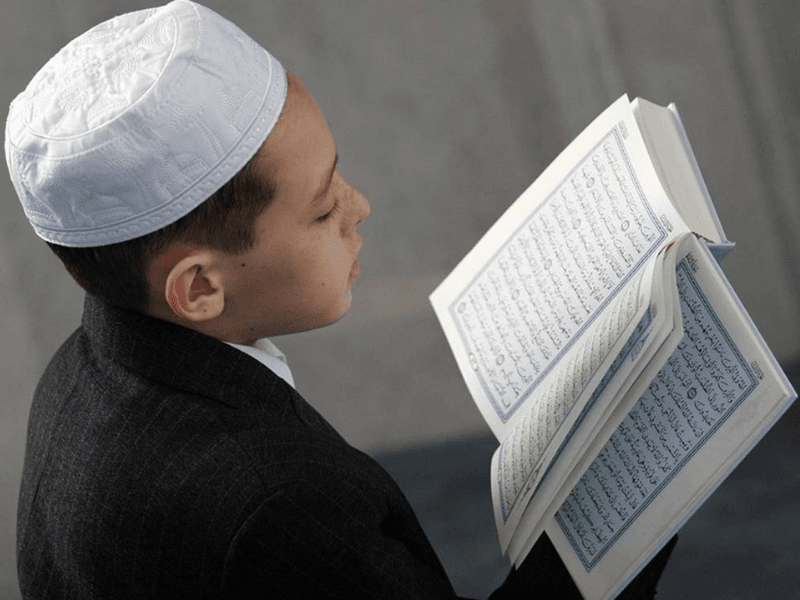
Why Tajweed Matters in Proper Quran Recitation?
The significance of Tajweed in Quran cannot be overstated. It is the guardian of the Arabic language and the protector of the Quranic meaning. Here is why it matters:
- Preserving Divine Accuracy: When you apply Tajweed, you prevent the distortion of words. Even a slight change in a vowel or a letter’s exit point can alter the entire theological meaning of a verse.
- Following the Sunnah: The Prophet (PBUH) recited the Quran with specific rhythms and elongations. By learning Tajweed in Quran, you are directly following his example of perfecting Quran recitation.
- Achieving Spiritual Focus (Khushu): The melodic nature of Tajweed naturally slows down the reciter, allowing for deeper reflection and a more tranquil heart during prayer.
- Fulfilling a Religious Duty: Many scholars consider at least a basic knowledge of Tajweed in Quran to be an obligation (Fard) for every Muslim to ensure their daily prayers are valid.
- Enhancing Memory: The rhythmic rules of Tajweed, such as Ghunnah and Madd, create auditory patterns that make it significantly easier to memorize and recall verses.
- Developing Aesthetic Beauty: The Quran is meant to be recited beautifully. Tajweed provides the rules for “beautifying” the voice, making the recitation move the listener’s soul.
- Building Linguistic Discipline: Mastering Tajweed requires focus and precision. It sharpens your cognitive abilities and improves your general Quranic phonetics and articulation.
- Avoiding Hidden Mistakes: There are subtle mistakes (Lahm Khafi) that only those trained in Tajweed can detect, such as incorrect timing of nasalization or elongations.
- Respecting the Speech of Allah: Treating the Quran with the highest level of Quran reading accuracy through Tajweed in Quran is a sign of deep respect for its Divine Author.
- Confidence in Leading Prayer: For brothers especially, a strong grasp of Tajweed provides the confidence needed to lead family or community members in congregational Salah.
Benefits of Learning Tajweed
Beyond the primary importance of accuracy, Tajweed in Quran offers unique life-altering benefits:
- Emotional Healing: The vibration and frequency of correct Quranic articulation have a calming effect on the nervous system.
- Universal Connection: Whether you are in New York or London, Tajweed allows you to join any recitation circle worldwide and sound familiar to your brothers and sisters.
- Intellectual Growth: Learning Tajweed in Quran introduces you to the sophisticated world of Arabic linguistics and Quranic phonetics.
- A Legacy for Children: When parents master Tajweed, they can pass on the correct proper Quran pronunciation to their children, ensuring the legacy continues.
Benefits of Learning Tajweed with a Qualified Teacher
The secret to Iman School’s success lies in our faculty. You cannot learn Tajweed in Quran from an app because an app cannot hear the subtle “airiness” in your Hams or the “thickness” of your Tafkheem.
Our best Tajweed teachers online provide a “human mirror.” They identify your specific linguistic hurdles, whether you are a native English, French, or Urdu speaker, and tailor the Tajweed lessons to fix your unique accent. This personalized approach is why our students achieve Quran reading accuracy much faster than those who study alone.
Core Principles of Tajweed
To truly understand Tajweed in Quran, one must look at the pillars that uphold this science. Here are the 10 core principles:
- Knowledge of Makharij: This is the study of the 17 exit points in the throat and mouth. Every student of Tajweed in Quran must know exactly where a letter originates to produce it correctly.
- Understanding Sifat: Every letter has qualities like heavy or light, whispered or audible. Tajweed teaches you how to balance these traits for every sound.
- Rules of Nun Sakinah and Tanween: This involves four main rules (Izhar, Idgham, Iqlab, Ikhfa) that dictate how the “N” sound behaves when followed by other letters in Tajweed in Quran.
- Rules of Meem Sakinah: Similar to the Nun, the letter Meem has its own set of behaviors in Tajweed in Quran that affect the flow and rhythm of your recitation.
- The Science of Al-Madd (Elongations): One of the most recognizable parts of Tajweed, this principle governs how long you stretch specific vowel sounds (2, 4, or 6 beats).
- Heavy and Light Letters (Tafkheem and Tarqeeq): This principle of Tajweed ensures that letters like Ra and Lam are pronounced with the correct “thickness” depending on the context.
- The Rule of Idgham (Merging): This involves merging two letters together. It is a key component of Tajweed in Quran that creates the smooth, fluid sound of professional reciters.
- Qalqalah (Echoing): Certain letters require a “bouncing” or “echoing” sound when they are silent. Tajweed specifies exactly how much bounce is needed for each.
- Stopping and Starting (Waqf and Ibtida): Tajweed in Quran isn’t just about sounds; it’s about knowing where it is permissible to stop and where you must continue to preserve the meaning.
- Ghunnah (Nasalization): This is the rhythmic vibration in the nose for letters like Noon and Meem. It is the “soul” of the melody in Tajweed.
How Tajweed Improves the Pronunciation of Arabic Letters and Words?
For a beginner, Arabic letters can feel alien. Tajweed in Quran acts as a scientific manual for your mouth and throat.
- Clarifying Distinct Sounds: Arabic has many letters that sound similar (like Ta and Taa). Tajweed in Quran teaches you the physical mechanics to distinguish them.
- Standardizing Vowel Lengths: It prevents lazy reading. Tajweed forces you to give every vowel its due time, resulting in mastering Quran pronunciation.
- Improving Flow: By learning how letters merge, Tajweed in Quran eliminates the “staccato” or robotic sound of early learners, replacing it with a professional flow.
- Engaging the Throat Muscles: Many non-Arabic speakers don’t use their deep throat muscles. Tajweed provides the “exercise” needed to activate these unused areas.
- Correcting Tongue Placement: Many mistakes in proper Quran pronunciation come from the tongue being a few millimeters off. Tajweed in Quran provides the precise blueprint.
- Balancing Airflow: Some letters require a burst of air (Hams), while others require the air to be trapped (Jahr). Tajweed in Quran teaches you this balance.
- Enhancing Listening Skills: As you learn the rules of Tajweed, your ears become tuned to the nuances of native speakers and world-class reciters.
- Building Mouth Muscle Memory: Through Tajweed practice exercises, your mouth eventually adopts these positions automatically, leading to Quran fluency with Tajweed.
- Eliminating Foreign Accents: While everyone has an accent, Tajweed provides a universal standard that brings your recitation closer to the Classical Arabic of the Quran.
- Speed Management: Tajweed in Quran teaches you how to maintain accuracy whether you are reading fast (Hadr) or slowly (Tahqeeq).
The Connection Between Tajweed and Understanding the Quran
I want you to imagine the Quran as a beautiful lock, and Tajweed in Quran as the teeth of the key. Without the correct Quranic articulation, the lock simply won’t turn. When you apply the rules of Tajweed, you aren’t just making “nice sounds”; you are highlighting the emotional and grammatical weight of the verses.
For instance, the rules of Madd (elongations) often appear in verses of deep significance or warning, forcing the reciter to pause and reflect on the magnitude of the words. If you ignore Tajweed in Quran, you might accidentally merge two words that should be separate, changing a command into a question.
Proper Quran recitation with Tajweed ensures that the “soul” of the message is delivered exactly as Allah intended, allowing the meanings to penetrate your heart with much more clarity than a flat, robotic reading ever could.
Essential Rules of Tajweed
To master Tajweed in Quran, you must become familiar with the “toolkit” of rules. Here are the most prominent ones explained simply:
- Noon Sakinah and Tanween: This is arguably the most famous part of Tajweed in Quran. It governs how the “N” sound interacts with the letters that follow it. It includes Izhar (clarity), Idgham (merging), Iqlab (changing to a ‘M’ sound), and Ikhfa (hiding with a nasal sound).
- Meem Sakinah: This set of rules in Tajweed in Quran deals with the silent ‘M’. Depending on what comes next, you might merge it, hide it, or say it clearly.
- Al-Madd (The Stretches): This is where Tajweed gets its melody. You learn to stretch vowels for 2, 4, 5, or 6 counts. There are different types, like Madd Tabee’ee (natural) and Madd Lazim (compulsory).
- Qalqalah (The Echo): Certain letters ($q, t, b, j, d$) require a “bouncing” sound when they are silent. Mastering this is a hallmark of perfecting Quran recitation.
- The Rules of Laam: Specifically in the name of “Allah.” Tajweed in Quran teaches you when to make it “heavy” (thick) and when to keep it “light” (thin).
- The Rules of Ra: Similar to the Laam, the letter Ra has specific conditions where it must be pronounced boldly or softly.
- Sifat al-Huroof (Characteristics): This is the “personality” of each letter in Tajweed, whether it is whispered, loud, soft, or firm.
See also: Islamic Sciences Courses
Common Tajweed Mistakes and How to Avoid Them
Even the most dedicated students make mistakes. By identifying these early, you can ensure your Tajweed in Quran remains pure. Here are 10 common errors:
- Dropping the Ghunnah: Many beginners forget the two-beat nasal sound. To avoid this in Tajweed in Quran, always remember that Noon and Meem with a Shaddah need that vibration in the nose.
- Incorrect Madd Lengths: Some students stretch everything equally. In Tajweed, precision is key; a 2-beat stretch should not be a 4-beat stretch. Use your fingers to count beats until it becomes natural.
- Mixing Heavy and Light Letters: Beginners often make “light” letters heavy if they are next to a “heavy” one. Tajweed in Quran requires you to keep each letter independent.
- Weak Qalqalah: If you don’t “bounce” the letter enough, it sounds like a mistake. Focus on the proper Quran pronunciation by letting the sound echo slightly.
- Breath Management Issues: Stopping in the middle of a word is a major error. Tajweed teaches you to look for the “stop” signs and manage your breath accordingly.
- Changing the ‘I’ to an ‘E’: In many Western accents, the Kasra is pronounced like an ‘E’. To master Tajweed in Quran, ensure your ‘I’ sounds like the ‘ee’ in “see.”
- Ignoring the Makhraj of the Throat: Letters like Ain and Ha must come from the middle of the throat. Don’t use your chest or the front of your mouth; follow the Quranic articulation guides strictly.
- Losing the Shaddah Emphasis: Failing to “press” on a double letter changes the word. In Tajweed, the Shaddah must be felt.
- Merging Letters Improperly: Sometimes students merge letters that should be clear (Izhar). Always check the letter that follows the Noon Sakinah.
- Reading Too Fast: Speed is the enemy of Tajweed in Quran. Start slow (Tahqeeq) to ensure every rule is applied before trying to increase your pace.

What Is the Best Way to Learn Tajweed Online?
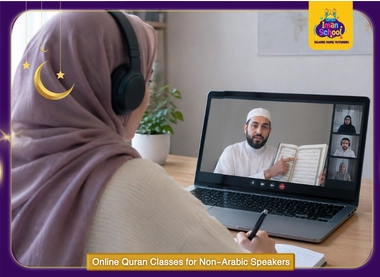
The most effective and time-tested method to learn Tajweed in Quran is the One-on-One model. Why? Because Tajweed is an “oral science.” It cannot be learned solely from a book or a pre-recorded video.
The Prophet (PBUH) learned from Angel Jibreel through listening and repeating. Similarly, when you join one-on-one Tajweed classes at Iman School, your teacher listens to every breath and vibration. For example, if you are practicing the rule of Ikhfa, your teacher can immediately tell if your tongue is too close to the teeth and correct you in real-time. This “Live Feedback Loop” is the secret to how to learn Tajweed step by step with 100% accuracy.
How Long Does It Take to Learn Tajweed?
The journey to master Tajweed in Quran is unique for every student. For a complete beginner, it typically takes 3 to 6 months to learn the foundational rules of proper Quran pronunciation and apply them to short Surahs. To achieve full fluency, where you can apply advanced Tajweed rules to any part of the Mushaf without hesitation, usually requires 12 to 18 months of consistent study.
At Iman School, we emphasize that quality is more important than speed. Mastering Tajweed in Quran is a spiritual marathon. Even if you only learn one rule per week, by the end of the year, you will have transformed your recitation into something beautiful and precise.
Tajweed for Beginners Step by Step
- Correct Your Intent: Start by seeking the pleasure of Allah.
- Master the Alphabet: You can’t learn Tajweed in Quran until you know the letters perfectly.
- Learn the Makharij: Study the 17 exit points of the letters.
- Start with Short Surahs: Apply Tajweed for beginners to the small Surahs you already know by heart.
- Listen and Repeat: Use an interactive Tajweed learning approach by mimicking a qualified teacher.
- Study the Rules: Move into the specific rules of Tajweed like Noon Sakinah.
- Practice Daily: Consistency is more important than the length of the study.
Understanding Makharij and Sifat in Tajweed
Think of Makharij as the “address” of the letter and Sifat as its “personality.”
I would show you that the letter Qaf (ق) has its address at the very back of the tongue. That is its Makhraj. But its Sifat (personality) is that it is “heavy” and has a “bounce” (Qalqalah). To master Tajweed in Quran, you must know both. If you go to the right address but use the wrong personality, the letter will sound like a Kaf (ك). This is why we focus so much on mastering Quran pronunciation through these two pillars at Iman School.
Online Tajweed Classes for Kids and Adults
We believe that it is never too early, nor too late, to begin learning Tajweed in Quran.
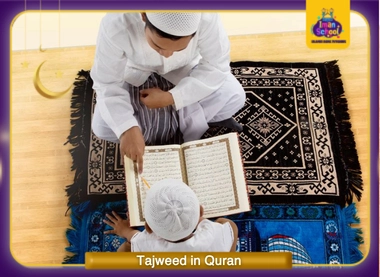
- For Kids: Our Tajweed for kids program uses interactive games and visual aids to make Quranic phonetics fun. Children naturally have more flexible articulators, making it the perfect time to instill perfecting Quran recitation.
- For Adults: Our Tajweed rules for adults are designed for busy professionals. We focus on the logical “why” behind the rules, helping you reconcile your Western linguistic habits with the deep, resonant sounds of Tajweed in Quran.
Difference Between Basic and Advanced Tajweed Rules
Basic Tajweed Rules
These are the essential “bread and butter” of Tajweed in Quran. They include the rules of Noon and Meem Sakinah, the natural stretches (Madd), and the points of articulation (Makharij). Mastering these is enough to ensure your prayer is valid and your proper Quran pronunciation is clear.
Advanced Tajweed Rules
Once you have the basics, Advanced Tajweed rules delve into the subtle nuances. This includes the various types of compulsory elongations (Madd Lazim), the specific “qualities without opposites” of certain letters, and the complex rules of “Stop and Start” (Waqf). This level is for those seeking Tajweed certification online or aspiring to teach others.
How Daily Practice Improves Quran Recitation Skills
To make Tajweed in Quran second nature, you need more than just a weekly class. Here are 10 tips:
- Recite at least two pages daily, focusing on only one rule of Tajweed at a time.
- Listen to a world-class Qari and try to shadow their Quranic articulation.
- Use a “color-coded” Mushaf to help you spot rules of Tajweed visually.
- Record your recitation and compare it to your online Tajweed teachers‘ recording.
- Practice your Makharij (exit points) while doing daily chores to build muscle memory.
- Teach a rule you learned to a family member; teaching is the best way to learn.
- Set a specific time for your Tajweed course study and stick to it.
- Focus on your breath control by reciting longer verses in one go.
- Recite the verses you are learning in your daily Salah to lock in the Tajweed in Quran.
- Make Dua to Allah to make your tongue fluent and your heart receptive.
Best Resources for Learning Tajweed at Home
While there are many Tajweed practice exercises available, Iman School provides the most comprehensive ecosystem. Our students gain access to:
- Digital libraries of easy Tajweed lessons for beginners.
- Custom Tajweed practice exercises designed for Western students.
- The best interactive Tajweed learning tools, including live feedback dashboards.
Tajweed for Non-Arabic Speakers
We specialize in Tajweed for non-Arabic speakers. We understand that the “Ain” or “Ha” might not exist in your native language. Our beginner guide to Tajweed breaks down these sounds into physical movements of the tongue and throat, ensuring that mastering Quran pronunciation is achievable for everyone, regardless of their mother tongue.
Interactive Tools Used in Online Tajweed Classes
To bring Tajweed in Quran to life, we use:
- Virtual Whiteboards: To draw the anatomy of the mouth for Quranic articulation.
- High-Quality Audio: So you can hear the subtle nasalization (Ghunnah) clearly.
- Real-time Highlighting: To follow the teacher through Quran recitation with Tajweed.

Enroll in Your First Tajweed Lesson at Iman School Today
Features of the Best Online Tajweed Course
What makes Iman School’s course the premier choice for Tajweed in Quran?
- Ijazah-Certified Teachers: Authentic chains of narration.
- One-on-One Classes: Total focus on your proper Quran pronunciation.
- Flexible Timing: Fits the busy schedules of students in the West.
- Structured Curriculum: A clear Tajweed roadmap from A to Z.
- Female Tutors: Dedicated classes for sisters.
- Trial Lessons: To ensure you love our Tajweed teaching methods.
- Affordability: Quality education that doesn’t break the bank.
- Multi-device Access: Learn Tajweed on your phone, tablet, or PC.
- Progress Reports: Monthly tracking of your Quranic reading accuracy.
- Community: Connect with others on the same spiritual journey.
FAQ About Tajweed in Quran
Is Tajweed in Quran mandatory?
Most scholars consider basic proper Quran pronunciation mandatory to avoid changing meanings during prayer.
Can I learn Tajweed in Quran by myself?
It is very difficult because you need a teacher to hear and correct your Quranic phonetics.
What is the hardest part of Tajweed in Quran?
For most, it is mastering the throat letters and the timing of the Madd.
Does Tajweed in Quran help with learning Arabic?
Yes! It builds a strong foundation in Arabic articulation and phonetics.
Is there a difference between Tajweed and Tarteel?
Tarteel is the slow, rhythmic recitation, while Tajweed in Quran is the set of rules used to achieve it.
Can my child start Tajweed in Quran at age 5?
Yes, it is the best time to start Tajweed for kids.
Do you offer Tajweed certification online?
Yes, we provide certificates upon the completion of our Tajweed course.
Why is Iman School the best for Tajweed in Quran?
Because of our 100% focus on one-on-one Tajweed classes and personalized feedback.
Getting Started with Tajweed at Iman School
Mastering Tajweed in Quran is one of the most rewarding journeys a believer can take. It changes your relationship with the Word of Allah, turning every recitation into a masterpiece of devotion.
Iman School is proud to be the best online Tajweed school, bridging the gap for Muslims in the West. Our online Tajweed teachers are ready to guide you through every Makhraj and Sifat until you achieve the fluency you’ve always dreamed of.